
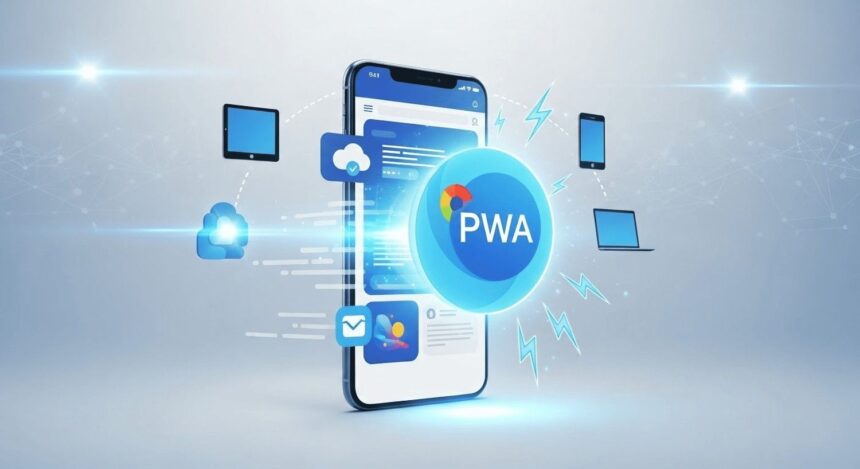
The mobile web is changing—quietly, but with clear certainty. We live in a “now” culture, where waiting feels unnatural. Whether it’s finding a recipe, ordering food, or checking into a flight, we expect it to happen instantly. Our devices have trained us to see speed as the norm, and any delay feels like friction.
But beneath this expectation lies a problem. Native apps are heavy, taking up storage, needing constant updates, and sometimes moving like slow beasts in a fast world. The traditional mobile web isn’t always better—it can be fragile, freezing, or failing when the signal weakens. Our demand for speed is beginning to outgrow the tools we’ve relied on.
And then there are Progressive Web Apps (PWAs). They arrived without a parade. But their promise is deep: the speed and feel of a native app, with the reach and openness of the mobile web. No downloads. No “update available” nagging. Just a smooth, app-like website that responds when you call it—whether you’re connected or not. For businesses, for creators, for people who simply want technology to get out of their way, PWAs might not just be the next step forward. They could be the way forward for the mobile web.
What Exactly Is a Progressive Web App?
A Progressive Web App isn’t another buzzword. It is a revolutionary change in online user engagement on the mobile web. Think of realizing that you went to a PWA that feels more like something special. It opens immediately, can operate as an offline web app, and can even reside on your home screen just like you would have downloaded any of the apps you received from a store. That is what happens when the lines blur between the mobile web and native apps.
Core PWA Features You Need to Know
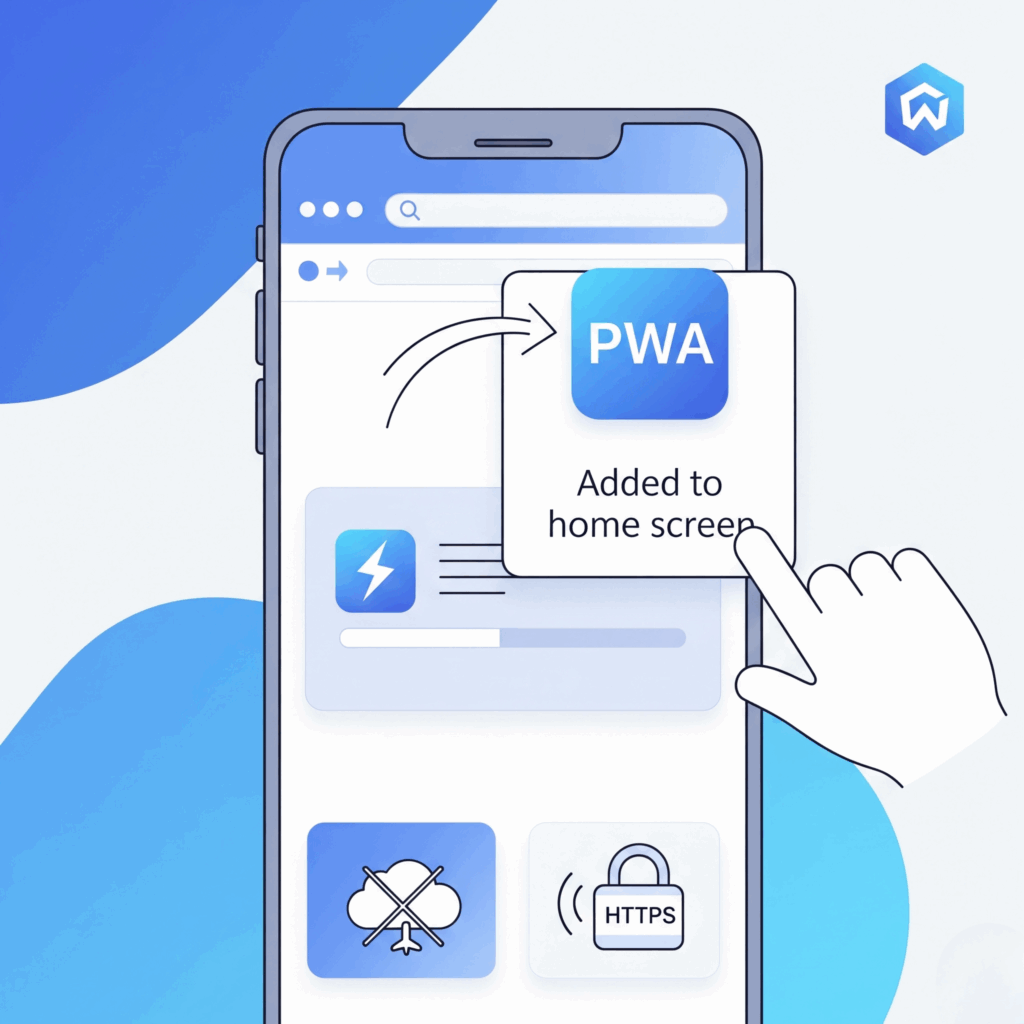
This isn’t magic—it’s a set of deliberate features of Progressive Web Apps:
-
- Installable – You can add a PWA to your home screen with a single tap.
- Offline-friendly – Cached files keep PWAs running even when your signal vanishes, making them true offline web apps.
- Responsive – A PWA fits whatever device you hold in your hand, large or small, ensuring cross-platform compatibility.
- Secure – Built on HTTPS, Progressive Web Apps guard the connection between you and it.
- Fast-loading – PWAs move at the pace of thought, without waiting for bloated files.
How Service Workers Enable Offline Access
Behind the scenes, service workers act like quiet archivists for Progressive Web Apps. They capture and store the files your PWA needs most, so you aren’t left stranded when your connection drops. In practice, it means reading an article on a train tunnel or checking a shopping cart on a rural backroad using the mobile web. It’s a subtle but radical change—like having a backup world ready when the main one flickers.
The App Shell Model for Instant Loading
The app shell model is deceptively simple for PWAs. It loads the structure of the Progressive Web App first—the “shell”—so it’s visible in an instant. The actual content streams in as soon as it can. Think of it as setting a stage before the actors arrive. You get the sense of readiness, of something already alive and waiting on the mobile web.
Why PWAs Are More Than Just “Responsive” Websites
Responsive web design adjusts to fit your screen. It is valuable, but it’s not enough. A Progressive Web App goes further—it can operate offline, utilize web push notifications, and, to the user, feels like a mobile app development marvel. It is the same as listening to a song in cheap laptop speakers as opposed to being in the same room with an actual band. Same notes but entirely different presence on the mobile web.
PWA vs Native Apps: Which Should You Choose in 2025?
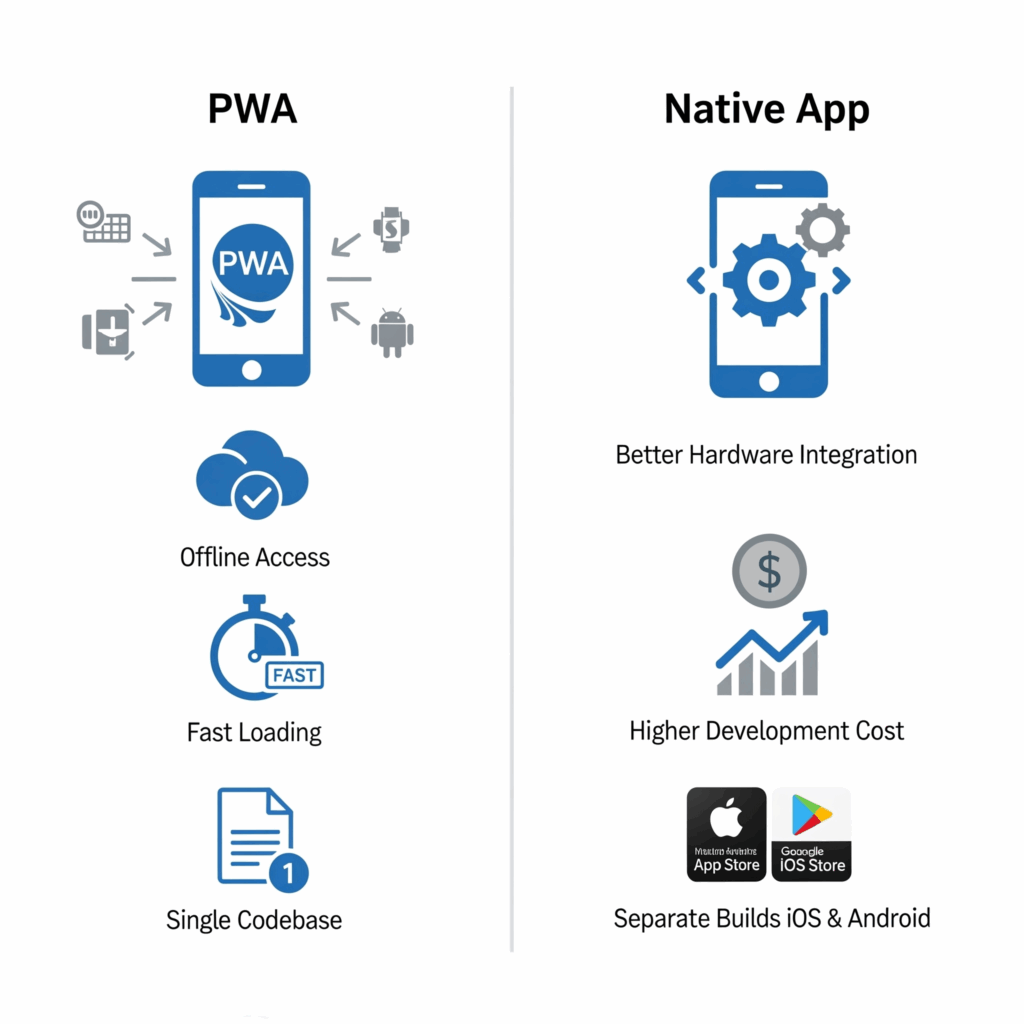
This isn’t a story of one winner and one loser. It’s about fit. About where you want to invest your time, your budget, and your users’ attention in mobile app development.
Comparing Development Costs, Speed & Maintenance
Progressive Web Apps are efficient. You only write your code once, and it will run everywhere, including desktop, mobile, tablet, without creating separate codebases for iOS and Android. Native apps require more: separate builds, separate updates. The more the hours, the higher the cost is. For many, the choice is clear: PWAs have far more flexibility and beat the cost and complexity of working and maintaining two (or more) native versions on the mobile web.
UX & Accessibility: PWAs vs Native Experiences
Native apps still have edges in hardware integration—camera, Bluetooth, and certain sensors. But for most everyday needs, Progressive Web Apps deliver a smooth, accessible experience without the drag of installation. For users, that means less friction. For creators, it means faster reach on the mobile web.
Real-World Case Studies of Brands That Switched
-
- Starbucks built a PWA that runs fast even on shaky 3G connections, opening up markets where reliable mobile web access is rare.
- Twitter Lite shrank its data footprint by up to 70%, keeping user engagement high in places where bandwidth is precious.
- Trivago discovered that a lighter, faster Progressive Web App kept travelers coming back—fewer clicks to book, more loyalty in return.
PWA vs Responsive Websites: The Key Differences
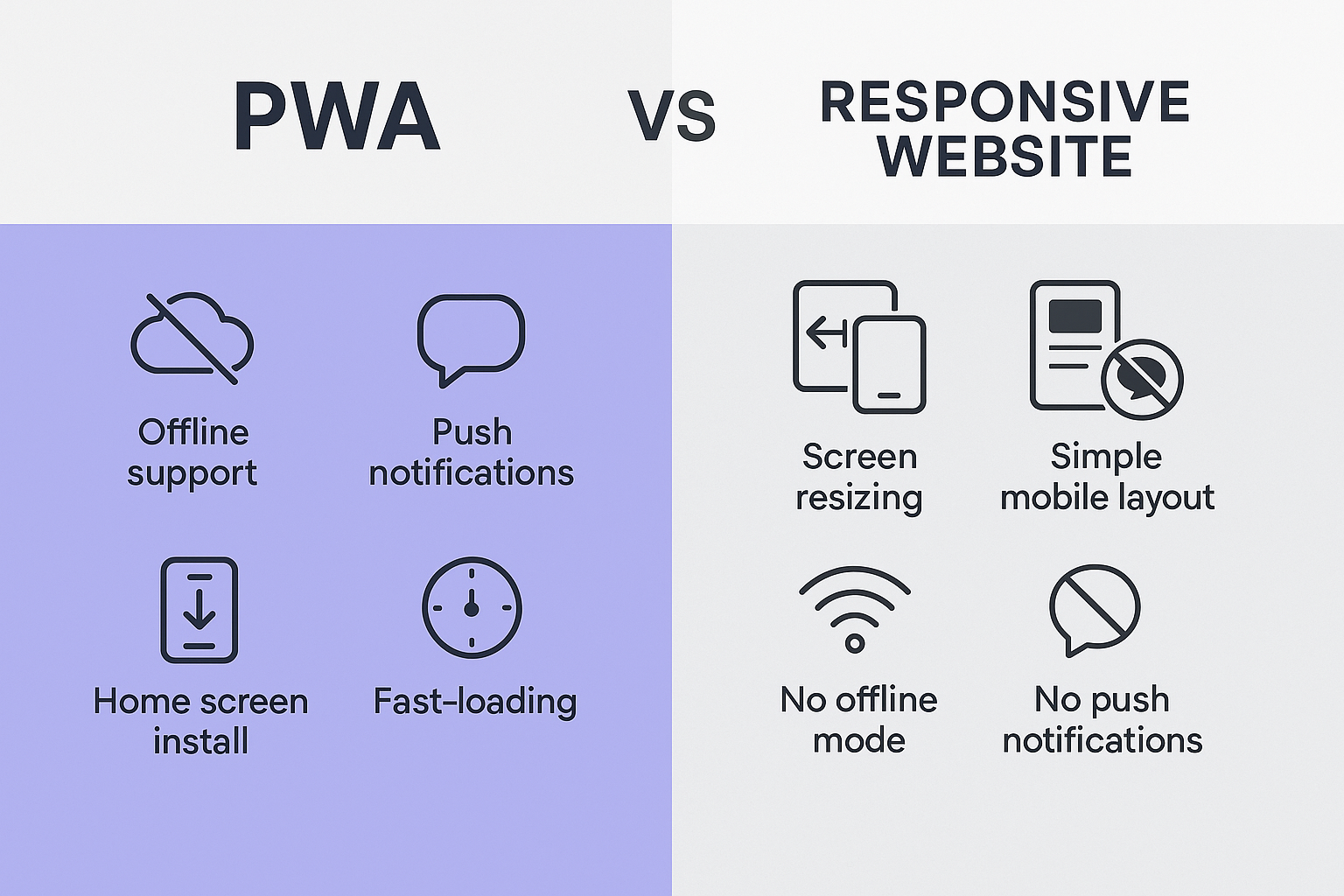
It’s tempting to think a responsive web design is enough. Resize your layout, and you’re done. But speed and user engagement demand more of the mobile web.
Performance on Slow or Unreliable Networks
Responsive sites still vanish when the signal dies. Progressive Web Apps endure. They cache key assets so you can keep scrolling, reading, and interacting even when the connection fades. In a world where “offline” still happens, that resilience matters for PWAs.
Engagement Features: Push Notifications & Home-Screen Prompts
Progressive Web Apps offer tools that responsive sites can’t match. Web push notifications convince people to come back: a flash sale, a notification of shipping, and even a reminder of an unfilled cart. People will have your PWA a single tap away on the very home screen, where they see icons they regularly tap.
SEO Benefits: How Google Indexes PWAs
Here’s a quiet advantage: Google indexes Progressive Web Apps just like any other site. That means you can capture organic traffic while offering an SEO-friendly web experience that feels like a native app. It’s discoverability and immersion rolled into one on the mobile web.
Top Business Benefits of PWAs in 2025
The numbers are compelling. The experiences, even more so for Progressive Web Apps.
E-Commerce Gains: Faster Checkouts & Lower Bounce Rates
Online, every second counts. Studies show a one-second delay can sink conversions. PWAs strip away unnecessary loading and clutter, making checkout swift. A smoother path means fewer abandoned carts and more repeat visits on the mobile web.
SaaS & B2B Advantages: One Codebase, No App Store Hurdles
For SaaS and B2B, the appeal of PWAs is almost practical to the point of inevitability. One codebase for all devices ensures cross-platform compatibility. No waiting on app store approvals. No duplicate development cycles. For companies in mobile app development, it’s a form of offline web apps.
Local Services Wins: Offline Support & On-Demand Engagement
Progressive Web Apps give local services a quiet superpower—offline functionality. Book an electrician without a signal, confirm the details when you’re connected again. It’s a small shift in the user’s day, but a big shift in trust on the mobile web.
Are Progressive Web Apps Secure and Scalable?
The question isn’t if PWAs can scale or stay secure—it’s how.
Why HTTPS Is Mandatory for Trusted PWAs
Every Progressive Web App must run on HTTPS. Not just for credit card transactions. For trust itself. It’s the baseline that signals to users: this connection is safe, this interaction is protected on the mobile web.
Scaling PWAs for Enterprise-Level Traffic
PWAs aren’t just for startups. With the right architecture and modern content delivery networks, Progressive Web Apps can absorb traffic spikes without blinking. That means readiness for product launches, seasonal rushes, or sudden media attention.
Browser & Device Compatibility Checklist
Cross-platform compatibility is built into PWAs. Modern browsers embrace Progressive Web Apps, and support continues to expand. For businesses, that means reach without reinvention on the mobile web.
How to Build Your First Progressive Web App
The path to building a PWA is more approachable than it looks.
Choosing the Right Tools & Frameworks (React, Angular, Vue)
Each framework carries its own personality for Progressive Web Apps. React is flexible and widely adopted. Angular is structured and feature-rich. Vue is elegant and approachable. Choosing the right one depends on your team’s rhythm and your project’s needs for an app-like website.
Auditing & Benchmarking with Lighthouse & Workbox
Lighthouse provides an objective look at the performance of your PWA, accessibility, and standing in SEO-friendly web metrics. Workbox automatically configures the caching and the service worker required to provide offline support. Together, they form a toolkit for building Progressive Web Apps with confidence.
Why Turain Software Is Your Ideal PWA Partner
Turain Software understands this landscape. Their expertise in digital transformation makes them an ally for anyone building a PWA. They don’t just deliver a product. They deliver a strategy—a way to step into the future without stumbling on the mobile web.
Conclusion: Is a PWA the Future for Your Business?
Key Takeaways on PWA Benefits and Trade-Offs
Progressive Web Apps combine the freedom of the mobile web experience with the degree of refinement of native apps. They are quickly erected, easier to maintain, and user-friendly. Native apps are not going anywhere—particularly where a deep integration of hardware is concerned. However, in the case of most businesses, PWAs present an option that has a good balance of reach, performance, and flexibility that is difficult to pass up.
Ready to Get Started? Talk to Turain Software’s App Experts
The shift is already happening. If you want to meet your users where they are—without the barriers of app stores or the fragility of a traditional site—a Progressive Web App is worth your attention. The mobile web is evolving. The question is whether your business will evolve with it.