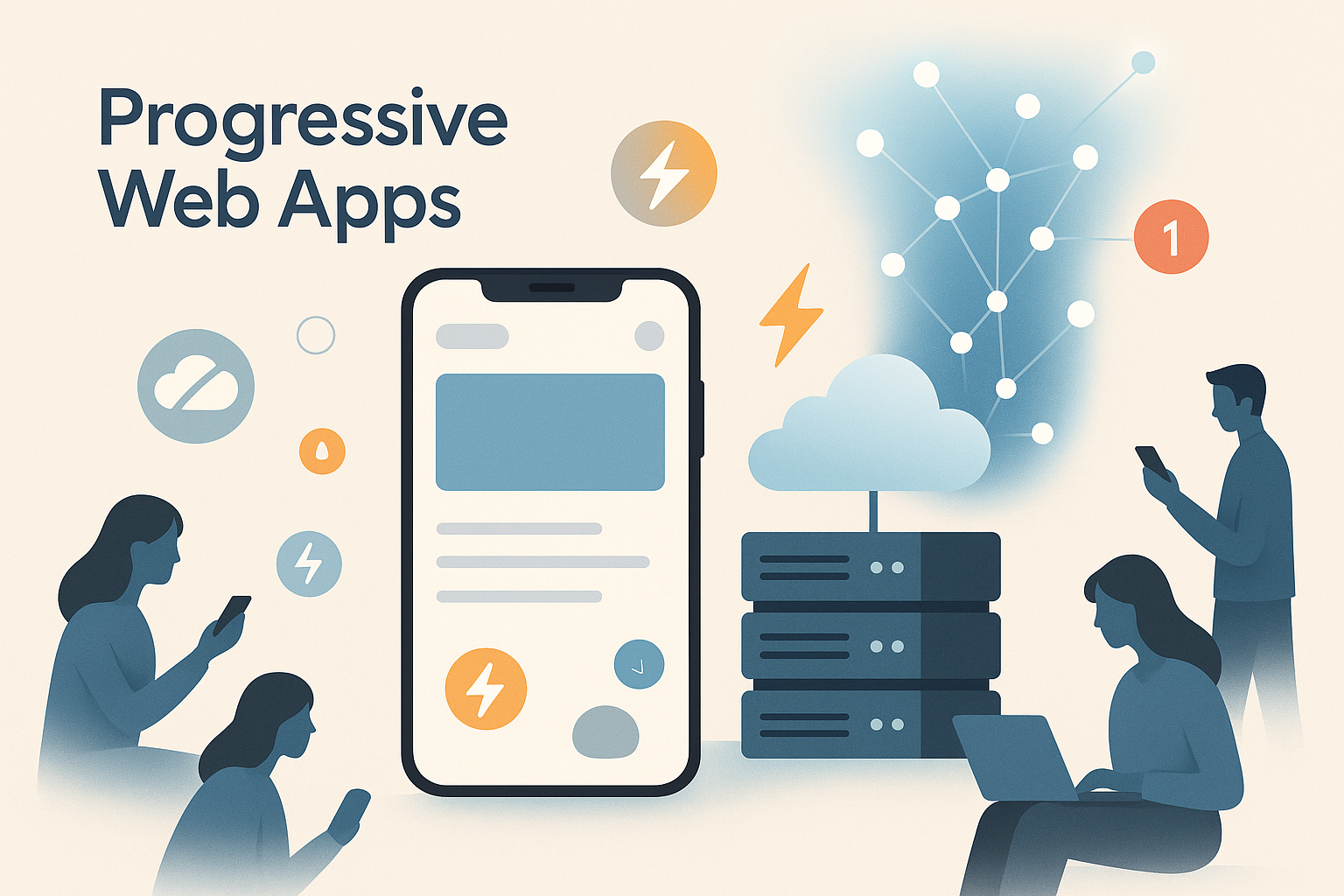
Some days, it is worth pausing to watch how people use their phones. They swipe, type, pinch, and scroll. They expect things to work fast, everywhere, on every device. They want apps that feel right in their hands. They want the web to act like an app. Over the years, it has become clear that a shift is happening. It’s a quiet but strong movement. Progressive Web App development is that movement. It changes how things are built, how people are reached, and how everyone connects. This is a story about choices—about when to build a PWA and about the real benefits of PWA for those who need to scale, adapt, and last.
What Makes a PWA Scalable in 2025?
Scalability defines the real strength of a scalable PWA. In 2025, user demands and technology will evolve faster than ever. Here’s what makes a Progressive Web App development project ready to grow endlessly.
Core Architecture That Supports Growth
A strong, scalable PWA begins with the right foundation. Core architecture decides how smoothly it scales over time. Let’s uncover the structures that truly support growth.
Service Workers, App Shell, and Offline Caching
A scalable PWA is more than just a website. Its bones are technical. At the core, you will find service workers. These are scripts that run in the background. They cache files and data. They manage network requests. They let your app work even when the internet drops. This is not magic. It is just a good, practical design. The offline functionality in Progressive Web App development means users never hit a wall. They can keep reading, searching, or shopping, even if the signal fades. The app shell is another key piece. It is the frame of the app. It loads first, stays put, and holds the UI together. It makes the app feel stable and swift. These parts let a scalable PWA breathe when traffic grows. The system does not buckle. It stands tall, ready for more.
Dynamic Content Loading at Scale
As your user count rises, old systems struggle. A scalable PWA solves this. It loads only what is needed, exactly when it is needed. Think of it like a careful chef, preparing each dish the moment it is ordered. No waste, no waiting. The server does not drown in requests. The user gets what they want, when they want it. This is the logic behind Progressive Web App development scalability. It’s simple, but it’s powerful.
Advantages for High-Traffic & Expanding Businesses
High-traffic businesses need apps that never slow down. Progressive Web App development brings speed, reliability, and seamless expansion. Here’s why scalable PWAs are a perfect fit for growing enterprises.
Handling Concurrency Without Server Bottlenecks
Big moments come without warning. It might be a flash sale, breaking news, or a sudden crowd gathering. Most apps slow down. The servers groan. But with a scalable PWA, you use caching and smart data flows. Requests are spread out. The system stays calm. Everyone gets in, nobody is left out. This is one of the quiet benefits of PWA that grows more obvious over time.
Performance Optimization for Mobile and Desktop
Speed is survival. Every second counts. Progressive Web App development uses code splitting, image compression, and optimized scripts. Scalable PWAs work hard to stay fast on any device. This is the heart of PWA performance advantages. They do their job well—on a tiny phone or a large desktop. Users notice. They stay longer, return more often, and trust your product.
PWA vs Native Apps: What’s the Right Fit for Your Business?
Choosing between PWA vs native apps isn’t always simple. Each offers unique strengths for different business goals. Let’s explore which path fits your vision best.
Cost, Development Time & Platform Reach
Money shapes every project. So does time. To build a PWA is to build once for all. One team, one codebase, all devices. That’s the core beauty here. The cost of PWA vs native apps is not small. Native apps need different teams for iOS and Android. Updates are slow and expensive. Progressive Web App development saves both money and time. They stretch your budget and let you reach more people.
Maintenance and Update Cycle Comparison
Scalable PWAs are easy to update. The user does nothing. The latest version loads every time. Fixes go live for all, everywhere, at once. Native apps need updates through stores. Some users never update, and old bugs linger. The benefits of PWA leave that problem behind.
One Codebase vs. Multiple Codebases
One codebase makes life easier. It means fewer bugs. It means faster updates. Your team works together, not apart. Native apps mean two or three codebases. That means more meetings, more testing, more risk. The choice is clear when you want to grow with Progressive Web App development.
Use Case Examples – Where PWA Outperforms
Some scenarios reveal the true power of scalable PWAs. They often outperform native apps in reach and flexibility. Here are key use cases that prove their edge.
E-commerce, News, SaaS, and Local Services
Some fields fit perfectly with Progressive Web App development. E-commerce needs quick checkout, live stock, and offline carts. News sites need speed and reach. SaaS products need cross-device support and fast updates. Local services need to work on any phone. Here, a scalable PWA outshines native. It flexes, adapts, and scales. These are direct benefits of PWA.
Notable Brands That Switched to PWAs
Big names teach by example. Amazon & Starbucks moved to a scalable PWA and grew mobile orders. Twitter Lite loaded faster and used less data. Flipkart cut bounce rates and tripled time on site. These brands show the real-world benefits of PWA. Their numbers speak louder than words.
When NOT to Choose a PWA Over a Native App
PWAs vs native apps aren’t always the perfect solution. Certain needs call for native app strength instead. Here’s when choosing a scalable PWA may hold you back.
Limitations of PWAs in Complex Use Cases
Progressive Web App development has clear boundaries in complex scenarios. Heavy features sometimes strain their performance and flexibility. Let’s look at the key limitations you should know.
Hardware Access (Bluetooth, NFC, etc.)
Not all problems fit the same solution. Some apps need deep device access. Bluetooth for devices. NFC for payments. Sensors for custom tasks. Scalable PWAs cannot always reach that far. For these, native apps are still the best.
Advanced Gaming or AR/VR Scenarios
Games need more. So do AR and VR. They need speed, graphics, sensors, and real-time access. PWAs vs native apps is clear here. PWAs are not built for those heights. Native apps are made for this world. They use every bit of device power.
App Store Visibility Considerations
App store presence still matters for many businesses. Progressive Web App development doesn’t always enjoy the same visibility as native apps. Here’s what to consider before making that choice.
Scenarios Where Native Still Wins
App stores matter for some products. Users search there, discover new tools, and trust what they see. PWAs vs native apps shows the gap here. If your plan depends on the store, native wins this round.
How to Build a Scalable, High-Performance PWA
Building a scalable PWA requires more than good design. Performance, structure, and foresight shape its long-term success. Here’s how to build a PWA that grows with demand.
Choosing the Right Framework
The framework you choose sets the tone for growth. It shapes performance, flexibility, and future scalability. Here’s how to decide on the right one.
React, Angular, Vue – Pros & Use Cases
Frameworks shape the work. React is flexible, good for big, interactive apps. Angular gives structure, good for large, complex builds. Vue is light, quick, and easy for small teams. The choice should fit your team, your app, and your vision in Progressive Web App development.
Backend Choices for Large PWAs (Node.js, Firebase, etc.)
The backend powers the app. Node.js is fast and scalable. It works well for real-time needs. Firebase is managed, reliable, and fast for launching. Pick what matches your scale and your goals. A good backend is quiet, and it lets the front end shine in scalable PWAs.
Key Performance Optimization Techniques
Performance makes or breaks a scalable PWA. Optimization keeps experiences smooth, even under heavy load. Here are key techniques to maximize speed and reliability.
Lazy Loading, Code Splitting, Caching Strategies
Speed is won in small steps. Lazy loading waits until you need a file. Code splitting breaks up the app for faster loads. Caching strategies use service workers to save data offline. Each method trims fat and adds speed. These are the real benefits of PWA in performance.
SEO Optimization for Discoverability
Progressive Web App development apps are found by search engines, but native apps are not. Good SEO means your app is easy to find. New users come in from Google. This is a big edge in the world of PWA vs native apps.
Progressive Web App UX: Delivering an App-Like Experience
Users expect the ease of apps with every click. A scalable PWA must mirror that comfort and familiarity.
Key Features that Replicate Native Feel
A great Progressive Web App development project feels close to a native app. Key features bridge that gap with smooth interactions. Here’s what makes the experience truly seamless.
Push Notifications, Add-to-Home-Screen, Offline Mode
A scalable PWA can feel like a native app. Push notifications in web apps keep users coming back. You can send messages about sales, news, or updates. Add-to-home-screen makes an installable web app. Users tap, and it feels like any other app. Offline mode means never losing access. This is how you build a PWA with an app-like experience on the web.
Smooth Transitions & Responsive Layouts
Looks matter. So does feel. Responsive design means your app fits any screen. Smooth transitions make it feel modern. A scalable PWA should move and shift with grace, not stutter or break.
Mobile-First Design for PWA Success
Success with Progressive Web App development begins on mobile screens. A mobile-first design ensures speed, clarity, and comfort. Here’s why it’s essential for lasting user engagement.
Accessibility and Speed Optimization
Most users start on mobile. Start looking at it first, there too. Make it fast. Make it work for everyone. Good design means everyone, every device, with speed. This is the heart of Mobile UX Optimization and one of the strong benefits of PWA.
How Secure, Maintainable & Future‑Ready Are PWAs?
Security and stability define the true value of Progressive Web App development. Maintenance and adaptability keep them relevant over time. Here’s how scalable PWAs stay secure, maintainable, and future-ready.
Why HTTPS Is Mandatory for PWA Security?
Security is not optional. Every scalable PWA must use HTTPS. It protects users, data, and trust. No exceptions. It is a basic rule, not a bonus.
When to Update Your PWA Without Reinstalling?
Progressive Web App development updates without any effort from users. The latest version loads automatically. There’s no need to reinstall or wait for stores to approve. Your app stays current and safe. This is one of the hidden benefits of PWA.
How to Future‑Proof Your PWA for Browser Changes?
Browsers move fast, and standards change. Test your app often. Update your code and watch for new features. This is how you keep a scalable PWA alive in a changing world.
Should You Choose a PWA Over a Native App in 2025?
The choice between PWA vs native apps shapes your future reach. Both paths hold strengths for different needs. Here’s how to decide wisely in 2025.
Quick Comparison: PWA vs Native – Use Case Matrix
Choose a scalable PWA for reach, speed, and low cost. Choose native for deep hardware, games, or heavy store traffic. Know your needs. Let them guide you. The real benefits of PWA lie in reach, flexibility, and savings.
Get Expert Help – Partner with Turain Software for Scalable PWA Development
Building the right app is not easy. Turain Software knows this path. They are a website development company in Kolkata. Their work covers e-commerce website design and development, as well as informative websites. They are well aware of the use of Progressive Web App development and the need for proper Mobile UX Optimization in the modern digital world. They help you build a PWA with skill and care.
Free Consultation: Is PWA the Right Fit for Your App Idea?
Still unsure? Ask for help. Turain Software offers free talks. They will listen, reflect, and advise – maybe a scalable PWA fits, maybe native, or maybe cross-platform mobile development is best. Good advice saves time, money, and stress.
Conclusion:
Every builder faces a fork in the road. The choice between PWA vs native apps is not always clear. Sometimes, the answer waits in the details. Sometimes, it’s in the dream you hold. Progressive Web App development offers reach, speed, and single-source simplicity. It works when you need to grow, adapt, and connect—without limits. But native has its place, too. It digs deep, goes far, and serves special needs. The best choice is the honest one—the one that fits your users, your team, and your future. In 2025, the web is ready for you. The tools are here. The lessons are written in code and in stories. To build a PWA is to join a movement that values reach, speed, and quiet power. The benefits of PWA are real, proven, and growing. Step carefully. Build wisely. Watch your work help people do more, every day.