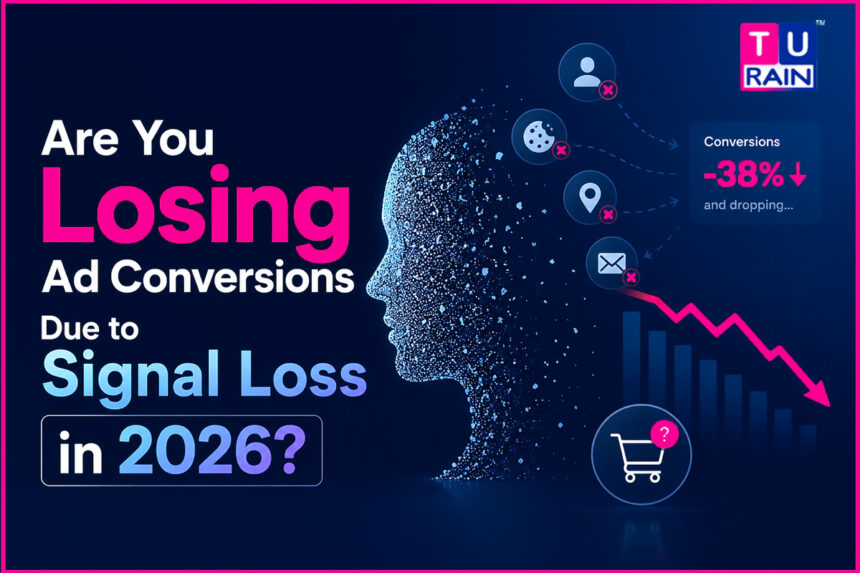
Have you ever opened Meta Ads or Google Ads reports and felt a shock, right at the start of your day? The platform shows one number, and yet Shopify shows another. The gap feels like money vanishing, which is why it triggers panic so quickly. That gap is often a signal loss, and once it starts, it rarely fixes itself.
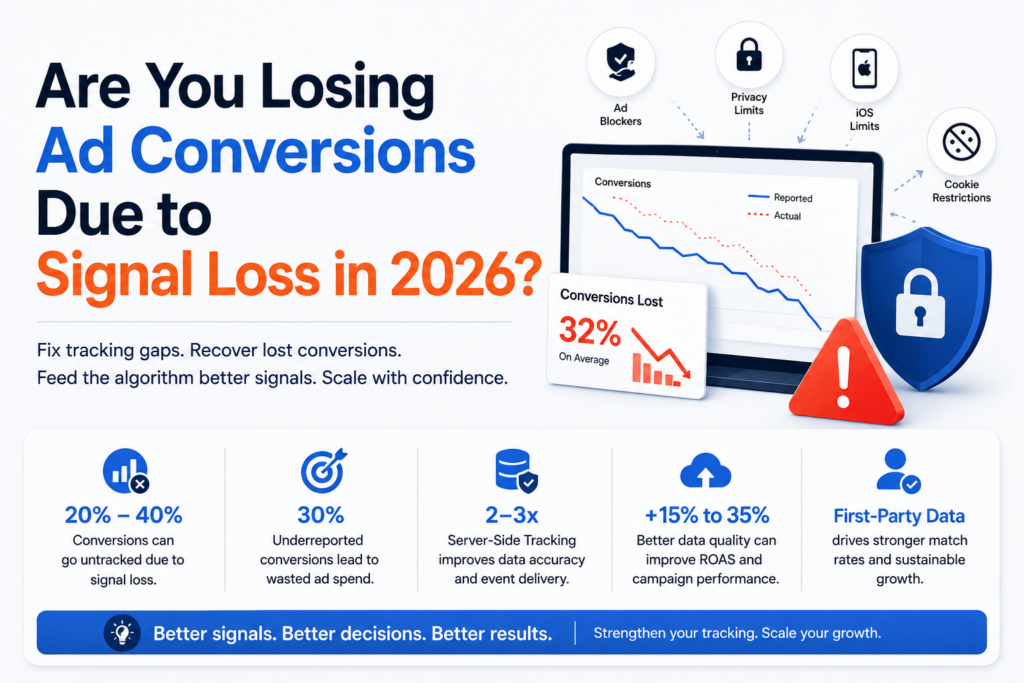
Signal loss happens when the platforms fail to “see” conversions, even while real buyers keep purchasing. It is not always your fault, because the environment has changed.
-
- Ad blockers stop browser requests, so events never reach the platforms.
-
- Privacy prompts reduce tracking permission, and therefore, signals get limited.
-
- iOS tracking limits cut many paths, which is why attribution looks weaker.
-
- Cookie restrictions shorten attribution windows, so journeys break mid-way.
So the classic browser pixel becomes fragile, and because of that, it drops events. It misses purchases, and then it undercounts leads. Then the algorithm learns the wrong lesson, which makes optimization drift. And when the algorithm learns the wrong lesson, it spends worse, even if your ads look fine on the surface.
This is why many brands shift to Server-Side Tracking or Server-Side Tagging, especially when scaling matters. They also push events through Conversions API (CAPI), so delivery becomes steadier. And they build a stronger First-Party Data Strategy, because first-party signals are now the real asset. The goal is simple, but also urgent. Restore measurement, so reporting matches reality. Feed the algorithm better signals, and then scale with fewer blind spots.
What Exactly Is Server-Side Tracking and First-Party Data?
Think of this as a structural upgrade, not just a tiny tweak. Not a tiny tweak, because the entire flow changes.
With browser tracking, the visitor’s browser sends most signals, and that is the old default. That browser is the weak link, which is why it fails so often. It is blocked, and so it cannot send events reliably. It is restricted, and therefore it loses data. It is inconsistent, which then causes reporting gaps.
With Server-Side Tracking or Server-Side Tagging, the flow changes, and the change is meaningful. Your website still creates events, but now the delivery becomes more controlled. Your server receives the event first, and then it forwards it to the ad platforms.
That forwarded payload is powered by your First-Party Data Strategy, which means the inputs come directly from you. This means data you collect directly, and because of that, you can govern it better. You control how it is captured, so rules stay consistent. You control how it is stored, and then you can manage retention responsibly. You control how it is shared, which helps reduce unnecessary exposure.
Then comes the bridge to platforms, and this bridge matters. That bridge is often the Conversions API (CAPI), so the server can talk to platforms directly.
In simple terms, to keep it crystal clear:
-
- Browser pixel = event tries to reach Meta/Google from the browser, but the browser can fail.
-
- Server-Side Tracking or Server-Side Tagging = event reaches your server first, so you can control routing.
-
- Conversions API (CAPI) = your server sends the event to the ad platform, which improves delivery consistency.
-
- First-Party Data Strategy = the clean input that improves match quality, and therefore improves learning.
You are not “owning everything” in a magical way, but still, you gain real control. But you are gaining stronger control over collection and routing, and that is the practical win. That is the real win, because reliability is now the currency.
Why Do Server-Side Tracking and First-Party Data Matter So Much Now?
Post-signal-loss measurement matters because it affects two things, and both are expensive when ignored. Compliance and ROAS, so you feel it legally and financially.
How it helps users
It can make browsing lighter and safer when done right, which is why it also improves the experience.
-
- Fewer heavy scripts running in the browser, so pages feel less cluttered.
-
- Cleaner pages with less third-party noise, and therefore fewer surprises.
-
- Better performance opportunities through smarter tagging decisions, which then support trust.
Real-world importance
Ad platforms run on feedback loops, and that is non-negotiable. They need confirmed outcomes, so they can optimize with confidence.
When you use Server-Side Tracking or Server-Side Tagging with Conversions API (CAPI), you can often send more consistent purchase and lead events, which means the platform sees more truth. Then optimization gets better, and then bids become smarter. Audience building improves, so targeting becomes cleaner. Retargeting becomes smarter, and because of that, wasted spend drops.
Industry impact
Regulators are stricter, and this trend is not slowing. Consent expectations are higher, so transparency matters more. Data handling is under a microscope, which is why governance is now strategic.
A First-Party Data Strategy can support privacy-by-design because you can minimize what flows out. It can help you minimize what you share and then reduce risk. It can also help you enforce consent rules, so your system respects choices. But it is not an automatic compliance shield, which is important to state clearly. Implementation still matters because policy and reality must match.
How Does Server-Side Tracking Actually Work?
If you peel the layers back, the logic is clear, and once you see it, it makes sense. The server becomes the gatekeeper, so the rules live in one place.
Step 1: The Initial Trigger
A user clicks an ad, and then they browse. They take an action, which creates an event.
Examples, just to anchor it:
-
- Submit lead
-
- View content
-
- Add to cart
-
- Begin checkout
-
- Purchase
Step 2: The First-Party Data Catch
Instead of relying only on a browser pixel, the site sends the event to your server endpoint, so delivery does not depend on the browser alone.
This is where Server-Side Tracking or Server-Side Tagging starts to shine, because the event hits the infrastructure you manage. The event hits the infrastructure you manage, and therefore, you can standardize the pipeline.
Step 3: Scrubbing and Anonymization
Now your server decides what to pass on, which is why this step is powerful.
-
- Remove fields you do not need, so data stays minimal.
-
- Avoid sending sensitive details, and therefore reduce exposure.
-
- Hash identifiers were required, so matching can still happen responsibly.
-
- Respect the consent state from your banner, because the user’s choice comes first.
This step supports your First-Party Data Strategy, since governance becomes practical. It helps reduce unnecessary exposure, and then it improves control. It also helps keep rules consistent, so your setup does not drift.
Step 4: The Conversions API Dispatch
Finally, the server sends the formatted event to the platforms through Conversions API (CAPI) (or equivalent server endpoints), so the platform receives a cleaner signal.
This direct server-to-server dispatch is usually more stable than browser-only delivery, which is why brands adopt it. Not perfect, but still stronger. Not unstoppable, yet often far more consistent.
What Are the Key Features of a Server-Side Tracking Setup?
If you want to fight signal loss, you want resilience, and that means better architecture. You want control, so rules stay centralized. You want better delivery, because optimization depends on it.
1) Stronger cookie and identifier control
When cookies are first-party and set correctly, they can be more durable than third-party approaches, although modern limits still exist. Still, modern browsers can apply limits in several scenarios, so you must be realistic. So the goal is not “unbreakable,” but rather “more reliable than pixel-only.” The goal is “more reliable than pixel-only,” because that alone can lift attribution stability.
2) Better resistance against many blockers
Requests that originate from your own domain can pass more often than requests to known tracking domains, which is helpful. But some blockers and privacy tools can still interfere, so it is not guaranteed. So this is improved resilience, not guaranteed immunity, and that nuance matters.
3) Faster pages when implemented thoughtfully
Removing or reducing heavy scripts can improve load performance, and that supports experience. That can support SEO, and then it supports discoverability. It can also lower bounce rates, so traffic becomes more valuable.
4) Cleaner governance
With Server-Side Tracking or Server-Side Tagging, you can centralize rules, which reduces chaos.
-
- One place to control what gets sent, so payloads stay consistent.
-
- One place to enforce consent choices, because consent must be honored.
-
- One place to standardize event naming, so reporting stays clean.
-
- One place to manage data minimization, and therefore lower risk.
This is where a First-Party Data Strategy becomes practical, not theoretical. This is where it becomes practical, because you can actually operate it daily.
Who Needs to Implement First-Party Data Tracking?
This is no longer only for big brands, and that is the shift. The need scales with ad spend and attribution pain, so even smaller brands feel it.
Beginners
Early-stage brands can burn budget fast if optimization is blind, which is why early setup matters.
-
- Learning phase becomes unstable, so the results swing.
-
- Retargeting gets messy, and then frequency rises.
-
- CPA rises before you even understand why, which feels brutal.
Starting with Server-Side Tracking or Server-Side Tagging can reduce that chaos, so learning improves. Pair it with Conversions API (CAPI) early, because consistency helps training. Build your First-Party Data Strategy from day one, so you are not rebuilding later.
Professionals
Freelancers and media buyers face the same client complaint, and it never ends.
“Your ads show less than my store,” which creates distrust.
A better event pipeline helps explain performance with more confidence, so conversations get easier. It also improves optimization signals, and then results often stabilize.
Businesses
E-commerce, B2B, and local services all suffer from missing events, but in different ways.
-
- E-commerce needs purchase integrity, so ROAS is real.
-
- B2B needs lead quality + offline mapping, because revenue closes later.
-
- Local services need booking confirmation with privacy controls, so tracking stays safe.
Agencies and Innovators
Teams like the growth experts at Turain often build resilient pipelines because their clients need scale. They rely on Server-Side Tracking or Server-Side Tagging, Conversions API (CAPI), and a structured First-Party Data Strategy to reduce algorithm blind spots and therefore protect performance.
What Are Some Practical Use Cases of Server-Side Measurement?
Owning the pipeline changes outcomes, and you can see it in daily reporting. Here is how it looks in real scenarios, so the value feels tangible.
Example 1: Rescuing E-commerce ROAS
A boutique brand sees Meta performance drop, even while sales continue. Purchases are happening, but reporting is not.
They implement Server-Side Tracking or Server-Side Tagging, so events arrive more consistently. They send key events via Conversions API (CAPI), which helps platform learning. They tighten their First-Party Data Strategy around checkout events, so match quality improves.
Result: more purchases are captured, and then attribution improves. Optimization improves, so bidding becomes less noisy. Campaigns regain profitability, even though recovery levels vary.
Example 2: Connecting B2B Offline Sales
A lead comes in today, and then the deal closes weeks later. The deal closes weeks later on a call, which breaks classic pixel credit.
Server-side setups can connect systems like CRM and backend records, so the journey stays linked. Then the final outcome can be sent back as an offline conversion event using Conversions API (CAPI), which restores credit.
This ties revenue to the true source and therefore helps with budget decisions. It also cleans up bidding decisions, so the platform stops chasing low-value leads.
Example 3: Securing Healthcare Data
A clinic tracks appointment requests, but privacy is critical. Privacy is critical, so the pipeline must be strict.
With Server-Side Tracking or Server-Side Tagging, the clinic can design a tighter flow, which reduces exposure. It can avoid sending patient identifiers, so sensitive data stays internal. It can send only a minimal “booking completed” event, and therefore support a safer First-Party Data Strategy.
Important note: “safer” is not the same as “automatically compliant,” so do not overclaim. Healthcare compliance depends on your full setup, vendor agreements, and what data is transmitted, which is why professional guidance matters.
What Are the Limitations of Server-Side Tracking Systems?
This is the modern standard, but it is not magic. You still need to know the limits, so expectations stay realistic.
Where it struggles
Server-side does not override user choice, because consent rules still apply.
If a user declines tracking through your consent banner, a compliant setup must respect that choice, and therefore, events may be limited. That means the event may be dropped or reduced, so you must plan for modeled gaps.
Set-up complexity and costs
This is not a copy-paste pixel job, so budgeting matters.
You may need:
-
- Cloud hosting, so the container can run
-
- DNS and subdomain routing, because endpoints must resolve
-
- Server container configuration, so events map correctly
-
- Event mapping and deduplication logic, and therefore reporting stays clean
-
- Ongoing maintenance and monitoring, so it does not silently break
That is why many brands partner with specialists, because the setup is technical. Or agencies that build and manage it, so marketing teams stay focused.
Situations where it is not ideal
If you run a hobby blog with no paid media and minimal measurement needs, the complexity may not be worth it, so keep it simple.
What Will Post-Signal Loss Measurement Look Like in the Future?
Tracking is shifting, and that shift is permanent. Perfect 1-to-1 visibility is fading, so expectations must change. Predictive measurement is rising, which is why first-party inputs matter more.
What experts predict
Browser-only pixels will keep losing reliability, so hybrid measurement will dominate.
First-Party Data Strategy becomes the long-term asset, and therefore the competitive edge
-
- Pixel still matters for some browser signals, so it won’t vanish overnight
-
- Server-Side Tracking or Server-Side Tagging becomes the stability layer, because delivery is steadier
-
- Conversions API (CAPI) becomes the delivery baseline, so platforms receive core events
-
- First-Party Data Strategy becomes the long-term asset, and therefore the competitive edge
How the technology will evolve
Platforms will blend what they can confirm with modeled results, so gaps get estimated. Aggregation will increase, and privacy thresholds will tighten. MMM and incrementality will become more normal in planning, because direct tracking is less complete.
Why you should pay attention
If you rely only on client-side pixels, the account can slowly starve, and then performance slips. Optimization weakens, so bids get noisier. Reporting becomes less trustworthy, which makes decisions harder. Costs rise, and scaling becomes painful.
What Is the Final Takeaway for Your Data Strategy?
The easy era of plug-and-play tracking is ending, but your growth does not have to end with it.
When you move to Server-Side Tracking or Server-Side Tagging, you reduce reliance on fragile browser delivery, so signals arrive more consistently. When you use Conversions API (CAPI), you send cleaner confirmation signals, which improve platform learning. When you invest in a First-Party Data Strategy, you build a measurement foundation you can improve over time, and that makes future upgrades easier.
Yes, there is a learning curve, but it is manageable. Yes, there is setup work, and yet the payoff is real:
-
- Better event capture consistency, so dashboards match reality
-
- Better optimization inputs for platforms, and therefore lower wasted spend
-
- Better governance and data control, which support privacy-by-design
-
- Better readiness for privacy-first changes, so you don’t scramble later
If you are tired of wasted spend and broken dashboards, a future-proof pipeline is the move, and it is worth prioritizing. And if you want it done fast and correctly, leaning on specialized partners like Turain can help you step into this new era with confidence, while keeping your measurement resilient.
(References)
-
- Meta for Business, “About Conversions API and Server-Side Tracking”
-
- Google Developers Blog, “Understanding Server-Side Tagging in Google Tag Manager”
-
- Search Engine Land, “How to Navigate Signal Loss and the Cookieless Future in 2026”
-
- Usercentrics, “5 Key Benefits of Server-Side Tracking Marketers Should Know”
Disclaimer:
This blog is intended for general informational purposes only. It is not professional advice.

All numbers, names, examples, and metrics used here are approximate. They are used only for explanation.

They may not match real-world data. They may not reflect any actual business, person, or platform results. Any similarity to real events or outcomes is purely coincidental.

No claim, guarantee, or promise is made in this blog.

Results can vary widely based on setup, consent, traffic, platform rules, and many other factors.

Please consult qualified legal, analytics, or advertising professionals before making decisions.