It’s 2026, and GSMA Open Gateway lets applications interact with telecom networks in smarter, deeper, more seamless ways than ever before. If you’re a product manager or developer in fintech, e-commerce, or SaaS, you’ve battled One-Time Passwords (OTPs) up close—they’re clunky, hit by maddening delays from network glitches and carrier queues, and wide open to phishing attacks that snatch codes mid-flight. Users tap phones endlessly in frustration as texts fail to arrive, while hackers exploit these gaps to drain accounts and steal identities. This outdated flow destroys trust, drives up drop-offs in logins and sign-ups, and gives fraudsters easy victories. In today’s world of instant, ironclad security needs, the OTP era feels like a dusty relic blocking the frictionless experiences everyone demands.
- What Are Network APIs (GSMA Open Gateway)?
- Why Does This Matter for You?
- How Does Number Verification API Work? (OTP Alternative)
- How Does SIM Swap API Work? (The Fraud Stopper)
- Key Features of Open Gateway APIs
- Who Should Use Network APIs?
- Practical Use Cases: Implementing via Turain
- Limitations of Network APIs
- Future Outlook: The Programmable Network
- Addressing Vulnerabilities and Remaining Flaws
- Conclusion
Enter GSMA Open Gateway and CAMARA APIs.
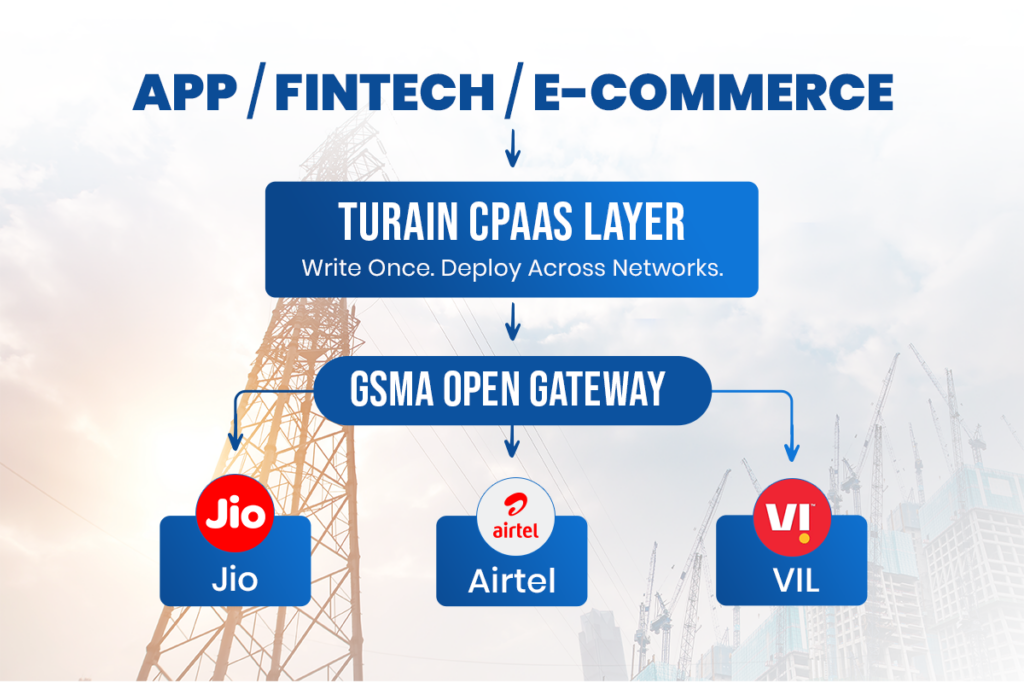
This is not just another tech buzzword trend; rather, it is a standardized framework that allows developers to access telco network capabilities via simple APIs, across major carriers. Whether your user is on Jio, Airtel, or Vodafone in India, the code remains largely the same.
For CPaaS (Communications Platform as a Service) providers like Turain, this is a game-changer. We are moving from “sending messages” to “verifying identities” instantly, silently, and securely.
In this guide, we will explore how Open Gateway Network APIs—specifically Number Verification API and SIM Swap API—are reducing OTP reliance, preventing fraud before it happens, and creating a smoother, safer user experience in 2026.
What Are Network APIs (GSMA Open Gateway)?
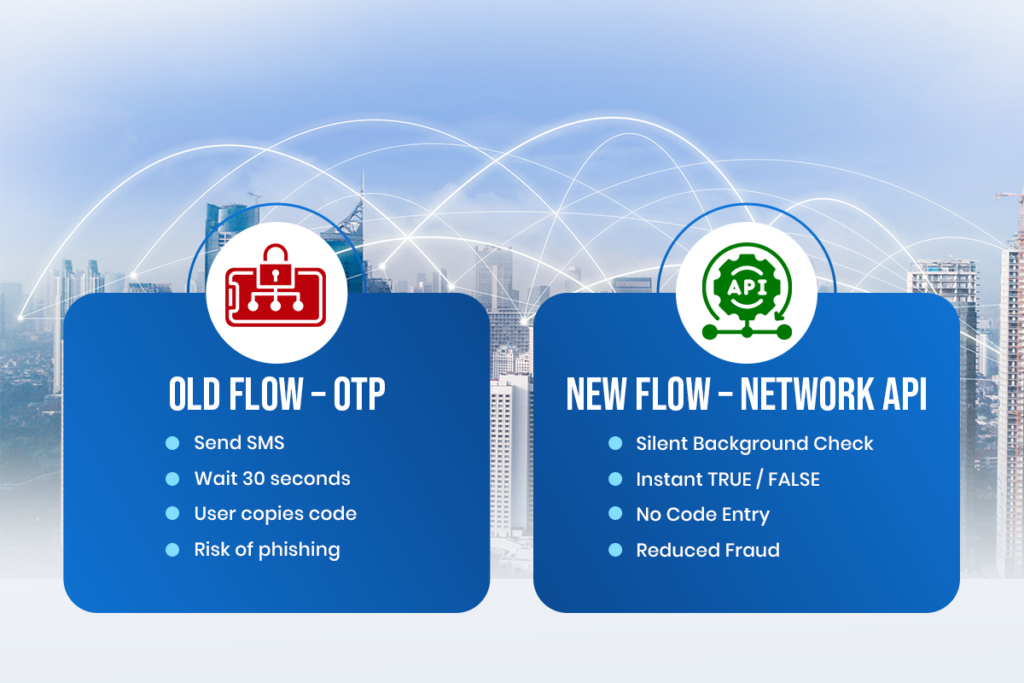
Think of the telecom network as a locked black box; for decades, only the operators (Telcos) had the keys. They knew where a user was, if their SIM changed, or if they were on a call, while developers had zero access.
GSMA Open Gateway unlocked this box because it is a global initiative designed to expose these network capabilities through standardized, easy-to-use APIs called CAMARA APIs.
- Before: You sent an SMS and hoped it arrived, but you had no clue if the user’s SIM was hijacked 5 minutes ago.
- Now (2026): You can ask the network directly via GSMA Open Gateway.
- “Is this transaction coming from the owner’s device?” (Number Verification API)
- “Has this SIM card been swapped recently?” (SIM Swap API)
- “Where is this device located?” (Device Location)
Why Does This Matter for You?
If you are building an app in 2026, you know that security and user experience (UX) are often at war. High security usually means bad UX (captchas, long OTPs), but GSMA Open Gateway Network APIs help resolve this conflict.
-
- For Fintech: It stops “Account Takeover” attacks more effectively because if a hacker swaps a victim’s SIM to steal OTPs, the SIM Swap API flags it instantly.
- For E-commerce: It enables “Silent Authentication” so users log in with their phone number without entering an OTP, as the network verifies them in the background using the Number Verification API.
For Developers: It is “Write Once, Deploy Across Major Networks”, meaning you integrate one API via Turain through GSMA Open Gateway, and it works across many major telecom networks where available.
How Does Number Verification API Work? (OTP Alternative)
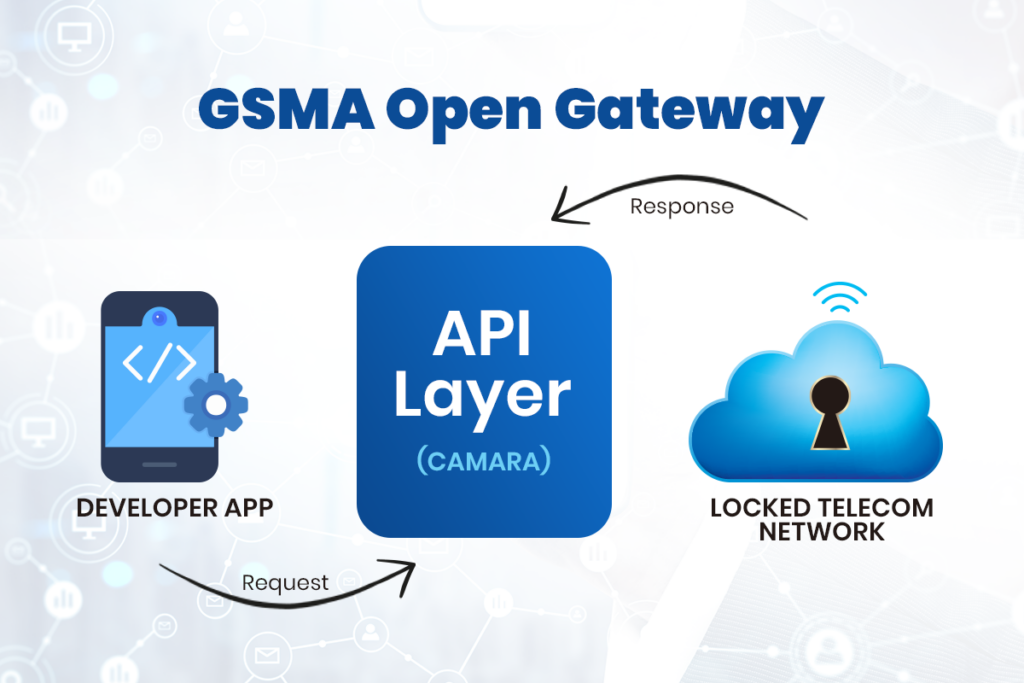
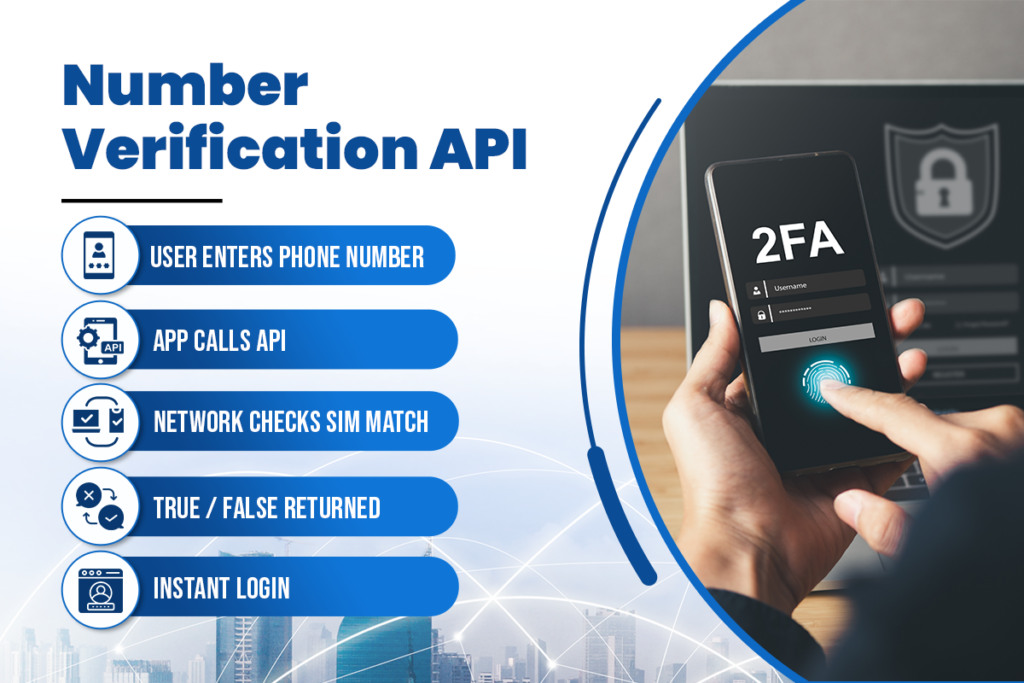
Forget waiting 30 seconds for an SMS, because the Number Verification API validates a user’s identity using their active mobile data connection.
-
- User Action: A user enters their phone number to log in to your app.
- Background Check: Your app calls the Number Verification API via Turain immediately.
- Network Confirmation: The telecom operator checks: “Is the data traffic for this session coming from the SIM card associated with this phone number?”
- Result: The operator returns TRUE or FALSE.
- Access Granted: If true, the user is logged in instantly: No SMS, no copying codes.
Benefit: Minimal friction means sharply reduced phishing risk (because you can’t phish a silent background check via GSMA Open Gateway).
How Does SIM Swap API Work? (The Fraud Stopper)
SIM Swap fraud is when a hacker tricks a carrier into transferring a victim’s number to a new SIM card, allowing them to intercept banking OTPs.
The SIM Swap API is your shield against this specific threat.
-
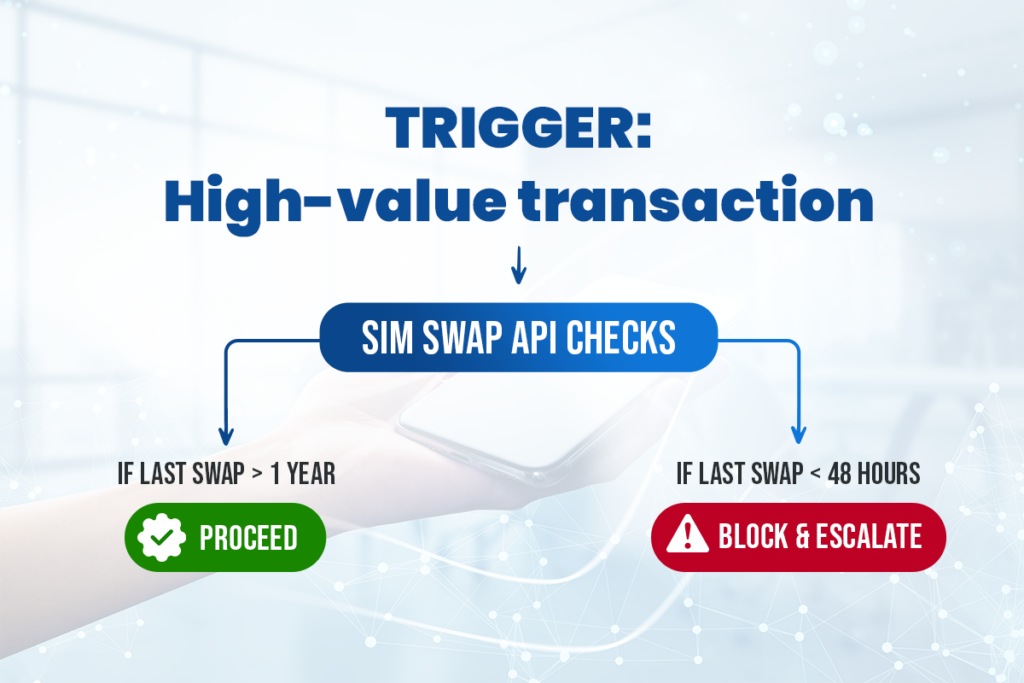
- Trigger: A user attempts a high-value transaction (e.g., transfer ₹50,000).
- API Call: Before sending the OTP, your system asks the network: “When was the last time this SIM was swapped?” using the SIM Swap API.
The Response:
-
- Scenario A: “Last swap: 4 years ago.” -> Safe. Proceed with OTP.
- Scenario B: “Last swap: 2 hours ago.” -> RISK! Block the OTP immediately and ask for email verification or biometric ID.
Benefit: You stop the fraudster before they can even receive the OTP, powered by GSMA Open Gateway
Key Features of Open Gateway APIs
-
- Universal Standard (CAMARA): Code structure remains identical via GSMA Open Gateway, whether querying Telefónica in Spain or Jio in India.
- Privacy-First: Apps see no raw network data—just “Yes/No” or timestamps from Number Verification API or SIM Swap API—keeping user privacy intact.
- Real-Time: Checks complete in milliseconds with zero latency drag on app performance.
- Consent-Based: Sensitive queries like location require explicit user permission for full privacy law compliance.
Who Should Use Network APIs?
-
- Banks & Wallets: Essential for transaction security in 2026 with SIM Swap API.
- Gig Economy Apps: To verify that the rider/driver account hasn’t been sold or hijacked using the Number Verification API.
- Social Networks: To prevent bot accounts and verify real human users silently.
- Healthcare: To secure patient login without complex passwords for elderly users.
Practical Use Cases: Implementing via Turain
Integrating these APIs is simpler than you think because you don’t need direct deals with 100 telcos. Turain’s CPaaS layer aggregates them for you seamlessly through GSMA Open Gateway.
Scenario 1: Frictionless Sign-Up
-
- Goal: Increase user registration conversion.
- Solution: Replace SMS verification with Number Verification API.
- Result: Significant drop-off reductions, like from 20% to under 5%, so users sign up in one click.
Scenario 2: The “Suspicious Login” Alert
-
- Goal: Protect user accounts.
- Solution: When a user logs in from a new device, call the SIM Swap API.
- Logic: If SimSwapDate < 48 hours, trigger facial recognition; Else, allow login.
Limitations of Network APIs
While powerful, they are not magic wands.
While powerful, the Number Verification API and SIM Swap API aren’t magic wands.
-
- Mobile Data Required: Number Verification API thrives on 4G/5G mobile data. Wi-Fi complicates flows with extra redirects.
- Cost: Each GSMA Open Gateway API call is billed separately and costs more than SMS. Yet fraud savings make it worthwhile.
- Coverage: Major operators support them live now. Smaller regional carriers still catch up through 2026.
Future Outlook: The Programmable Network
We are just scratching the surface, and in late 2026, expect:
-
- Quality on Demand (QoD): Apps will ask the network for “Boosted Speed” for a video call or gaming session via API.
- Device Status: Check if a device is roaming or in a “Do Not Disturb” mode before calling.
Anti-Fraud Federation: Shared fraud signals across banks and telcos via these GSMA Open Gateway APIs, like the SIM Swap API.
Addressing Vulnerabilities and Remaining Flaws
Even with GSMA Open Gateway powering Number Verification API and SIM Swap API, no system stands bulletproof. Hackers adapt quickly, leaving gaps in 2026’s digital fraud landscape.
-
- Wi-Fi Blind Spots: Number Verification API excels on 4G/5G. Yet Wi-Fi users hit fallbacks like redirects or OTPs, adding friction while reopening phishing risks.
- Coverage Gaps: Smaller carriers trail GSMA Open Gateway This strands rural or niche users on vulnerable legacy flows open to SIM hijacks.
- Social Engineering Wins: SIM Swap API catches recent changes. But hackers who engineer porting ahead slip past undetected.
- Cost vs. Scale Tradeoff: API calls outprice SMS blasts. High-volume apps must weigh fraud savings against real budget pressures.
- Fallback Fatigue: Rare network glitches drop APIs. OTPs rush back in, reviving the exact flaws GSMA Open Gateway
Turain Tip: Layer biometrics and device fingerprinting on top. A single API neutralizes 80% of threats. Stacking seals the rest.
Conclusion
The “dumb pipe” era of telecom is over, meaning the network is now programmable, intelligent, and accessible. For businesses, GSMA Open Gateway serves as the bridge to a safer, faster digital future. By integrating Number Verification API and SIM Swap API, you’re not just upgrading your tech stack—you’re elevating trust itself. Ditch 30-year-old SMS for security. Switch to Network APIs via Turain instead. Build the fraud-proof experiences your customers truly deserve.
Disclaimer:
All numbers, dates, percentages, and timelines here—like 20% drop-offs, 48-hour thresholds, or late-2026 rollouts—are approximations drawn from industry examples. They're never exact guarantees.
Always verify with official GSMA Open Gateway, carrier, and Turain documentation for precise specs, pricing, coverage, and compliance. No performance, availability, or results are promised. Test thoroughly in sandbox environments. Confirm live for your setup. Results vary by use case. Your mileage may differ.