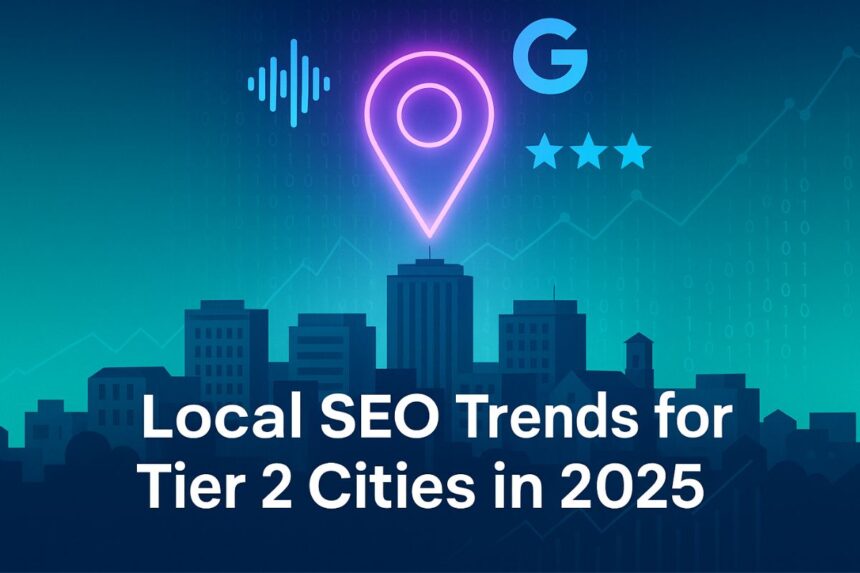
In 2025, Tier-2 cities represent unique environments of low competition and high intent, where local SEO in Tier-2 cities will become a success. Searching customers have intentions and seek nearby solutions that they can rely upon and take action. Consider hyper-local content, make sure it is voice search optimized according to Tier‑2 cities, and your Google Business Profile is rich and active. Provide regular, top-quality local citations, and responsibly handle reviews with local review management, and watch yourself shoot up the search rankings and maps. It is not merely the ranking, but it is also trust and recognition within your community. Be present on platforms, and bridge where and when customers search, prefer, and purchase.
- Why Local SEO in Tier‑2 Cities Is Unique
- What Challenges Do Small‑City Businesses Face?
- Which Opportunities Exist in Less‑Competitive Markets?
- How to Create Hyper‑Local Content That Ranks
- How to Leverage User‑Generated Content & Reviews
- How to Optimize for Voice Search in Tier‑2 Markets
- How to Master Your Google Business Profile (GBP)
- What Are Quality Local Citations—and How Do You Build Them?
- How to Track & Measure Your Local SEO Success
- Which Metrics Matter Most: Visibility, Clicks, Calls & Directions
- Which Tools to Use: GSC, Local Rank Trackers & Analytics
- Conclusion & Next Steps
Why Local SEO in Tier‑2 Cities Is Unique
Local SEO in tier‑2 cities is a whole new game; it’s not just a smaller version of big-city strategies. People who look for you here usually have a specific and urgent need, so they are ready to do something right away. There aren’t as many people in the field, so early adopters can get a lot of attention that lasts for years. If you’re thinking about getting this done, that means you need not only to learn the facts but also to get a sense of how business is done in the area with local SEO tier‑2 cities.
What Challenges Do Small‑City Businesses Face?
There aren’t many ways to learn about things because the community doesn’t have a lot of digital presence. It’s not just about the numbers; it’s also about making a good first impression online, which is sometimes the only one that matters in tier‑2 cities. It’s harder to build authority when backlink ecosystems are weak. Your own site has to do more work if there aren’t any active bloggers or regional media. Tools like online booking may not catch on as quickly if people don’t use technology as much. Education is a part of your marketing in local SEO tier‑2 cities. If you don’t have a lot of money, you need to be more careful about how you spend it. It should feel like you have to do every action, not like you are just doing it for show in local SEO tier‑2 cities.
Which Opportunities Exist in Less‑Competitive Markets?
It’s easier to get high keyword rankings in smaller markets, so even basic local SEO in tier‑2 cities can help you get to the top. This is the simple thing that other people forget for readers. When there aren’t many articles about hyper-local topics, it’s easier to stand out. If no one else is writing about the fair in town, your post will be the first place people look with local SEO in tier‑2 cities. In 2025, “near me” search trends 2025 will be the most popular search term for micro-location if one page is well-optimized. Your profile has more room to stand out in GBP visibility because fewer businesses are actively optimizing local SEO in tier‑2 cities.
How to Create Hyper‑Local Content That Ranks
Tier-2 cities can use hyper‑local SEO strategies that are based on how people in those areas talk about their surroundings. It seems like a general keyword doesn’t exist, but when you say a street name, it feels like it does. Being a part of the place you work is more than just knowing how to use algorithms in local SEO tier‑2 cities.
How to Build Neighborhood‑Specific Landing Pages
Make a separate page for each service area, and give each one its own look and feel. Include the streets people know, the schools their kids go to, and the café where meetings are held. Include reviews from people who live there; real voices make your claims more believable. People will trust you right away if you show them pictures of your work in places they know in local SEO tier‑2 cities.
Targeting Local Landmarks & Events
Talk about things that matter to people in the area, like parades, markets, and festivals. When a restaurant promotes “Best Lunch Near Nehru Park” during a festival, it doesn’t just follow a trend; it becomes part of the story of the event with local SEO in tier‑2 cities.
Incorporating Micro‑Local Keywords
When you type in “grocery delivery near Hong Kong Market,” you tell the search engine where you are and what you want. These keywords aren’t very interesting, but they are exact, and people click on things that are exact in local SEO tier‑2 cities.
How to Leverage User‑Generated Content & Reviews
User-generated content works because people trust people who are like them. Every real review and every picture of a customer you get will help you reach more people with local SEO in tier‑2 cities.
Encouraging Authentic Local Reviews
Instead of giving people money to get feedback, give them small hints. A request made right after a service is over can seem natural and not forced. When you say that reviews help “local shoppers find us,” you turn a private act into a public one in local SEO tier‑2 cities.
Responding to Feedback to Build Trust
When you respond to reviews, even bad ones, it shows that you care. If you respond to a bad comment in a calm, human way, you can turn your critics into fans. The silent majority cares about that visible care just as much as the reviewer does in local SEO tier‑2 cities.
How to Optimize for Voice Search in Tier‑2 Markets
People search for things differently when they speak than when they type, which is important for voice search optimization in Tier‑2 cities. Spoken questions are usually longer, friendlier, and more specific to a place in local SEO tier‑2 cities.
How to Conduct Conversational Keyword Research
Start with the things people ask you when they talk to you. It can also help to listen to people at your store, on local social media, and in community groups. Get phrases that sound like things you’ve heard before in local SEO.
Mapping “Near Me” & Question‑Style Queries
Sort these into groups based on what they clearly want. “Where’s the best optician near me?” and “How late is the pharmacy open on Sundays?” are two of them. Mapping keeps your content from going all over the place with small city SEO best practices.
How to Implement FAQ & Local Business Schema
Schema is very interesting, and it’s an important part of your website that helps search engines find your content when they need it in local SEO tier‑2 cities.
-
- Claim your Google Business Profile without delay. This first step is essential to own your local search narrative. Unclaimed listings are open to inaccuracies or even hijacking. Securing your profile means controlling what potential customers see and sets the stage for all further optimization.
- Choose categories with intention, not convenience. Your primary category defines your core identity in Google’s eyes. Secondary categories can widen reach, but only if they align meaningfully. Misaligned categories confuse both algorithms and customers, diluting your message and impact. Precision here sharpens relevance.
- Ensure every detail matches across all platforms. Consistency of your name, address, phone number (NAP), hours, and website builds search engine trust. Discrepancies create doubt, both for Google and for your customers. A seamless digital footprint feels professional and reliable, turning curiosity into action.
- Complete verification thoughtfully, selecting the fastest reliable method. Whether by postcard, phone, email, or instant approval, verification proves your legitimacy. This isn’t bureaucratic busywork; it’s the foundation of trust that unlocks full GBP functionality and search visibility.
- Maintain your profile with fresh content and active engagement. Regularly update photos, post timely offers, and respond to reviews and questions. An active profile signals to Google that your business is alive and attentive. This human connection, visible to prospects, turns clicks into visits, and visits into loyalty.
Using FAQ Markup for Instant Answers
If your FAQ section is easy to find, your answer will show up right away in voice search results. You could think of it as getting your best soundbite ready for Google to use with local SEO.
Applying LocalBusiness Schema to Boost Visibility
When you include all of your NAP information, service area, and hours, Google knows for sure what your business is. Certainty leads to more trust and more placements with local business listings.
How to Master Your Google Business Profile (GBP)
Your Google My Business profile could be the most visible digital thing you own. It often comes up before your website in local searches. Treat it like it’s your own store in local SEO tier‑2 cities.
How to Set Up & Verify Your GBP
Claiming your profile is not optional; it’s the least you can do. Choose the fastest way to check, and make sure that every piece of information matches your citations exactly. But any difference, no matter how small, makes the signal weaker with Google Business Profile.
-
- Identify the questions your customers ask most often. This anticipates how people speak when using voice search, which is naturally conversational and specific. Crafting these FAQs thoughtfully gives your business a chance to answer instantly, reducing friction and building trust. When a user finds a clear, direct response, they stay longer and feel understood.
- Write answers that are simple yet precise. Avoid jargon and fluff; your goal is clarity, not complexity. Clear answers increase the chance Google will feature your content as a rich snippet or voice response, placing you front and center in search results. The value lies in being the go-to source for quick, reliable information.
- Use structured data markup to signal search engines. Adding FAQ schema isn’t just technical decoration; it’s a way to speak Google’s language. Tools like Google’s Rich Results Test verify your code and ensure your content is eligible for enhanced displays. This behind-the-scenes work amplifies your visibility without extra ad spend.
- Apply the Local Business schema comprehensively. Include vital business details—name, address, phone number, hours, and service areas—to provide Google with a complete picture. This foundation bolsters your search presence, especially in local queries. Precise markup gives search engines confidence to promote your business in maps and localized results.
- Regularly audit and validate your markup. Errors creep in as websites evolve. A single mistake can cost you rich snippet placement or reduce voice search accuracy. Maintaining schema quality ensures your investment in content and SEO pays off consistently over time. It’s a quiet safeguard for your digital reputation.
Choosing the Right Categories & Services
The searches that bring you up the most are in your main category. Secondary categories can help you reach more people, but you have to be very careful when you pick them. Putting in too much stuffing can make things less important in local SEO tier‑2 cities.
How to Use GBP Posts, Q&A & Attributes Effectively
GBP isn’t fixed; it gives people rewards for using it. Adding new content keeps it alive in the algorithm and in people’s minds with Google My Business.
Publishing Offers & Event Updates
Use posts to tell people about deals that are only good for a short time or that you’ll be at events in your area. A short, interesting post can get clicks from both regular customers and people who are just interested in local SEO in tier‑2 cities.
Managing Customer Questions & Reviews
The Q&A section is where people can get the information they need. If you don’t answer questions, you lose control of the story. Check in and respond often, and keep the tone steady and professional with local review management.
What Are Quality Local Citations—and How Do You Build Them?
Citations are like proof that you are real, but only if they are correct and trustworthy. In 2025, having a few strong local citations quality is better than having a lot of weak ones.
How to Identify High‑Authority Directories
Choose platforms that are known to work well in your field or area. Google knows that other people trust you when you have high-authority listings. If they are low quality, they can make the signal less clear with the local citations’ quality.
Industry‑Specific vs. General Listings
Specific sites, like a hospitality directory for hotels, have more information than general listings. General directories get to more people, but they have to compete with entries that are less specific in local business listings.
Ensuring NAP Consistency Across Platforms
You can easily use consistency as a trust factor. Search engines don’t want to show you if your phone number is wrong in one place with local SEO in tier‑2 cities.
Tools for Monitoring Your Citations
You can save hours of work with tools like Ubersuggest and Semrush. They find mistakes that you might not notice in local SEO tier‑2 cities.
Fixing Inaccurate or Duplicate Listings
When there are duplicates, they share authority, which makes both entries less powerful. Taking them away makes you stand out more and keeps customers from getting lost with local citations.
How to Track & Measure Your Local SEO Success
You can’t tell if things are getting better if you don’t measure them. Tracking shows what is working and where you need to work harder in local SEO tier‑2 cities.
Which Metrics Matter Most: Visibility, Clicks, Calls & Directions
Map: You can tell if your local presence is working by looking at the number of pack positions, clicks to call, and requests for directions. Traffic that doesn’t go anywhere is noise; action that shows something is important with mobile‑first indexing.
Which Tools to Use: GSC, Local Rank Trackers & Analytics
GSC tells you how often you show up and what searches you do. Rank trackers let you know exactly where you are in local search results. Analytics can show you whether the people who visit your site are customers or just people who are browsing in local SEO tier‑2 cities.
Conclusion & Next Steps
Key Takeaways for Tier‑2 City SEO in 2025
Final Thoughts and What to Do Next: Things You Should Know About local SEO tier‑2 cities in 2025. Hyper‑local SEO strategies and micro-local keywords can help you get into places that broad strategies can’t. Voice search optimization in Tier‑2 cities makes it easier for people to find what they want by speaking instead of typing. You are credible if you have a strong GBP presence and trustworthy local citations quality.
Ready to Dominate Local Search? Book Your 30‑Min Audit.
Want to be the king of local search? Set up a time for your 30-minute audit with us. Before competition gets tougher, tier-2 businesses have a rare chance to own their digital category. If you have a good plan and follow it carefully, you can make your brand the first one that comes to mind. You can start by partnering with Turain Software by scheduling your 30-minute local SEO audit today.