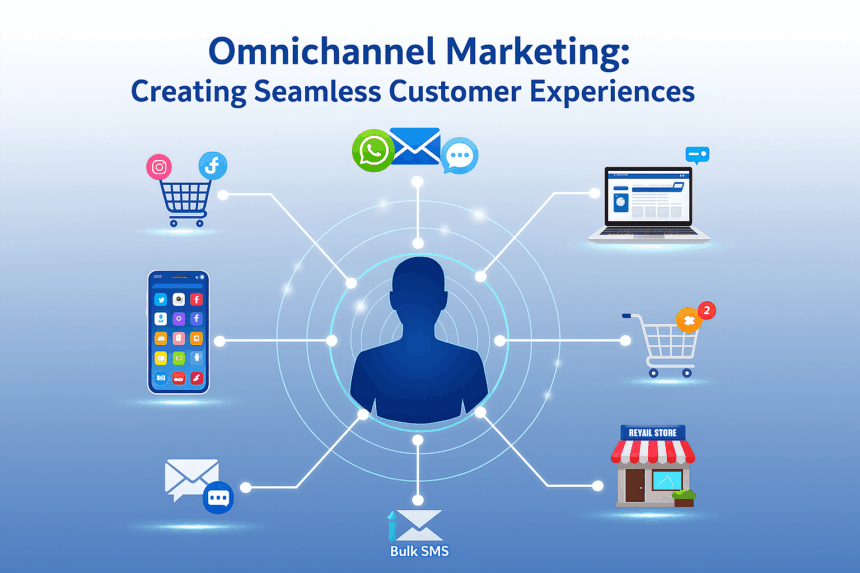
Customer attention feels fragile when brands forget context. Omnichannel marketing answers that fragility with order and with connection. It does not throw messages at every wall, and it does not confuse customers with fractured voices. It weaves a path, and it brings customers along.
Multichannel marketing once felt enough, and it scattered messages across platforms without deep care for unity. But omnichannel marketing goes further, and it builds one fabric where every channel supports another. That is why every strong digital marketing strategy today depends on it.
Ignoring it risks confusion. Building it nurtures trust. And trust becomes growth.
What Exactly Is Omnichannel Marketing and How Is It Different from Multichannel Marketing?
Omnichannel marketing is simple in form, and it is strong in function. It delivers consistent messaging across channels, and it integrates customer touchpoints into one unified flow.
Multichannel marketing spreads presence widely, and it leaves each platform working alone. Omnichannel marketing ties each platform together, and it creates cross-channel integration with intent.
Consider a customer browsing shoes on an app, and then receiving a marketing automation email that reminds them, and then seeing a social media marketing ad that calls them back. The same customer finally enters a store, and the shoes are waiting. Every moment is connected, and every signal feels consistent.
That is the power, and that is the promise.
Why Does Creating a Seamless Omnichannel Customer Experience Matter Today?
The customer does not think about channels, and the customer only wants one seamless path. An omnichannel customer experience gives that path, and it respects attention.
The benefits are not abstract, and they are measurable. Loyalty grows stronger when messaging remains steady, and retention follows with ease. Revenue rises when a customer experience strategy brings simplicity, and trust builds with every repeated success.
Breaking the journey with inconsistency destroys the bond. Fragmenting the touchpoints with confusion ends the sale. A customer wants seamlessness, and a brand must deliver it.
What Are the Core Elements of a Successful Omnichannel Marketing Strategy?
Building an omnichannel marketing strategy is not about presence, and it is not about noise. It is about structure and integration. These are the elements that matter:
- Customer-Centric Approach: Begin with customer journey mapping and study behavior across customer lifecycle stages.
- Data Integration: Use omnichannel platforms to unify customer data and create one shared truth
- Personalization at Scale: Deploy marketing automation tools to adjust and to respond in real time.
- Consistent Messaging Across Channels: Protect brand voice with clarity, and align every message.
- Technology Stack: Select the right omnichannel marketing tools to streamline customer experience, and connect them with care.
Each element is simple, and each element is technical. Together, they form the heart of any omnichannel marketing strategy.
How to Build an Omnichannel Marketing Strategy for a Small Business Without Breaking the Bank?
A small business fears complexity, and it fears cost. But omnichannel marketing does not belong only to large enterprises. It can begin small, and it can grow step by step.
Start with the most important touchpoints, and let them integrate first. A website, social media marketing, and WhatsApp marketing can already build a core network. Add bulk SMS where it makes sense, and connect it with marketing automation.
Choose affordable omnichannel platforms, and let them unify customer data. Work with a digital marketing agency in Kolkata if local support is needed, and let them handle scale.
Track customer lifecycle stages with patience, and refine messaging with data. An omnichannel customer experience is built slowly, and it strengthens with time. Even small steps build loyalty, and even simple tools create clarity.
What Are the Best Omnichannel Experience Examples in Retail That Brands Can Learn From?
The best omnichannel experience examples in retail show patterns worth repeating.
Starbucks built a rewards app, and it tied online ordering with in-store redemption. Every purchase synced across systems, and every customer felt continuity.
Sephora connected profiles across the web and stores, and it delivered personalized recommendations with precision. Online insights guided offline service, and the unified customer experience became stronger.
Nike connected its apps, websites, and stores, and it turned them into one ecosystem. The brand created consistency across customer lifecycle stages, and it respected every touchpoint with intent.
These omnichannel marketing examples prove the model, and they remind us that theory finds life in practice.
What Are the Common Challenges in Omnichannel Marketing and How Can Businesses Overcome Them?
Omnichannel marketing carries weight, and it carries difficulty. The challenges are clear, and they are not trivial.
Data silos appear quickly, and they block the flow. Businesses must invest in omnichannel platforms, and they must unify data with care.
Inconsistent messaging creeps in, and it weakens trust. Protect tone with guidelines, and align voice across touchpoints.
Technology overload confuses teams, and it drains focus. Start with the right omnichannel marketing tools to streamline customer experience and avoid excess.
Privacy concerns follow data use, and they demand attention. Respect regulations and build transparency into every step.
Challenges will remain, and solutions will evolve. But reflection and discipline allow progress.
What Does the Future Hold for Omnichannel Marketing and Customer Experience Strategy?
The future of omnichannel marketing carries new shapes, and it carries new tools. The trends already appear, and they grow stronger each year.
Artificial intelligence enables personalization, and it predicts needs before words are spoken. Predictive analytics studies patterns, and it prepares answers for tomorrow.
AR and VR enter retail, and they enrich customer touchpoints with immersion. Conversational marketing grows wider, and WhatsApp marketing and chatbots bring speed.
The customer experience strategy of tomorrow depends on these forces, and it depends on curiosity. Brands that listen will adapt, and brands that act will lead.
Conclusion: Why a Digital Marketing Strategy Needs Omnichannel Marketing Today
The choice is simple, and the choice is urgent. Is the preference for a fragmented voice, or is it for a unified customer experience?
An omnichannel marketing strategy gives coherence, and it turns confusion into clarity. Every customer touchpoint matters, and every signal must align. Social media marketing, bulk SMS, WhatsApp marketing, and every platform must come together with one voice.
Working with a digital marketing agency in Kolkata offers expertise, and it guides the transition. Investing in omnichannel marketing tools to streamline customer experience provides structure.
Omnichannel marketing is not just a technique, and it is not just design. It is discipline and insight. It builds slowly, and it grows with patience. The reward is loyalty, and the reward is growth.