
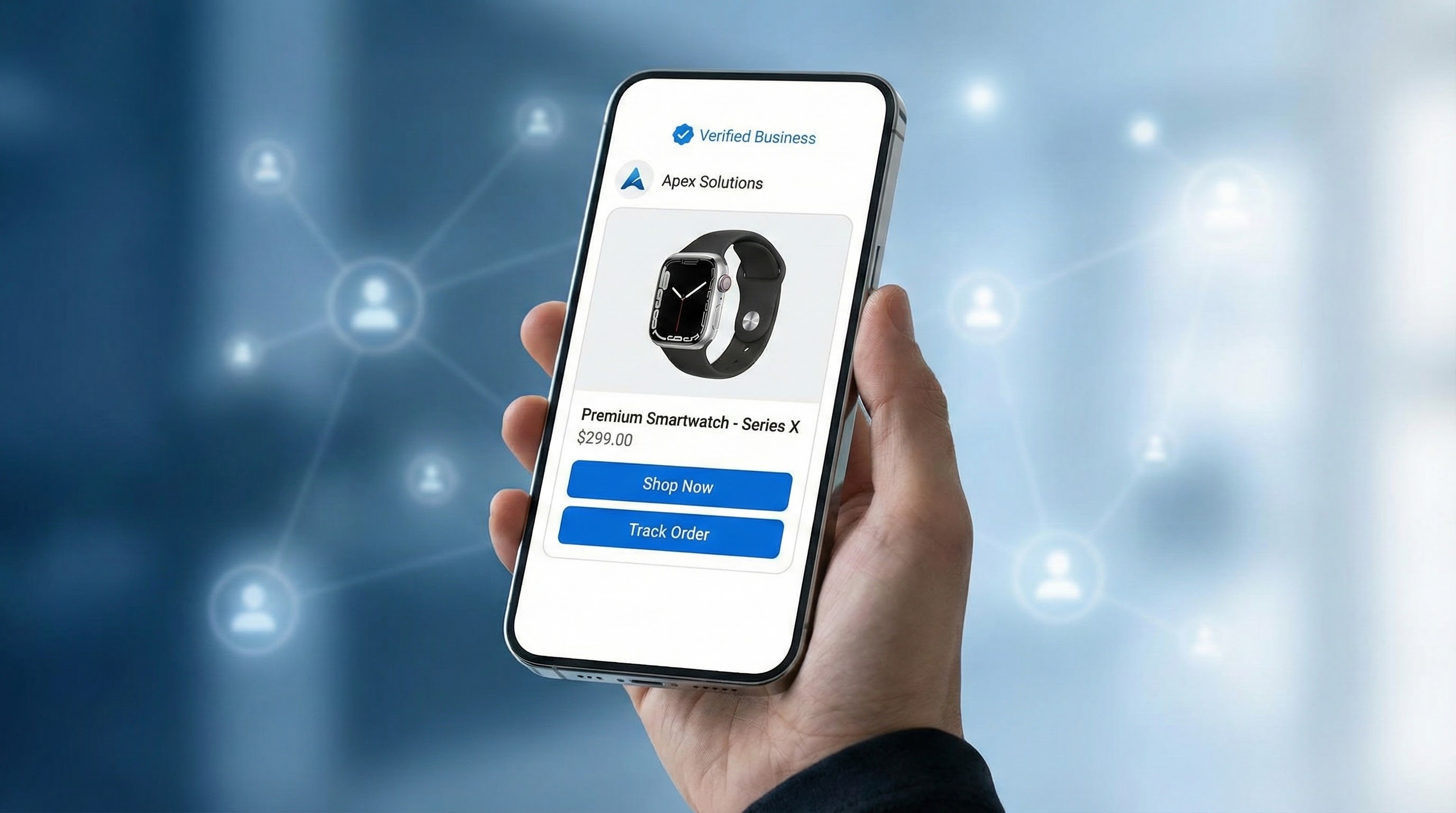
RCS Business Messaging (often called RBM or RCS for Business) is the next evolution of A2P messaging—built for the way customers communicate today. Instead of plain-text SMS, RCS lets brands deliver interactive, app-like experiences directly inside the user’s default Messages app—without asking customers to download anything.
For modern enterprises, that means you can move beyond “Your OTP is 123456” and into verified, rich conversations: product carousels, appointment buttons, delivery tracking, payment prompts, FAQs, and support—while keeping the speed and reach of telecom messaging.
In this guide, you’ll learn what RBM is, how it works, what features make it powerful, where it fits vs SMS/WhatsApp, and how to use it to drive growth—especially in high-intent moments like onboarding, renewals, cart recovery, and service notifications.
What is RCS Business Messaging (RBM)?
RCS (Rich Communication Services) is a messaging standard designed to upgrade traditional SMS/MMS with modern chat features. RCS Business Messaging is the enterprise layer—allowing brands to message customers using rich content, interactive actions, and two-way conversations through supported RCS clients and carriers.
Why enterprises are shifting from SMS to RCS
SMS is universal, but it’s limited:
-
- No native rich media experience
- No interactive buttons
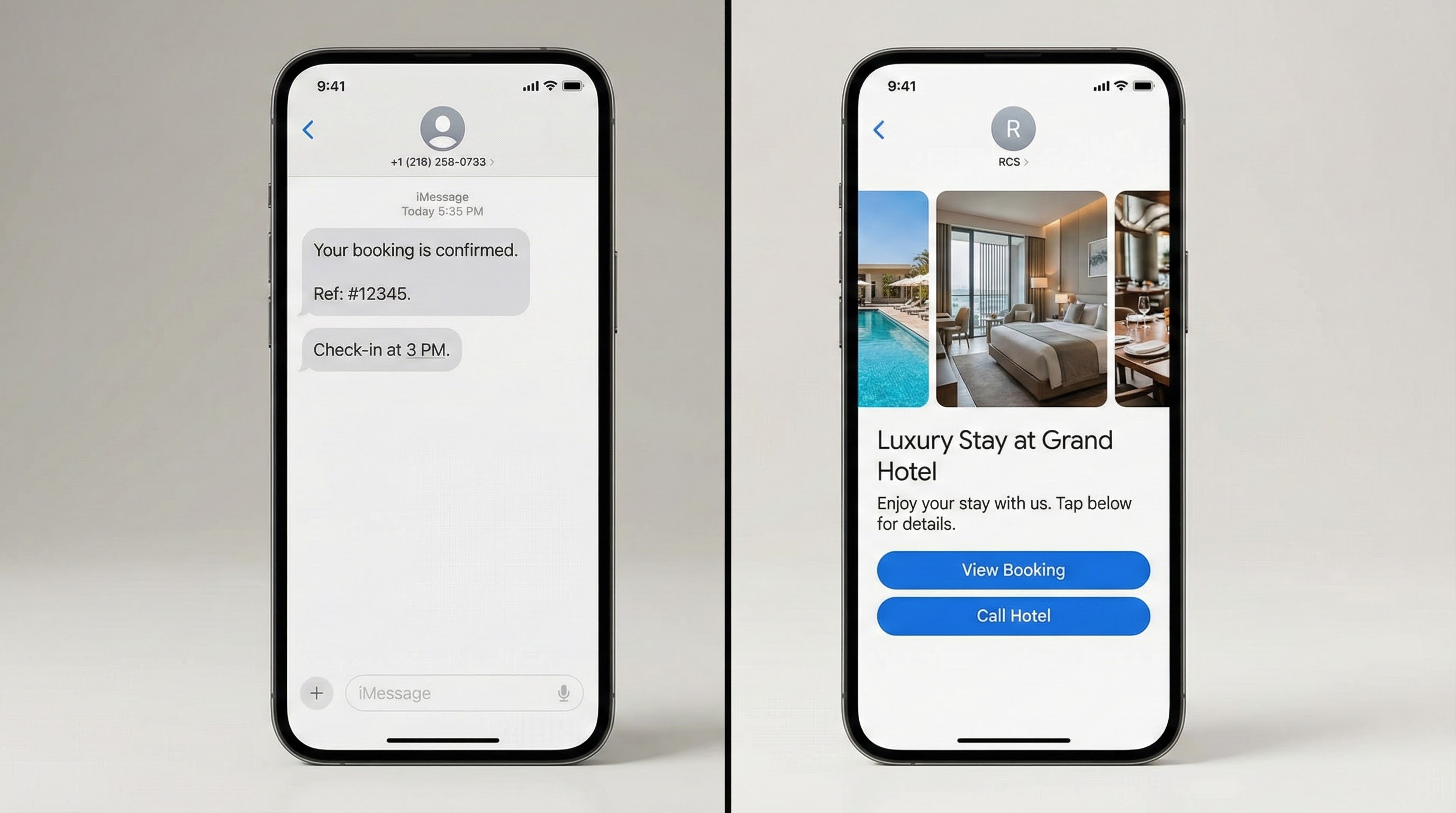
- Limited brand identity and higher risk of spoofing perception
- Basic delivery insights
RCS addresses these gaps by enabling branded, interactive messaging experiences, often with improved engagement for customer journeys like product discovery, support, and reactivation.
RCS now matters more because iPhone supports it
A major accelerator is that RCS can be enabled on iPhone with iOS 18 (where supported by the carrier). This expands reach and makes cross-platform rich messaging more practical.
Key Features of RCS Business Messaging
RBM is best understood as “messages that behave like mini landing pages”—inside the inbox.
Rich cards, carousels, and media
RBM supports:
-
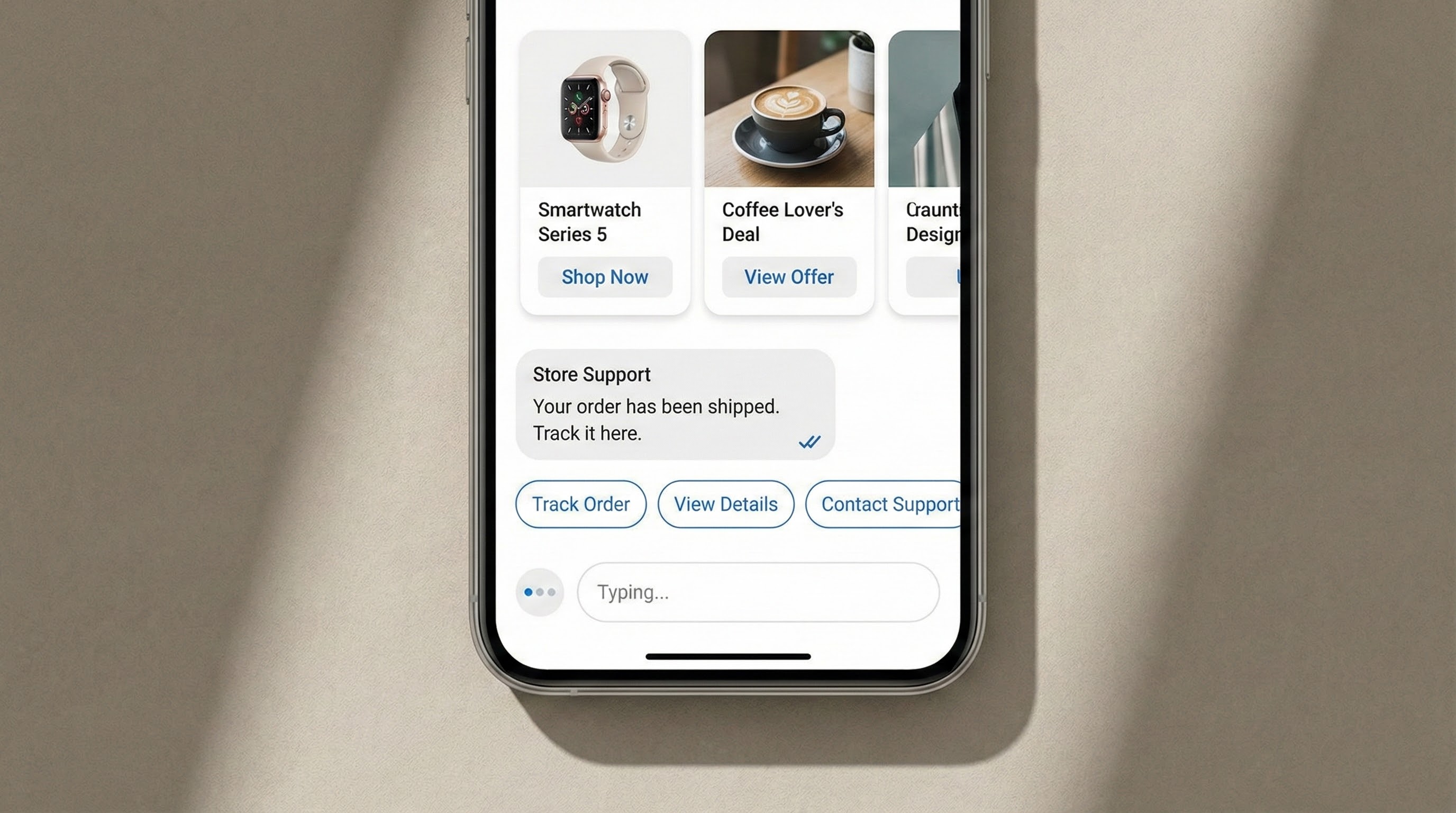
- Rich cards (media + title + description + actions)
- Carousel cards for browsing multiple items
- Images, video, GIFs
- In certain implementations, even PDF files (with India-specific availability noted by Google).
Suggested replies and suggested actions (buttons)
Two of the most conversion-friendly RBM capabilities:
-
- Suggested replies (tap-to-send responses like “Yes”, “Reschedule”, “Show options”)
- Suggested actions (tap-to-call, open URL, get directions, etc.)
Brand presence and trust signals
RBM is designed to deliver stronger brand recognition than SMS by presenting a business identity in the conversation experience (varies by ecosystem and approval). This reduces confusion and can increase user confidence compared to unknown numeric senders.
Read receipts and richer delivery insights
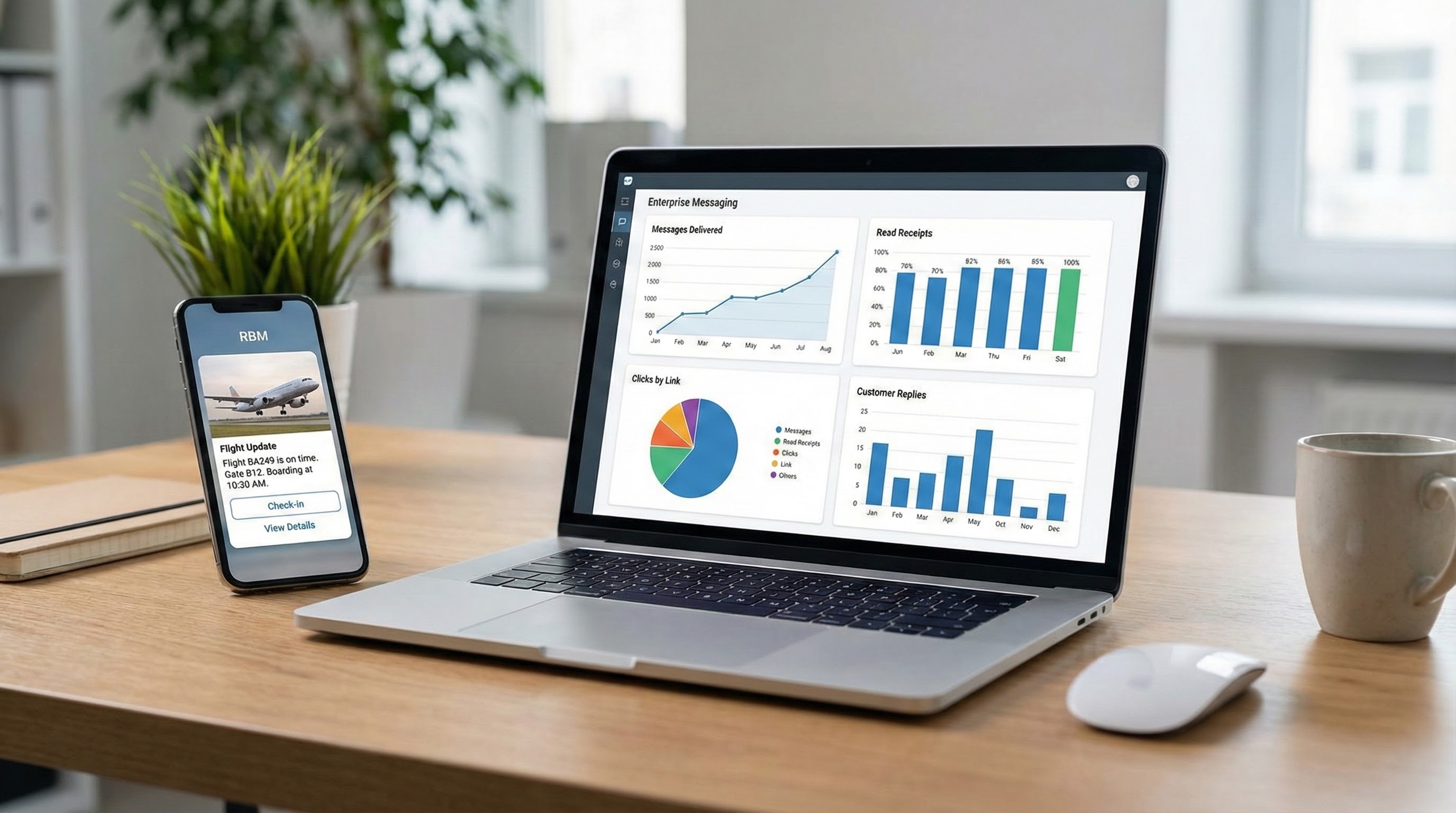
RCS can provide more granular messaging signals than SMS in supported environments (e.g., delivered/read indicators), enabling better funnel measurement and optimization.
Two-way conversational journeys
RBM isn’t only broadcast. It supports interactive, two-way messaging, making it ideal for:
-
- Customer support triage
- Guided product selection
- Feedback + surveys
- Post-purchase journeys and upgrades
Business Benefits of RCS for Modern Enterprises
Higher engagement in high-intent moments
When customers are already ready to act (checkout, appointment, shipment, renewal), RBM reduces friction using in-message buttons and rich context.
Better customer experience without another app
Customers don’t have to install anything new—RBM happens in the messaging app they already use.
Stronger brand clarity vs plain SMS
Brand-forward presentation and richer layouts can reduce user hesitation, especially for links, payments, and confirmations.
Measurable improvements across the funnel
RBM supports performance-driven messaging:
-
- Clicks on CTAs
- Reply rate
- Read rate (where available)
- Product interaction events (carousel browsing)
- Conversion attribution when paired with analytics
Works best as part of an “omnichannel CPaaS” stack
RCS is powerful—but it won’t reach every device in every context. The winning strategy is RCS + SMS fallback + WhatsApp + Email + Voice orchestrated by a CPaaS layer.
Top RCS Business Messaging Use Cases
Promotional campaigns that feel like mini storefronts
Best for: ecommerce, D2C, retail, travel, food delivery
- Example journey:
-
- Carousel: “New arrivals” / “Best sellers”
- Buttons: “Shop now” “View offer” “Track order”
- Quick reply: “Show more like this”
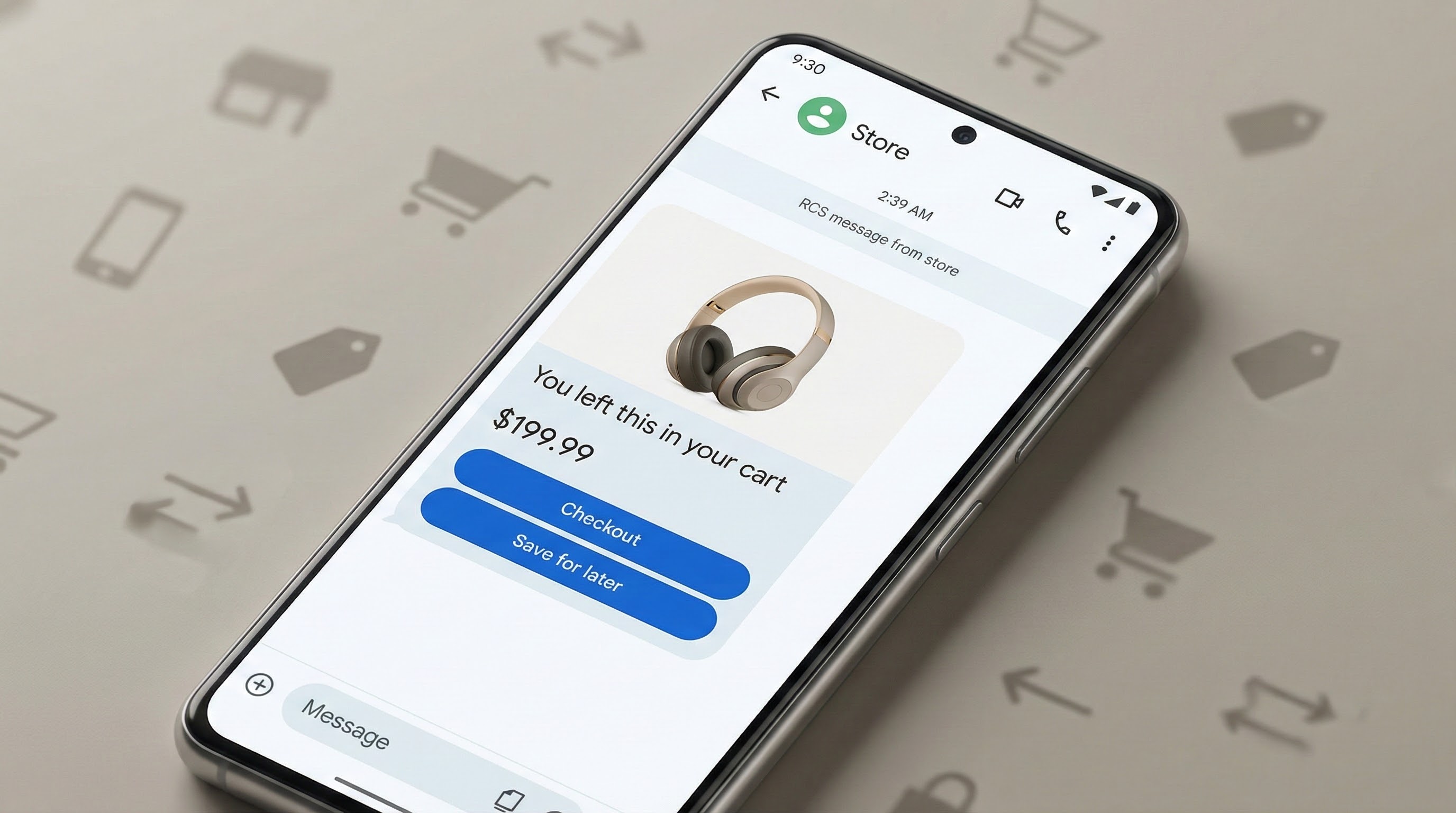
Cart recovery and checkout nudges
- Best for: ecommerce, subscription brands
- Why RCS wins: product image + price + direct “Complete checkout” button reduces drop-offs.
Order, delivery, and service notifications (with actions)
- Best for: logistics, hyperlocal, marketplaces
-
- “Track package” button
- “Change address” / “Reschedule delivery” quick replies
- Post-delivery feedback capture
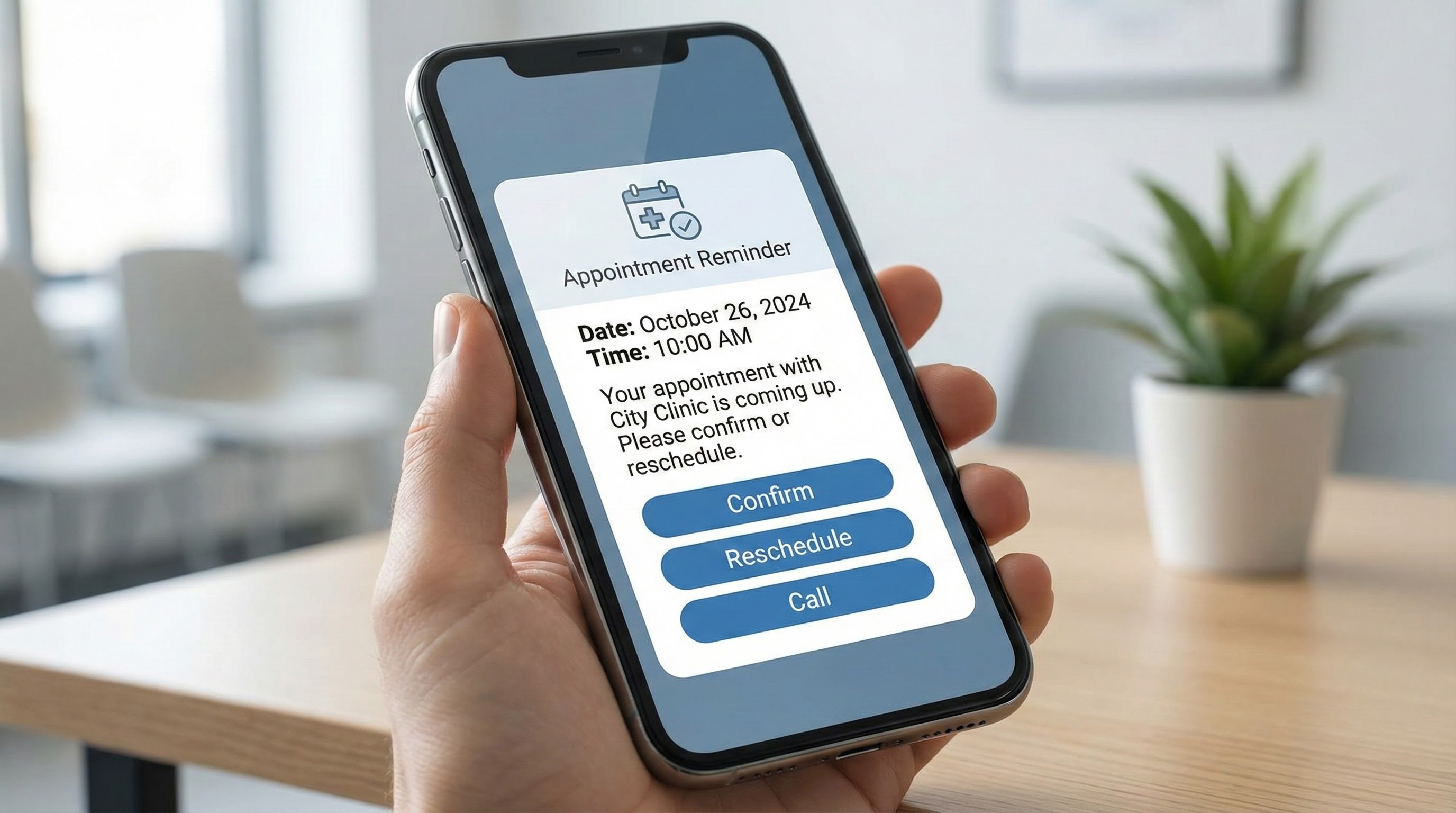
Appointment booking, reminders, and rescheduling
- Best for: healthcare, salons, clinics, finance branches
-
- “Confirm” / “Reschedule” / “Call support” actions
- Map/directions action where relevant
Customer support automation (tier-1)
- Best for: telecom, fintech, utilities, SaaS
-
- Guided menu: “Billing / Account / Technical / Refund”
- Escalation to live agent when needed
- Share documents (where supported) like policies or invoices (PDF availability can be market/client-dependent).
OTP + onboarding + verification (hybrid approach)
RCS can improve onboarding with a richer “next step” flow, but most enterprises still keep SMS OTP as universal fallback for maximum reach and reliability.
Feedback, surveys, NPS, and review generation
-
- One-tap replies: “1–5” rating
- Button: “Leave a review”
- Smart routing for detractors to support
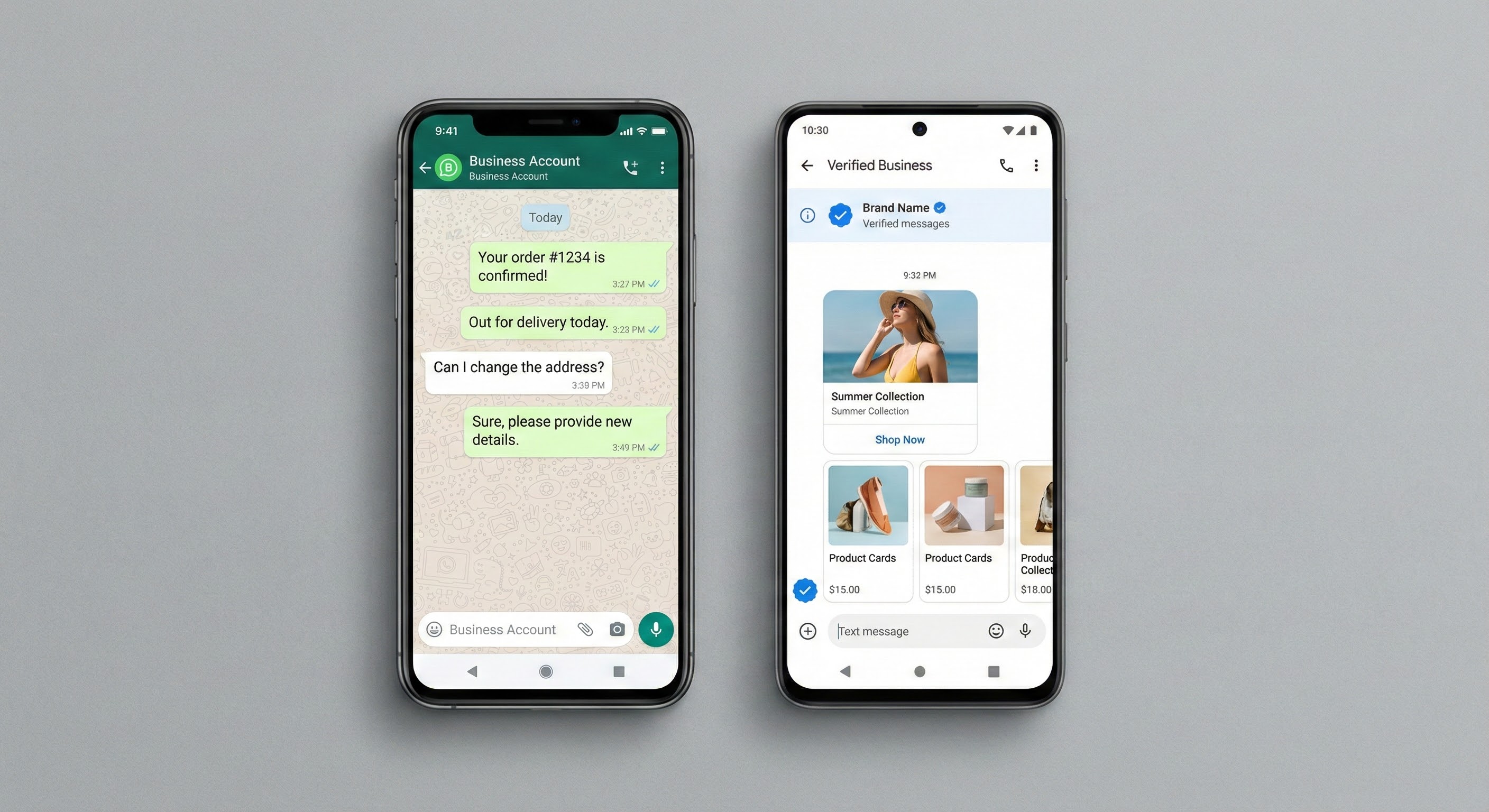
RCS vs SMS vs WhatsApp (When to use what)
Use RCS when:
-
- You want rich, interactive journeys inside the native inbox
- Your audience has meaningful RCS reach (Android + iPhone iOS 18 where carrier-supported)
- You need conversion-oriented CTAs (browse, buy, book, track)
Use SMS when:
-
- You need maximum universality (any phone)
- Critical alerts + OTP must deliver everywhere
- You require simple compliance-controlled templates at scale (India-heavy enterprises often rely on SMS + DLT processes)
Use WhatsApp when:
-
- You want high engagement in WhatsApp-first audiences
- You need richer conversational commerce with templates + flows
- You have opt-in and want persistent chat threads
Best practice: Orchestrate all three with routing + fallback.
Compliance and Trust (India-ready considerations)
In India, commercial messaging programs should be designed with compliance-first thinking—clear consent, purpose limitation, and transparent brand identity.
Sender governance & regulatory alignment
TRAI publishes guidance for entities sending commercial communications, including becoming a registered sender/principal entity as applicable.
Customer experience rules that protect trust
-
- Don’t spam: use frequency capping
- Use clear opt-in/opt-out paths
- Keep message content consistent with what the customer signed up for
- Send from verified brand identity wherever possible
How to Launch RBM Successfully (Enterprise checklist)?
Pick journeys with immediate ROI
- Start with:
- Cart recovery
- Order tracking
- Appointment reminders
- Tier-1 support menus
Design templates like product UX, not like SMS
-
- One goal per message
- One strong CTA
- Use carousels only when choice matters
- Keep copy short and skimmable
Build fallback logic (critical)
- Not every user will be RCS-ready at every moment. You need:
-
- RCS → SMS fallback
- Optional WhatsApp routing when consent exists
Measure what matters
- Track:
-
- Delivered, read (if available), clicks
- Reply rate
- Conversion rate per journey
- Drop-off point inside the flow
Iterate continuously
- A/B test:
-
- Card image type (product vs lifestyle)
- CTA text (“Buy now” vs “Complete order”)
- Timing (15 min vs 2 hours post-cart)
- Personalization depth (category-level vs product-level)
How this maps to Turain’s CPaaS services (and how we generate leads)?
Turain can position RBM as a next-gen channel inside your CPaaS stack, not a standalone feature.
Turain CPaaS:
-
- RCS Business Messaging (RBM): rich cards, carousels, verified brand messaging, two-way journeys
- SMS (Transactional + Promotional) with fallback: OTP, alerts, universal reach
- WhatsApp Business Messaging: conversational commerce + support
- Voice / IVR / Toll-free: escalation from chat to call, missed-call flows
- Cloud Call Center: agent handling + CRM integration
- DLT / Compliance support (India): smoother onboarding for SMS programs (where applicable)
Conclusion
RCS Business Messaging empowers enterprises to move beyond plain SMS and deliver rich, interactive, and branded conversations directly inside the native messaging app. When combined with SMS fallback and other CPaaS channels, RCS helps businesses improve engagement, build trust, and drive conversions across the customer journey.
Disclaimer:
RCS features and availability may vary by device, operating system, carrier, and region. Businesses should ensure user consent and regulatory compliance before launching commercial messaging campaigns. Results may differ based on implementation and audience factors.
Frequently Asked Questions About RCS Business Messaging
What is RCS Business Messaging?
RCS Business Messaging (RBM) is an upgraded form of SMS that allows businesses to send rich, interactive messages—including images, carousels, buttons, and suggested replies—directly inside a customer’s default messaging app. It is part of the global RCS standard governed by GSMA.
Is RCS available on iPhone in India?
Yes. With iOS 18, Apple has enabled RCS support where carriers allow it. This means RCS can now work across both Android and iPhone, significantly improving reach in markets like India.
How is RCS different from SMS?
SMS supports only plain text, while RCS supports:
– Rich cards and media
– Interactive buttons
– Read receipts
– Verified brand identity
– Two-way conversations
RCS delivers a much higher engagement experience compared to traditional SMS.
Is RCS better than WhatsApp for business?
RCS and WhatsApp serve different purposes:
– RCS works inside the native Messages app and does not require app installation.
– WhatsApp offers persistent chat threads and strong engagement but requires opt-in and app dependency.
Best practice: Use RCS + WhatsApp + SMS together via a CPaaS platform.
Can RCS be used for OTP and transactional alerts?
Yes, RCS can enhance OTP and transactional journeys with branded messaging and next-step actions. However, SMS is still recommended as a fallback to ensure 100% delivery across all devices.
Is RCS secure and compliant for enterprises?
Yes. RCS includes sender verification, brand identification, and structured templates. In India, enterprises must also follow TRAI commercial messaging guidelines, consent management, and opt-out rules.
What industries benefit most from RCS Business Messaging?
RCS delivers strong ROI for:
– Ecommerce & D2C brands
– Banking & fintech
– Healthcare & clinics
– Travel & hospitality
– Telecom & utilities
– Education & EdTech
Do customers need to install an app to receive RCS messages?
No. RCS messages appear directly in the default Messages app on supported devices—no additional downloads required.
How can businesses start using RCS?
Businesses need:
– An RCS-enabled CPaaS provider
– Brand verification & approval
– Message templates and journeys
– Fallback routing (SMS / WhatsApp)
Turain handles end-to-end onboarding, including compliance and routing.








This article perfectly explains the power of RCS. I think one of the biggest benefits is its seamless integration into the native messaging app—making it feel like a natural conversation rather than a marketing message.