
In 2026, getting website traffic is no longer the biggest challenge for businesses. The real challenge is turning that traffic into qualified leads, customers, and repeat revenue.
Rising advertising costs, privacy-first data policies, and increasingly informed users mean that running isolated SEO, PPC, or social media campaigns no longer works. Businesses need a full-funnel digital marketing strategy—one that connects awareness, engagement, conversion, and retention into a single, measurable revenue system.
This guide explains how full-funnel digital marketing works in 2026, why it matters, and how brands can implement it successfully with an integrated digital marketing partner like Turain.
What Is Full-Funnel Digital Marketing?
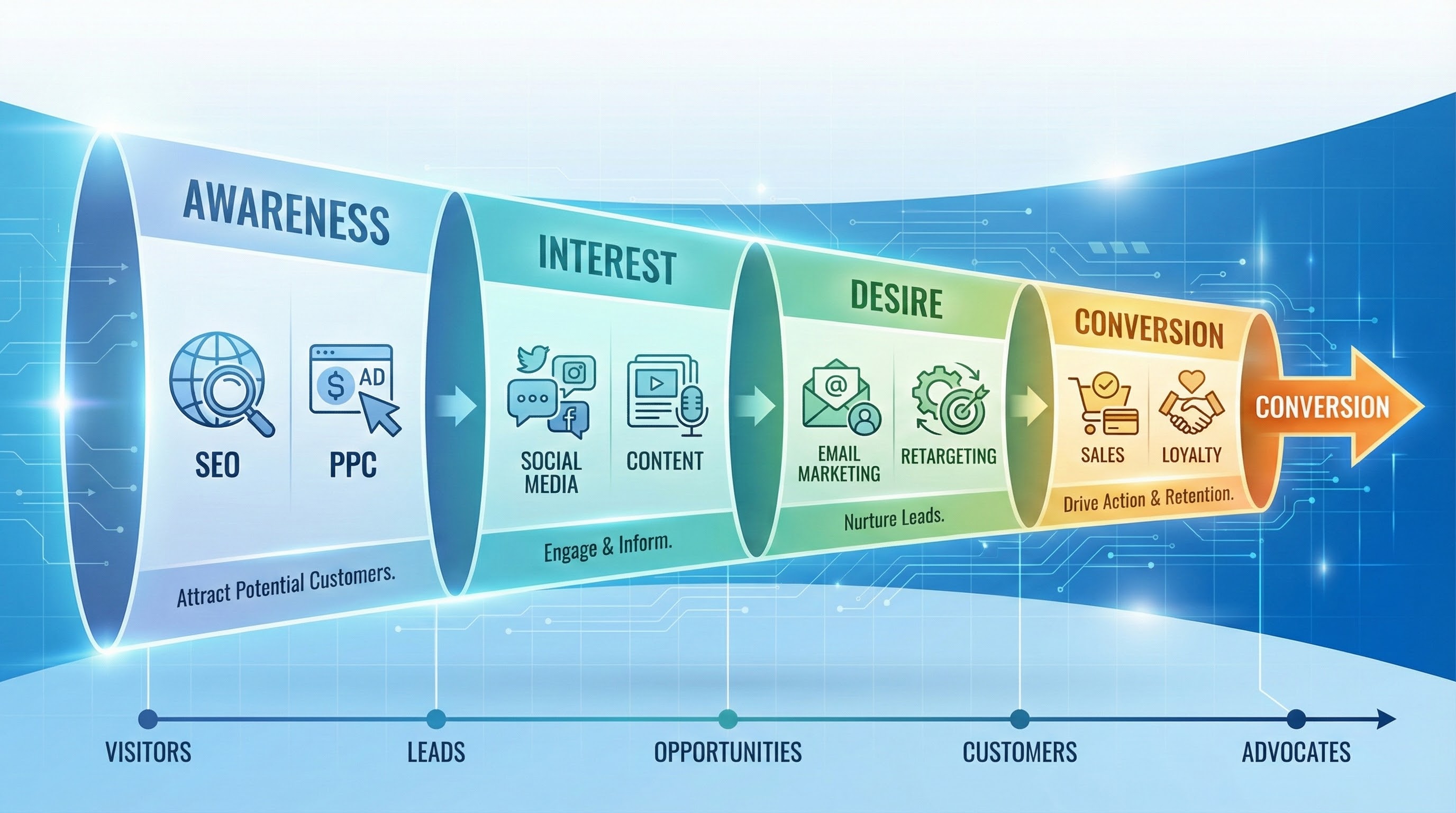
Full-funnel digital marketing is a strategy that targets every stage of the customer journey, not just lead generation or sales.
Instead of focusing on a single channel or goal, it aligns SEO, content, paid ads, social media, and conversion optimization to guide users from first interaction to long-term revenue.
The typical funnel stages include:
- Awareness – attracting the right traffic
- Consideration – educating and building trust
- Conversion – turning visitors into leads or customers
- Retention – encouraging repeat business
- Advocacy – building brand loyalty and referrals
In 2026, businesses that optimize only one stage lose users at every handoff point.
Why Full-Funnel Digital Marketing Is Critical in 2026?
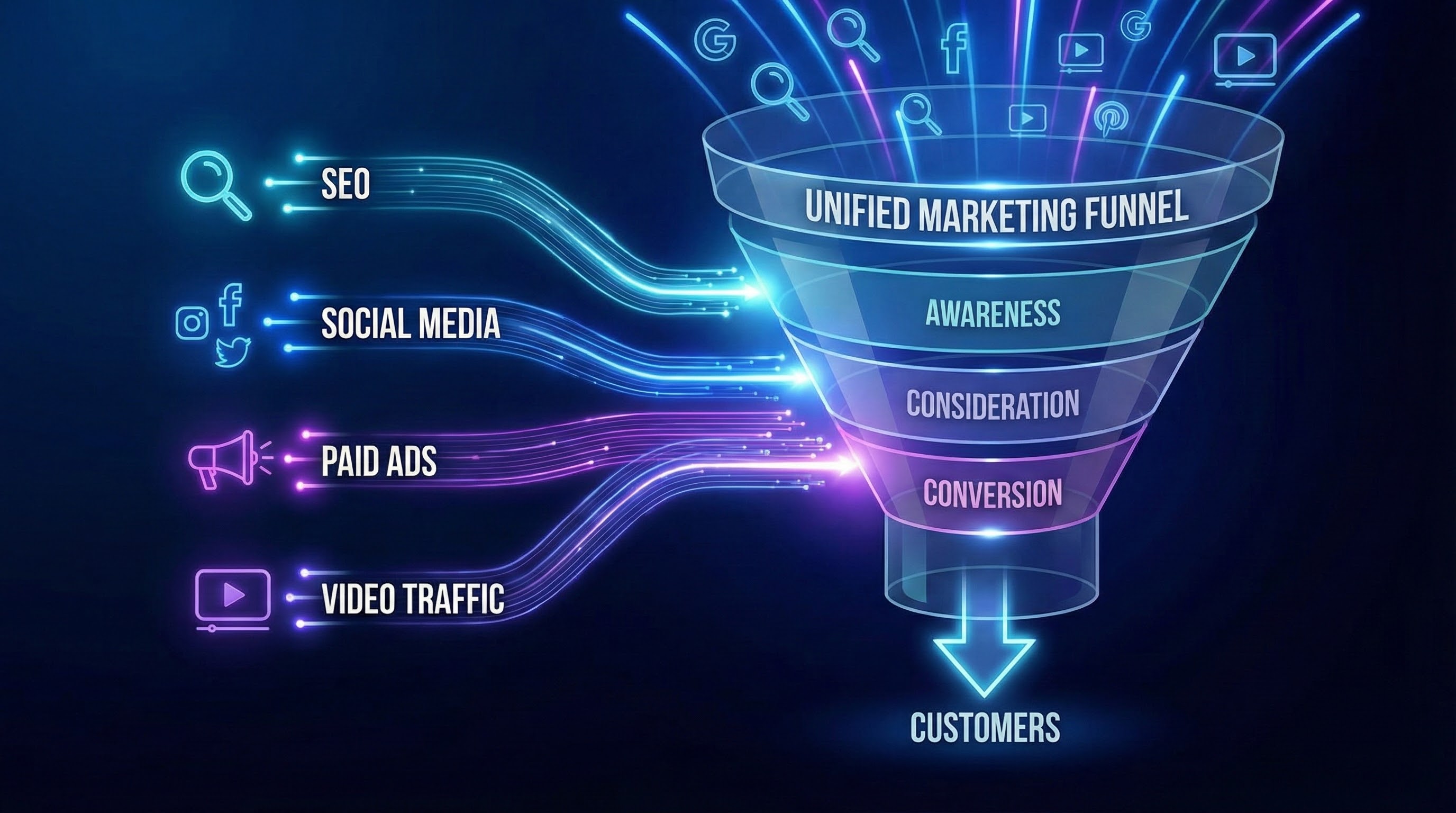
1. User journeys are fragmented
Customers interact with brands across Google Search, social media, YouTube, blogs, and remarketing ads before converting. A full-funnel approach ensures consistent messaging across all touchpoints.
2. Paid ads alone are no longer sustainable
Depending only on PPC increases customer acquisition cost (CAC). SEO and content marketing help reduce long-term dependency on paid traffic.
3. Trust and brand familiarity drive conversions
Users are more likely to convert when they’ve already seen your brand through organic search, content, or social media.
The Full-Funnel Digital Marketing Framework
Top of the Funnel (TOFU): Driving the Right Traffic
Goal
Create awareness and attract relevant, high-intent audiences.
-
Key Channels
- Search Engine Optimization (SEO) for informational and discovery keywords
- Content Marketing (blogs, guides, videos)
- Social Media Marketing for visibility and engagement
- YouTube marketing for brand awareness
This is where Turain’s SEO, Content Marketing, and Social Media Marketing services help businesses attract qualified traffic instead of vanity visits.
Middle of the Funnel (MOFU): Building Trust & Intent
Goal
Educate users, answer objections, and prepare them to convert.
-
MOFU Strategies
- Remarketing campaigns (Google & Meta)
- Educational and comparison content
- Case studies, testimonials, explainer videos
- Email or social nurturing
At this stage, content depth and remarketing work together. Turain integrates PPC remarketing, YouTube promotion, and content strategy to move users closer to conversion.
Bottom of the Funnel (BOFU): Converting Traffic into Revenue
Goal
Turn high-intent users into leads or paying customers.
-
Conversion-Focused Tactics
- High-intent Google Search Ads
- Optimized landing pages with strong CTAs
- Trust signals (reviews, guarantees, certifications)
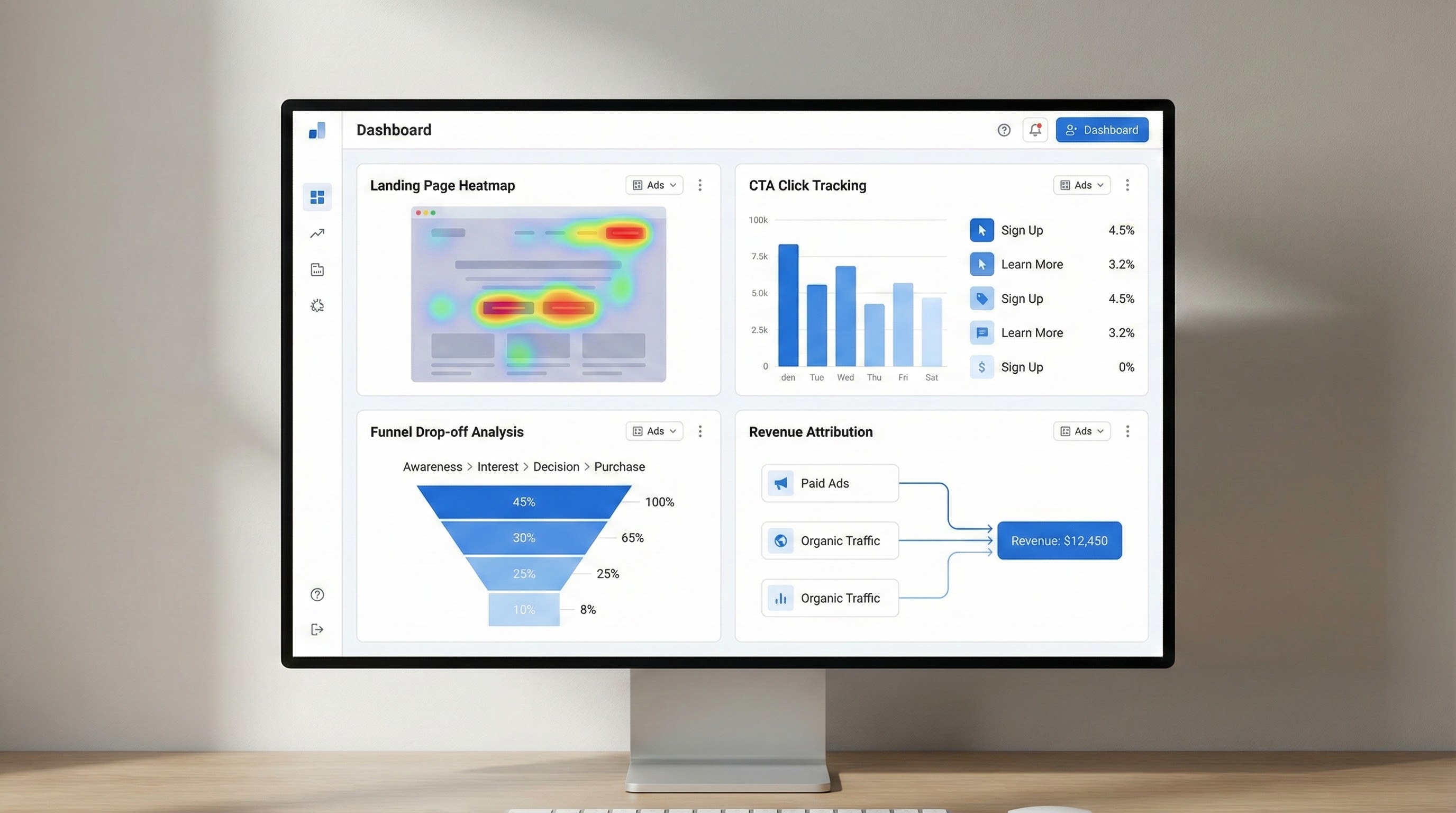
- Conversion tracking and continuous optimization
Performance marketing works best here—but only when supported by TOFU and MOFU efforts. This is where Turain’s performance advertising expertise delivers measurable ROI.
Post-Conversion Funnel: Retention & Revenue Growth
Why this stage matters?
Acquiring customers is expensive. Retaining them is profitable.
Retention Strategies
- Remarketing to past visitors and customers
- SEO and content for repeat purchases
- Social media engagement for brand loyalty
- Upsell and cross-sell campaigns
Full-funnel marketing doesn’t stop at conversion—it maximizes customer lifetime value.
Common Mistakes That Break the Funnel
-
Running channels in silos
- SEO, PPC, and social media must support each other—not compete.
-
Ignoring content quality
- Content isn’t filler. It’s a conversion and trust asset.
-
Poor tracking across the funnel
- Without proper tracking, optimization becomes guesswork.
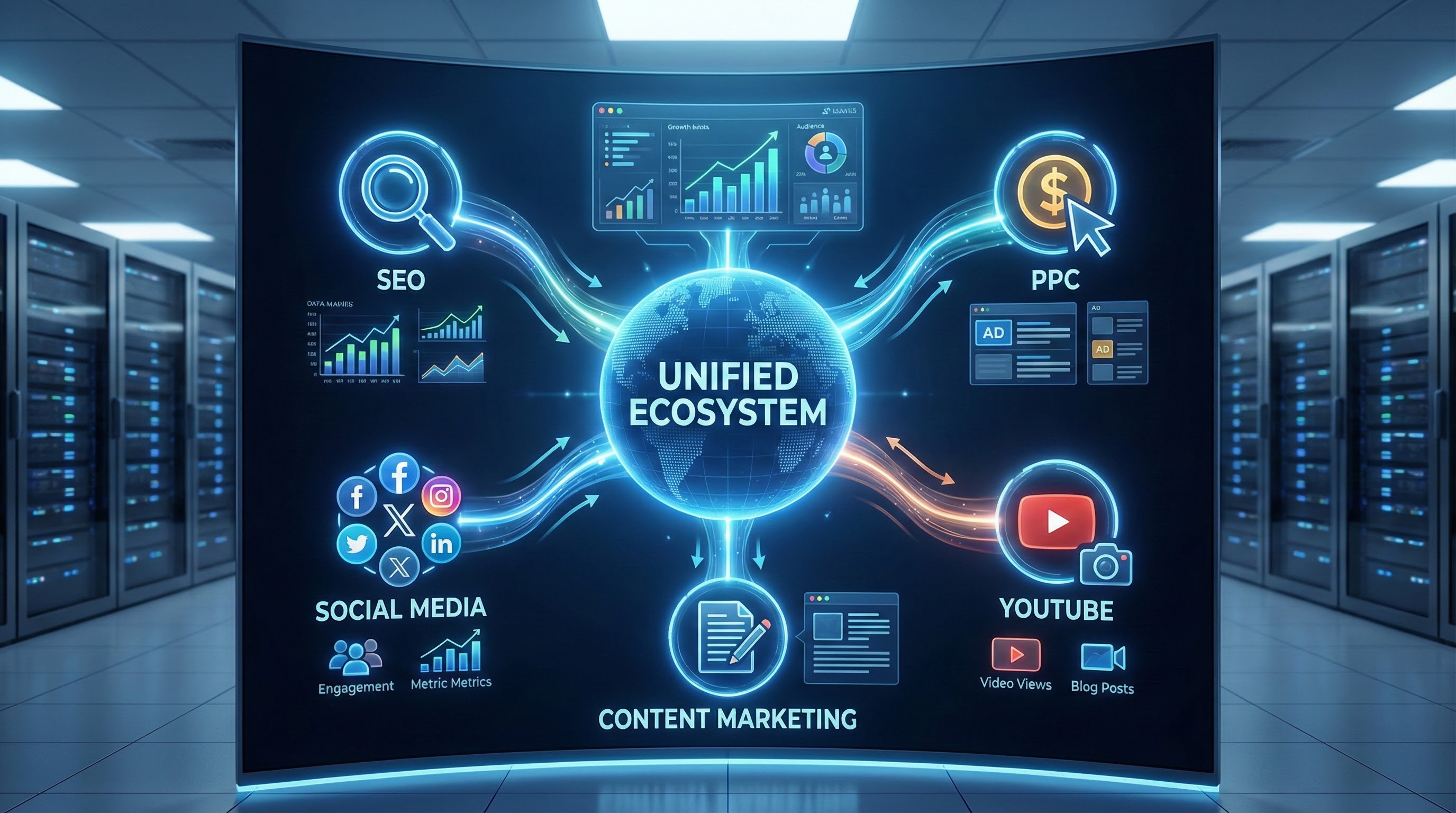
How Turain Builds Full-Funnel Digital Marketing Systems?
Turain doesn’t sell individual services—we build revenue-focused digital ecosystems.
Turain’s Full-Funnel Services
- Digital Marketing Strategy & Execution
- SEO for Sustainable Traffic
- Content Marketing for Trust & Conversions
- PPC & Performance Advertising
- Social Media & YouTube Marketing
Conclusion
In 2026, traffic without strategy is wasted potential. Full-funnel digital marketing ensures every visitor is guided through awareness, engagement, conversion, and retention—turning marketing spend into predictable revenue. By integrating SEO, content, social media, PPC, and conversion optimization into one unified system, businesses achieve sustainable growth and lower acquisition costs. With Turain’s full-funnel approach, brands don’t just generate traffic—they build scalable revenue engines.
Disclaimer:
This content is for informational purposes only. Digital marketing results vary based on industry, competition, budget, platform policies, and execution strategy. Marketing technologies and algorithms evolve continuously, and past performance does not guarantee future results.
FAQ’s
Q1. What is full-funnel digital marketing?
Full-funnel digital marketing is a strategy that targets every stage of the customer journey—from awareness and engagement to conversion, retention, and repeat revenue—using integrated channels like SEO, content, PPC, social media, and CRO.
Q2. How is full-funnel digital marketing different from traditional digital marketing?
Traditional digital marketing often focuses on isolated channels like SEO or PPC. Full-funnel digital marketing connects all channels into one system that guides users from traffic to revenue, ensuring better conversions and long-term growth.
Q3. Why is full-funnel digital marketing important in 2026?
In 2026, rising ad costs, privacy-first tracking, and complex buyer journeys make it essential to optimize every funnel stage. Full-funnel digital marketing reduces acquisition costs, improves trust, and increases customer lifetime value.
Q4. What are the stages of a full-funnel marketing strategy?
A full-funnel strategy typically includes:
- Awareness (SEO, social media, content)
- Consideration (remarketing, educational content)
- Conversion (PPC, landing pages, CRO)
- Retention (remarketing, content, loyalty campaigns)
- Advocacy (referrals and brand trust)
Q5. How does SEO fit into full-funnel digital marketing?
SEO drives high-intent and informational traffic at the top and middle of the funnel, builds brand authority, and supports conversions by improving trust and lowering dependency on paid ads.
Q6. Can full-funnel digital marketing work for small businesses?
Yes. Full-funnel strategies can be scaled based on budget. Even small businesses can combine SEO, content, and targeted PPC to create sustainable traffic-to-revenue systems.
Q7. What role does PPC play in a full-funnel strategy?
PPC supports multiple funnel stages—from awareness and remarketing to high-intent conversion campaigns—helping businesses capture demand while other channels build long-term growth.
Q8. How long does it take to see results from full-funnel digital marketing?
Initial results from paid campaigns may appear within weeks, while SEO and content-driven results typically build over 3–6 months. Long-term benefits compound over time.
Q9. What metrics should be tracked in full-funnel digital marketing?
Key metrics include traffic quality, conversion rate, cost per lead (CPL), cost per acquisition (CPA), customer acquisition cost (CAC), retention rate, and customer lifetime value (LTV).
Q10. How does Turain help businesses implement full-funnel digital marketing?
Turain designs and executes integrated digital marketing strategies combining SEO, content marketing, PPC, social media, YouTube promotion, and conversion optimization to turn traffic into measurable revenue.