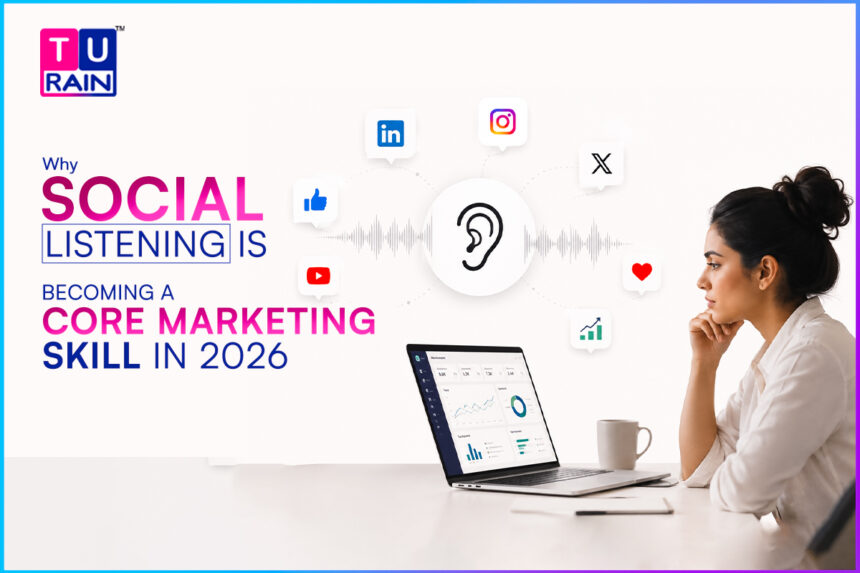
Why Does Reacting to Trends Late Still Hurt Brand Engagement?
A team spots a trend and spends weeks drafting the perfect post. By the time it goes live, the internet has completely moved on. The brand just looks painfully out of touch. They become the last person in the room to finally get the joke. This is exactly what happens when you stop paying attention. Real social listening fixes this. Heading into 2026, it is easily the most critical skill a marketing team can develop.
That’s the risk of not listening closely enough. A genuine social listening strategy is quietly becoming one of the most underrated skills a marketing team can build heading into 2026.
What’s the Real Difference Between Listening and Watching Trends?
Most teams “keep an eye on trends” by scrolling their own feed occasionally between meetings. That’s watching. Listening works differently. It means actively tracking conversations, comment sections, meme formats, and even complaint threads to catch a shift before it becomes obvious to everyone else.
Where the real signal actually lives:
- Comment sections, often far more honest than the caption itself about what audiences actually think.
- Regional meme formats, which move quickly and rarely make it into mainstream trend reports in time to matter.
- Complaint and query threads, which quietly reveal what audiences want that nobody’s providing yet.
- Search suggestions inside apps, where autocomplete often reveals exactly what people are already trying to find.
- Screenshots shared privately, a strong signal something is spreading before it shows up on public metrics.
- Basic social media monitoring dashboards, which surface volume spikes long before anyone notices manually.
- Voice notes and forwarded messages inside closed groups, harder to track formally, but often where a trend truly begins before it ever goes public.
Teams that repeatedly ask why a trend was caught late will usually find the answer in one of these overlooked corners. This reflects exactly how to use social listening for marketing effectively. Quietly. In the background. Well before a trend becomes obvious enough for everyone to jump on it at once.
What Does an Effective Real-Time Reaction Actually Look Like?
A food delivery brand recently noticed a spike in a specific, slightly chaotic meme format circulating in college WhatsApp groups and social threads, comparing “hostel mess food vs app food.” Rather than waiting for a formal trend report to confirm it, the social team reacted within a day, using the same format with a brand-specific spin.
That post performed noticeably better than the team’s usual scheduled content. Not because it was cleverer. Because it landed while the joke was still fresh, rather than arriving after the moment had already passed.
Speed matters more than polish in these moments. A rougher post published within hours regularly outperforms a beautifully designed one published three days later, once a trend has already started cooling off.
What Kind of Audience Insights Come From Listening That Surveys Miss?
Surveys ask people what they think when prompted. Social listening captures what people say when nobody’s asking. The gap between the two is often significant.
A few examples of audience insights that tend to surface only through genuine listening:
- Raw feedback. Customers rarely use official complaint forms. They prefer to vent right in the public replies.
- Better branding. Audiences love inventing their own nicknames for your products. These are usually much catchier than your official names.
- Surprise use cases. People will use your stuff in ways you never predicted. You only discover this by watching their conversations.
- Early warnings. You can spot a shifting mood long before a formal ticket gets filed.
How Should Social Listening Be Built Into a Marketing Workflow?
Social listening functions best as a habit, not an occasional scroll session squeezed in before a meeting.
- Daily routines. Make social listening a core habit. Stop just blindly scrolling right before a big meeting.
- Dedicated roles. Give this job to a specific person. Tracking conversations takes a completely different skill set than just scheduling posts.
- Set up alerts for brand mentions and category keywords. It removes dependence on memory or luck.
- Review comment sections weekly, not just likes and shares. That’s where the real audience mood actually shows up.
- Move quickly once something is spotted. A trend reacted to within 24 hours performs very differently from one reacted to a week later.
- Keep a running log of near-misses. Trends spotted but not acted on fast enough reveal a team’s own blind spots.
- Invest in proper brand monitoring tools once volume grows. A spreadsheet works fine at small scale but breaks down quickly once mentions pile up.
- Pair listening with real time social analytics. Knowing a trend exists counts for less than knowing exactly how fast it’s growing.
- Rotate listening duty across the team occasionally. Fresh eyes tend to catch patterns that someone deep in the daily grind starts to miss.
How Can Teams Separate a Real Trend From Noise That Fades Fast?
Not every spike is worth chasing, and reacting to everything wastes as much time as reacting to nothing. A few checks that help filter signal from noise:
- Look at the speed of growth, not just the volume. A slow, steady climb usually signals something with staying power. A sudden spike often burns out just as quickly.
- Check whether the trend crosses platforms. Something appearing only in one narrow corner of one app rarely justifies a full campaign pivot.
- Watch whether real people are engaging, or whether it’s mostly bot-like repetition. Genuine conversation carries more predictive weight than raw numbers alone.
- Ask whether the trend actually connects to the brand naturally. Forcing a fit often reads as more desperate than simply sitting a trend out.
- Compare against the team’s own past reactions. A running record of what worked and what fizzled quietly builds better judgement than any single rule ever could.
What Should a Team Look For When Choosing Between Listening Tools?
Not every brand monitoring tool suits every team size or budget, and the more expensive option isn’t automatically the better fit.
- Coverage across the platforms an audience actually uses, rather than broad coverage of platforms that don’t matter to that specific brand.
- Alert speed, since a tool surfacing mentions a day late defeats much of the purpose of listening in the first place.
- Sentiment tracking that’s genuinely reliable for regional languages, an area where many tools still fall short for Indian audiences specifically.
- A reporting view simple enough that someone outside the marketing team can glance at it and understand the mood shift immediately.
- Room to grow. A tool that works for a small brand today should scale reasonably as mention volume increases, without forcing a complete platform switch later.
Why Will This Skill Only Grow More Important?
Trends move faster than most content calendars can realistically keep pace with. Teams treating listening as a proper discipline, with dedicated time and clear ownership, will consistently catch moments competitors miss entirely. The goal isn’t chasing every meme that appears. It’s identifying which ones are genuinely worth chasing, and being fast enough to matter when the moment arrives. That’s ultimately why social listening matters more than most marketing calendars give it credit for. Using it for trend spotting tends to outperform any single scheduled campaign, simply because it’s built around what audiences are actually saying right now, not what a content calendar assumed they’d care about three weeks ago.
Disclaimer
This blog is intended for general informational and educational purposes only. It does not constitute formal business, marketing, or financial advice. Social media trends, platform algorithms, and audience behaviors change rapidly; brands should test any listening or content strategy on a small scale, review performance data carefully, and consult appropriate professionals before making major budget or strategic decisions.
FAQs
1. Why does reacting to a trend late hurt more than not reacting at all?
Because audiences perceive late entries as out-of-touch or desperate. A brand that posts a meme format three days after it peaked signals that the team isn’t actually part of the culture they’re trying to sell to.
2. What’s the real difference between social listening and just watching trends?
Watching is passive (scrolling your feed). Listening is active (tracking comment sections, regional meme formats, complaint threads, and search suggestions to catch a shift before it becomes obvious).
3. How can a small team practice social listening without expensive tools?
Start by assigning one person to review comment sections and search suggestions daily, set up free Google Alerts for brand keywords, and keep a running log of near-misses to identify blind spots.
4. How do you tell if a trend is worth chasing or just noise?
Look at the speed of growth, whether it crosses multiple platforms, if real people (not bots) are engaging, and whether it connects naturally to your brand without forcing a fit.
5. What audience insights does social listening catch that surveys miss?
Raw, unprompted feedback, nicknames audiences invent for your products, surprise use cases, and early warnings of shifting moods long before a formal complaint ticket is filed.
Reference links
These support the ideas around social listening, trend timing, and brand monitoring: