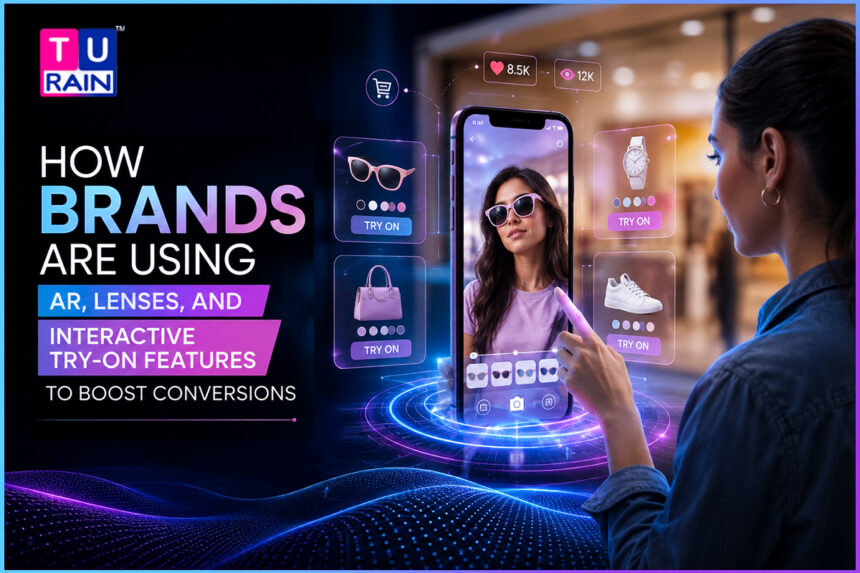
How Does AR Try-On Technology Influence Online Purchase Decisions?
A recent sunglasses purchase tells the story well. No store visit. A phone held up. A brand’s Instagram lens activated. The frame appearing on-screen, right there, in real time. Order placed. No guesswork. No returning the product a week later because “it looked different online.”
That small moment shows where retail is heading. Social media AR marketing isn’t a nice extra anymore. It’s fast becoming the reason one brand’s checkout page gets chosen over another’s.
Why Are AR Filters Suddenly a Serious Business Tool?
AR filters used to mean entertainment. Cat ears. Flower crowns. Nothing resembling a business tool. What’s changed is simple: brands realised the same technology making a filter fun can also make a purchase decision noticeably easier.
The categories seeing the biggest jump right now:
- Eyewear and jewellery, where fit and appearance matter more than almost anything else before a purchase commitment.
- Makeup and beauty, where shade-matching has always been the single biggest reason for online returns.
- Home decor, where a virtual sofa can now be placed inside an actual living room before ordering the real one.
- Footwear, slower to catch on but growing, particularly for sneaker drops where sizing anxiety runs high.
- Wider augmented reality marketing experiments, ranging from virtual product demos to fully interactive brand pages.
- Fashion accessories, watches, belts, scarves, where a quick visual preview settles hesitation that a product photo alone never quite manages to.
Cart abandonment tied to not being able to picture how something will look? That’s precisely the moment this feature exists to prevent. It’s the entire premise behind AR try on features. Remove the guesswork, and the sale tends to follow on its own.
This is essentially what drives the answer to how AR boosts social media conversions. Rarely does one dramatic feature launch explain it. It’s more of a slow, steady drop in hesitation, one try-on at a time.
How Has AR Solved a Persistent Problem in Indian E-Commerce?
Online shopping in India has fought one persistent issue for years. The gap between what appears on screen and what actually arrives at the door. Returns citing mismatched colour, or a size that just didn’t match expectations, remain painfully common. AR try-on tools go straight after that pain point. And they go after it well.
A jewellery seller based in Jaipur added a virtual try-on lens for an earring collection earlier this year. Customers could see the earrings sitting on their own ears through the camera before placing an order. Return requests dropped sharply, almost immediately, simply because guesswork left the equation entirely.
The pattern repeats elsewhere too. A small footwear brand testing a size-preview filter noticed fewer “wrong size” complaints within a month. A home decor seller offering a room-placement tool saw fewer buyers hesitating over furniture dimensions. Different categories, same underlying fix: showing something instead of just describing it.
What Does Brands Using AR Filters to Sell Actually Look Like Day to Day?
It rarely starts as a big production. Most brands begin with one filter, tied to one product line, tested quietly before any wider rollout. A jewellery brand might launch a single earring try-on before expanding to necklaces. A beauty label might start with lipstick shades before tackling foundation matching, which tends to be technically trickier.
What tends to separate the filters that actually drive sales from the ones that just get played with once and forgotten:
- Clear intent baked into the filter itself. A “try this on, then tap to buy” prompt performs differently than a filter with no obvious next step.
- Fast load times, since a laggy AR experience loses interest within seconds, regardless of how accurate the rendering eventually turns out.
- Regular updates matching current stock. A filter showing a discontinued product does more harm than having no filter at all.
What Steps Should Brands Take to Implement AR Effectively?
A massive technology budget isn’t required to start. Most major platforms already offer built-in tools for this, often at no additional cost.
- Start with the highest-return category. Shade or fit issues usually drive the most returns, so that’s where AR pays off fastest.
- Keep the filter simple and fast-loading. A laggy try-on experience frustrates users more than having no try-on option at all.
- Promote the feature directly in product posts, rather than burying it in a separate filter tab nobody checks.
- Watch the actual data, not just the buzz. Track how try-on usage correlates with fewer returns and more completed checkouts.
- Update filters seasonally. A stale try-on catalogue quietly signals inattention.
- Treat this as part of interactive social commerce, not a standalone gimmick sitting apart from the core strategy.
- Use lens marketing as a discovery tool too. A well-made filter often gets shared far beyond the people who actually buy, generating reach at no additional cost.
- Collect quick feedback after try-on sessions. A single tap-based rating, “loved it” versus “not quite,” builds a useful picture of what’s working over time.
How Should Brands Measure Whether AR Is Actually Paying Off?
Try-on usage alone doesn’t tell the whole story. A filter that gets opened often but rarely leads to a purchase is worth investigating rather than celebrating.
- Track the click-through rate from try-on to add-to-cart specifically, not just overall filter opens. That gap reveals whether the experience is actually persuasive or just novel.
- Compare return rates on items with an AR try-on option against those without. The difference, tracked over a full season, tends to make the business case on its own.
- Watch how long users spend inside the filter. A quick in-and-out often signals friction somewhere in the experience, while a longer session usually points to genuine consideration.
- Monitor filter shares separately from purchases. A widely shared filter that doesn’t convert well might still be doing valuable brand-awareness work, even if the sales numbers don’t show it directly.
- Survey a small sample of customers who used the filter. A short, two-question follow-up, did it help, would they use it again, often surfaces friction points that raw numbers miss entirely.
Brands that review these signals every few months tend to refine their AR rollout faster than those relying purely on gut feeling or anecdotal praise from the team. A quarterly review, even a short one, usually catches drift long before it shows up as a noticeable dip in sales.
What Does the Future of the “Store” Actually Look Like?
The instinct to “feel” a product before buying isn’t going anywhere. What’s changing is how that feeling gets delivered. AR and interactive try-on tools are quietly closing the trust gap that has always existed in online shopping. Brands building this in early aren’t adding a gimmick. They’re removing the single biggest reason a cart gets abandoned halfway through.
Immersive brand experiences, social media try-on marketing, interactive product discovery- whatever label gets used, the brands already applying this aren’t waiting for a perfect definition to settle first. Their return rates are simply dropping, quietly, month over month, while competitors are still debating whether the technology is worth the effort.
Disclaimer
The strategies and case studies discussed in this blog are for general informational and educational purposes only. They do not constitute formal business, technical, or financial advice. AR platforms and tools evolve rapidly; brands should test any new technology on a small scale, review performance data carefully, and consult appropriate technical or legal professionals before making major investment decisions.
FAQs (AR Try-On & Purchase Decisions)
Do AR try-on filters actually reduce product returns?
Yes. For categories like eyewear, jewellery, and makeup, brands consistently report a significant drop in returns related to “wrong shade” or “didn’t look as expected” once a reliable try-on tool is active.
Is expensive custom software required to launch an AR filter?
Not necessarily. Major platforms like Instagram and Snapchat offer built-in creator tools that allow brands to launch basic try-on lenses without a massive technology budget, though complex custom builds do require more investment.
How should a brand measure if an AR filter is actually paying off?
Don’t just track how many people opened the filter. Look specifically at the click-through rate from the try-on to the add-to-cart action, and compare the return rates of products with AR versus those without it.
References
- Meta for Business: How Augmented Reality Drives Purchase Intent and Reduces Returns
- Snapchat Business: The Impact of AR Try-On Lenses on E-Commerce Conversions
- Indian Retail Tech Reports: How AR is Solving the “What You See vs. What You Get” Problem in Indian E-Commerce