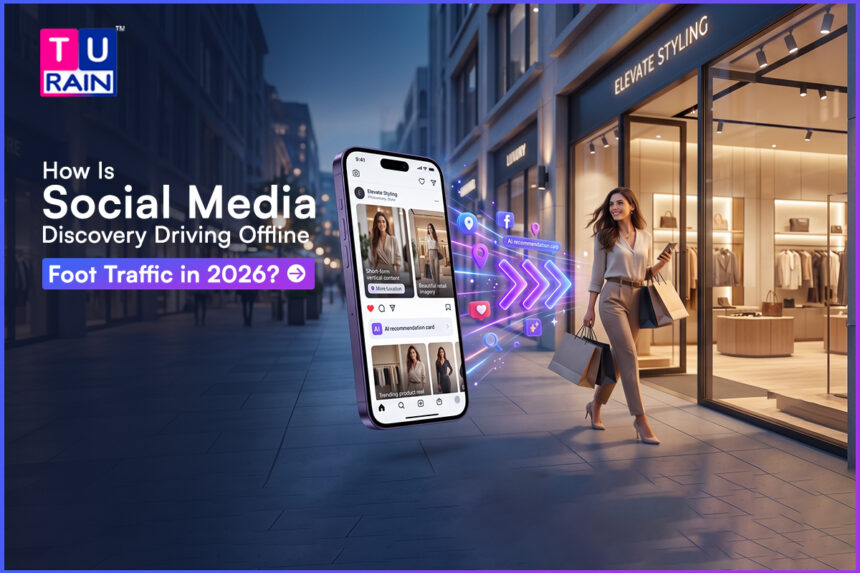
A shopper walks through a market in Jaipur. A phone buzzes. A reel of a chaat stall, barely 200 metres away. Nobody searched for it. Nobody followed the page. The app just knew someone was nearby and decided the moment mattered.
That’s not a fluke. It’s one of the clearest social media discovery trends shaping 2026. Marketing teams ignoring it are leaving money sitting right there on the table.
What Is Changing About the Path From Scroll to Store?
For years, social discovery followed one loop. See a post. Tap like. Maybe save it. Move on. The gap between seeing something online and actually walking into a store stayed wide. Most of it came down to chance.
That gap is closing fast. Platforms are building in map-based discovery, location-tagged content, and “near you” feeds that quietly nudge people off the couch and toward an actual doorstep.
What’s shifting on the ground:
- Location-first content gets pushed harder in feeds now, especially for food, retail, and local events.
- Map integrations inside apps let users see what’s trending within walking distance, not just what’s trending nationally.
- Check-in style tagging is back, smarter this time, feeding straight into recommendation engines instead of sitting as a forgotten vanity feature.
- Search bars inside social apps are starting to behave like mini local directories, especially for restaurants and salons.
- Local social media engagement is quietly becoming a ranking signal of its own, not just a pleasant byproduct of a good post.
- Story stickers and location tags are getting weighted more heavily by recommendation systems than plain hashtags ever were.
Small shops that seem to get walk-ins “out of nowhere” are usually benefiting from exactly this. Their content does double duty, part ad, part map pin. A small but deliberate shift toward genuine online-to-offline marketing, even where nobody on the team calls it that internally.
This is essentially what drives offline engagement in the first place. It isn’t one dramatic feature. It’s several smaller ones working together quietly in the background: location tags, map integrations, local search, story stickers.
Why Does This Matter More for Businesses in India?
India’s retail landscape has always been hyperlocal. A shop in Andheri and a shop in Salt Lake could sell the exact same product and still pull from entirely different customer bases. Buying decisions here tend to happen within a few kilometres of home, not a few hundred. Social platforms catching up to that reality is a genuinely significant shift for small business owners.
A bakery in Kolkata used to spend on generic city-wide ad targeting. Mostly likes. Barely any footfall to show for it. Once the team leaned into location-tagged reels showing the shop’s actual street and landmark, walk-ins from social jumped noticeably within weeks. People weren’t just watching cakes get frosted anymore. They were getting directions.
This pattern repeats across categories. A salon in Indore. A tailoring shop in Nagpur. A small gym in Lucknow. Each found the same thing once local tagging replaced broad city-wide targeting: fewer impressions, but far more of them converting into someone actually showing up.
What Does Experiential Social Media Marketing Look Like on the Ground?
Beyond tagging and location pins, a growing number of brands are treating social content as an invitation to a real event, not just a post to scroll past. A pop-up stall, a one-day workshop, a limited in-store tasting- all promoted the same way a product launch might be, but designed to pull people physically into a space.
This is where experiential social media marketing earns its name. The content isn’t just describing an experience. It’s the on-ramp to one. A candle brand running a “scent bar” for one weekend, filmed and tagged precisely, tends to outperform a month of standard product posts, simply because it gives an audience a specific reason to show up on a specific day.
What Should Brands Actually Do to Capture This Shift?
Treating a social presence and a physical location as two separate worlds no longer works. They’re merging regardless of planning. Brands that plan for it get there first.
- Tag the exact location on every post, not just the city. Precision helps the algorithm, and it helps confused customers too.
- Show the storefront, not only the product. People want to recognise the place before walking in.
- Use local landmarks in captions. “Two shops down from the metro gate” does more for real discovery than a polished tagline ever could.
- Encourage check-ins and geo-tags from actual customers. Their location data quietly feeds visibility more than branded posts do.
- Reply to location-tagged comments fast. It signals to the algorithm, and to future customers, that the account stays active and local.
- Build a small IRL marketing strategy around one event or one week. Even a modest in-store activation, tagged well, tends to outperform a purely digital push.
- Lean on community-led marketing where possible. A regular customer’s tagged post about a shop carries more weight than most paid content ever will.
- Test one hyperlocal campaign before scaling city-wide. A single neighbourhood, done well, teaches more than a broad, unfocused rollout.
How Can Businesses Measure Whether This Is Actually Working?
Standard engagement metrics rarely capture the online-to-offline effect properly. Likes and views tell part of the story, but they say nothing about whether a scroller actually became a customer. A few better indicators:
- Ask new customers how they found the shop. A simple question at checkout, “Instagram? Walking by? A friend?”, builds a surprisingly reliable picture over a few weeks.
- Track redemption on location-specific offers. A discount code tied only to a geo-tagged post shows exactly how many people that specific content pulled in.
- Watch for a rise in tagged customer posts. More organic tags usually means the physical experience is becoming worth sharing on its own.
- Compare footfall on days content goes live against days it doesn’t. The pattern, once tracked for a month or two, tends to be obvious.
- Look at repeat-visit rates from social-driven customers specifically. First-time walk-ins from a tagged post are useful, but the ones who come back are the real signal that the experience matched the content.
None of this requires expensive tracking software. A notebook at the counter and a few weeks of consistent questions usually reveal more than a dashboard full of vanity metrics ever will.
What’s the Bigger Shift Businesses Cannot Afford to Miss?
Online discovery used to stop at the screen. Now it’s expected to continue all the way to the door. Brands still thinking purely in reach and impressions will watch competitors quietly turn scrollers into walk-ins right under their noses. The tools needed to close that gap already exist. They cost nothing extra to switch on. The only open question is who actually bothers to use them properly.
That’s the essence of turning online discovery into real-world conversion, and of building genuine social media community experiences instead of one-off posts nobody remembers a week later. The brands getting this right in 2026 aren’t necessarily spending more. They’re simply connecting two things that used to live in separate departments, and letting each one make the other work harder.
Disclaimer
This blog is intended for general informational and marketing discussion purposes only. It does not guarantee traffic, sales, or ranking results for any business. Social platforms, recommendation systems, and local discovery features can change quickly, so brands should test strategies carefully and measure real-world outcomes before scaling.
FAQs
u003cstrongu003eWhy does social media discovery matter for offline foot traffic?u003c/strongu003e
Because location-aware feeds, map integrations, and local search features can turn a casual scroll into a store visit.
u003cstrongu003eWhat kind of businesses benefit most from this trend?u003c/strongu003e
Local businesses like cafes, salons, bakeries, gyms, and retail shops usually see the strongest impact because nearby customers can act immediately.
u003cstrongu003eHow can brands measure whether social media is driving real visits?u003c/strongu003e
They can track location-tagged offers, ask customers where they found the business, and compare footfall on posting days versus quiet days.