
WhatsApp is doubling down on its original promise: business messaging should feel helpful, relevant, and safe. That’s why the January 2026 update matters—because it reshapes how AI chatbots can be delivered on the WhatsApp Business Platform, especially if the bot behaves like a “general-purpose assistant.”
- What Exactly Changed in January 2026?
- What’s Still Allowed? (Yes, You Can Still Automate)
- The Compliance Rules Brands Must Follow (Non-Negotiables)
- 1) Consent / opt-in is mandatory
- 2) Respect the 24-hour customer service window + templates
- 3) Don’t train “broad AI” on WhatsApp Business data
- 4) Avoid spam, deception, and harmful automation patterns
- How to “Automate at Scale” Without Violating the New AI Rule?
- Where Turain CPaaS Fits?
- Automate Support & Lead Qualification at Scale—
- Conclusion
- FAQ’s
- Q1. Are AI chatbots banned on WhatsApp Business API in 2026?
- Q2. What’s the effective date of the new rule?
- Q3. What counts as “general-purpose”?
- Q4. Can my brand still use GPT-like models behind the scenes?
- Q5. Can we message customers freely anytime?
- Q6. How do we reduce WhatsApp messaging costs while staying compliant?
- Q7. What’s the biggest compliance risk brands overlook?
- Q8. How can Turain help?
If your brand uses WhatsApp for customer support, lead capture, appointment scheduling, or order updates, you’re not “banned.” But you do need to ensure your automation is business-first, consent-first, and policy-aligned.
What Exactly Changed in January 2026?
The “AI Providers” restriction (the core rule)
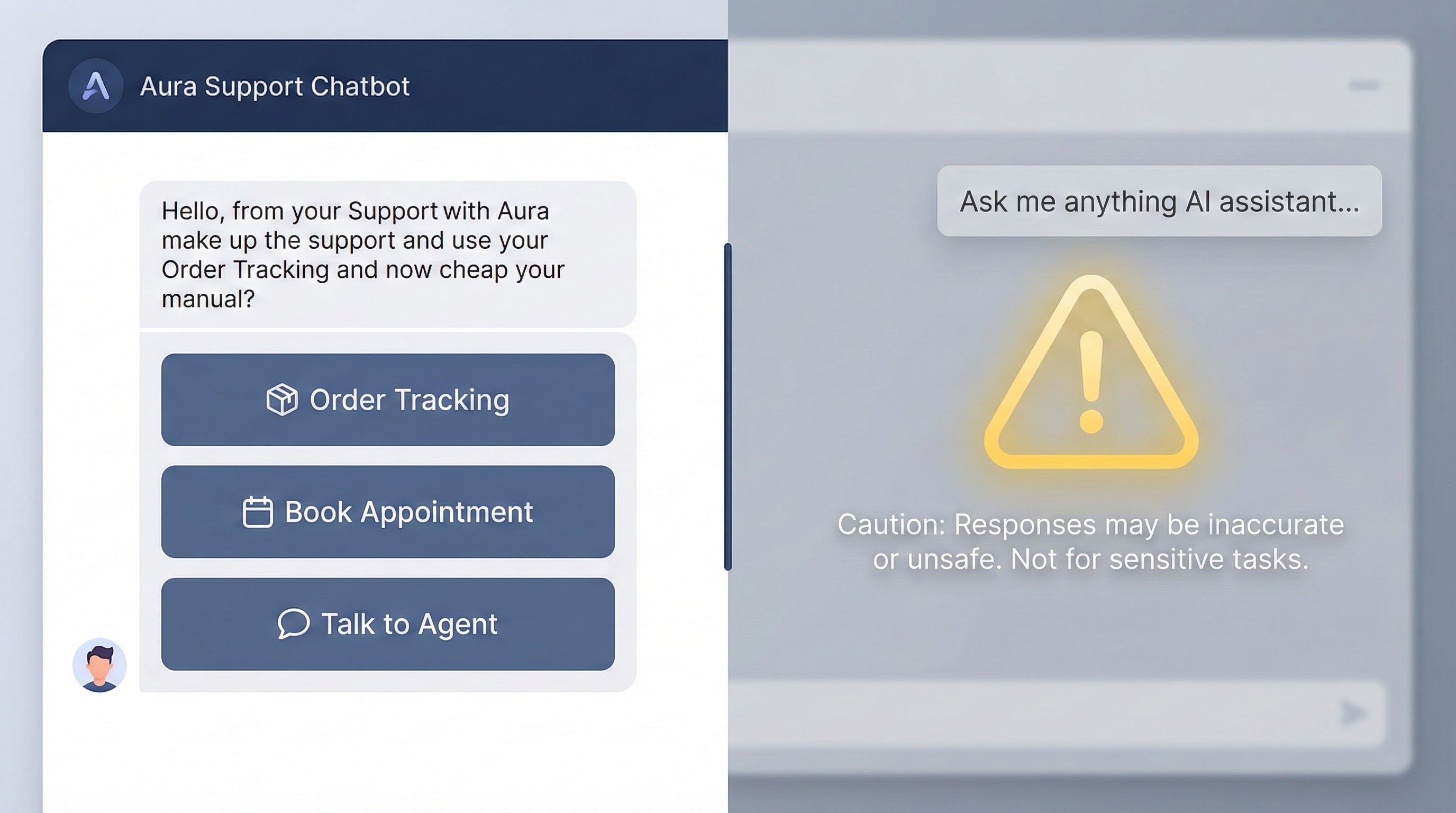
WhatsApp’s Business Solution Terms now explicitly say that AI Providers (LLM / generative AI platforms / general-purpose AI assistants) are prohibited from accessing or using WhatsApp Business tools to provide those AI technologies when the AI is the primary functionality being offered.
In plain English:
-
-
If WhatsApp is being used as a distribution channel for a standalone AI assistant (think “ChatGPT inside WhatsApp”), that’s what gets restricted.
-
The rollout dates
WhatsApp indicated an update path:
-
- Effective immediately for businesses signing up on/after Oct 15, 2025
- Effective Jan 15, 2026 for businesses who signed up earlier
A notable exception (Italy)
The terms include a specific carve-out referencing Italian country-code registered numbers. (This is widely discussed in the context of regulatory scrutiny.)
What’s Still Allowed? (Yes, You Can Still Automate)
Business-purpose bots are still OK
WhatsApp’s ecosystem continues to support automation for service conversations—including support flows and “AI-powered” service experiences—inside the rules of the platform.
Examples of compliant automation
Customer support & issue resolution
-
-
FAQs, troubleshooting flows, ticket creation, escalation to human agents
-
Sales enablement (structured)
-
-
Product discovery (catalogue), qualification questions, quote requests, store locator
-
Operations & reminders
-
-
Appointment booking, rescheduling, delivery updates, payment reminders
-
Authentication (secure journeys)
-
-
OTP flows and login verification using approved message types and categories
-
The Compliance Rules Brands Must Follow (Non-Negotiables)
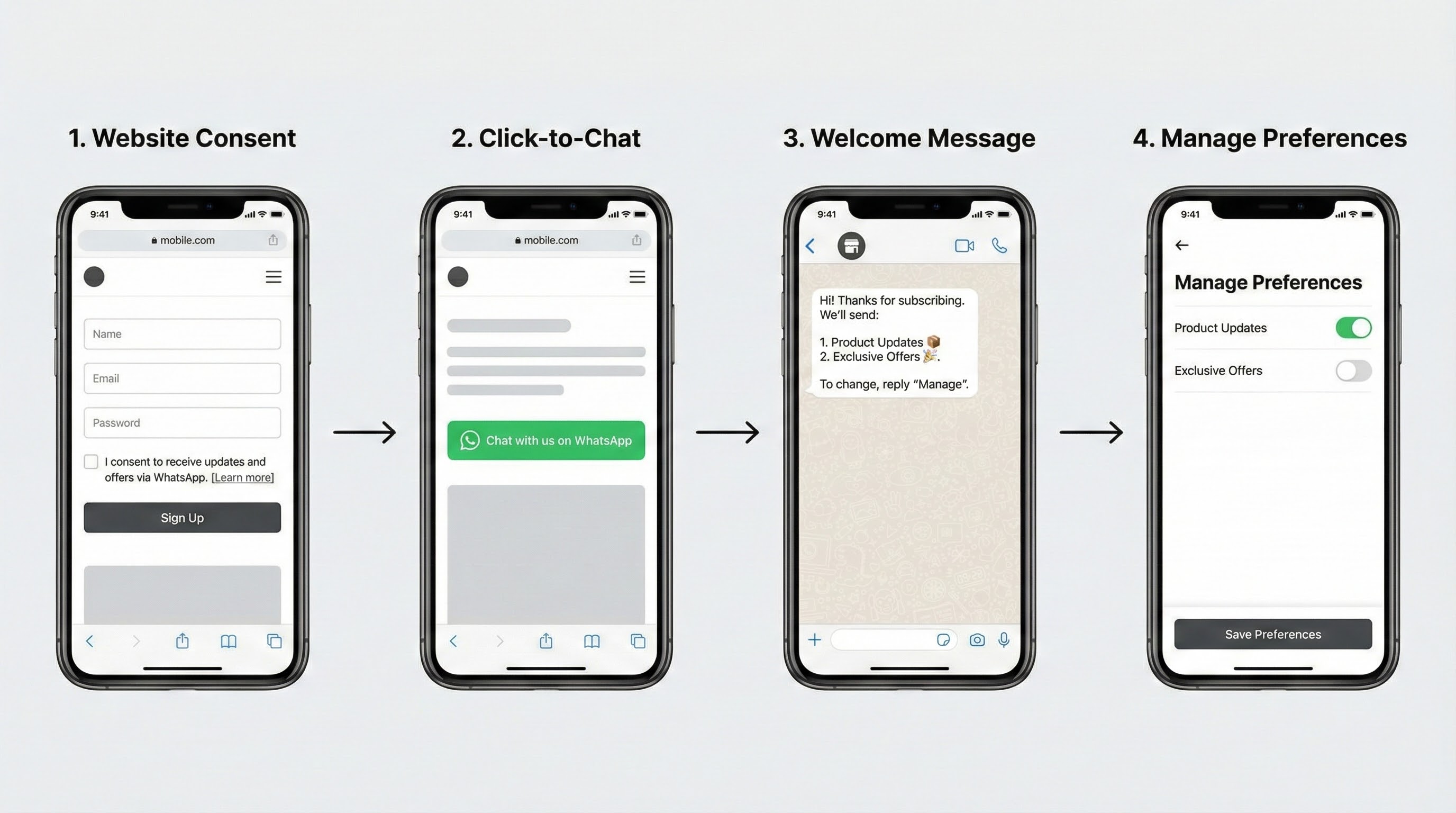
1) Consent / opt-in is mandatory
You may only contact users if they gave you their number and explicitly opted in to receive messages. Opt-outs must be honoured.
2) Respect the 24-hour customer service window + templates
-
- Inside 24 hours: you can respond normally (service conversation behaviour)
- Outside 24 hours: you must use approved message templates
3) Don’t train “broad AI” on WhatsApp Business data
If you use an AI vendor, WhatsApp restricts using Business Solution Data to create/train/improve general AI models. Limited fine-tuning for exclusive use is described as allowed under conditions.
4) Avoid spam, deception, and harmful automation patterns
WhatsApp’s guidelines warn against spam, fraud, and adversarial behaviour (including abusive automation).
How to “Automate at Scale” Without Violating the New AI Rule?

Think “AI inside the workflow,” not “AI as the product”
Your WhatsApp bot should behave like a brand assistant with defined boundaries:
-
- It helps customers with your products/services
- It doesn’t present itself as a general AI companion
- It avoids open-ended “ask me anything” positioning
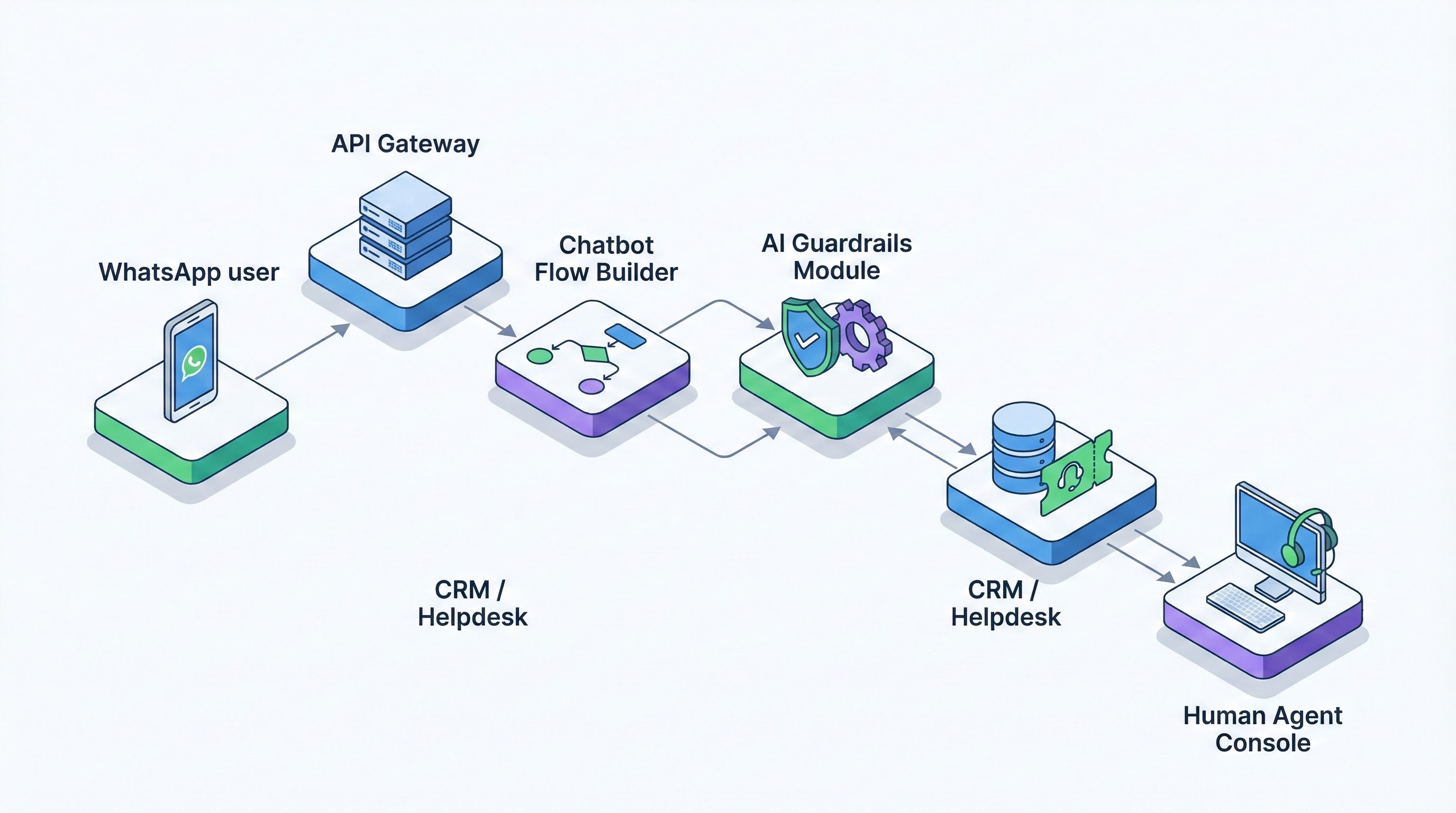
Use a compliant architecture (recommended)
Guardrailed AI + deterministic flows
-
- Use menus/buttons/quick replies for primary navigation
- AI only for:
- intent detection
- summarization for agents
- drafting responses that are verified before sending for sensitive categories
Human-in-the-loop escalation
-
- If AI confidence is low, route to human
- Always allow “Talk to agent” (and honor it fast)
Audit logs + policy monitoring
-
-
Template usage, opt-in source, user feedback signals, block/report rate monitoring
(WhatsApp can enforce restrictions when accounts repeatedly violate policies.)
-
Where Turain CPaaS Fits?
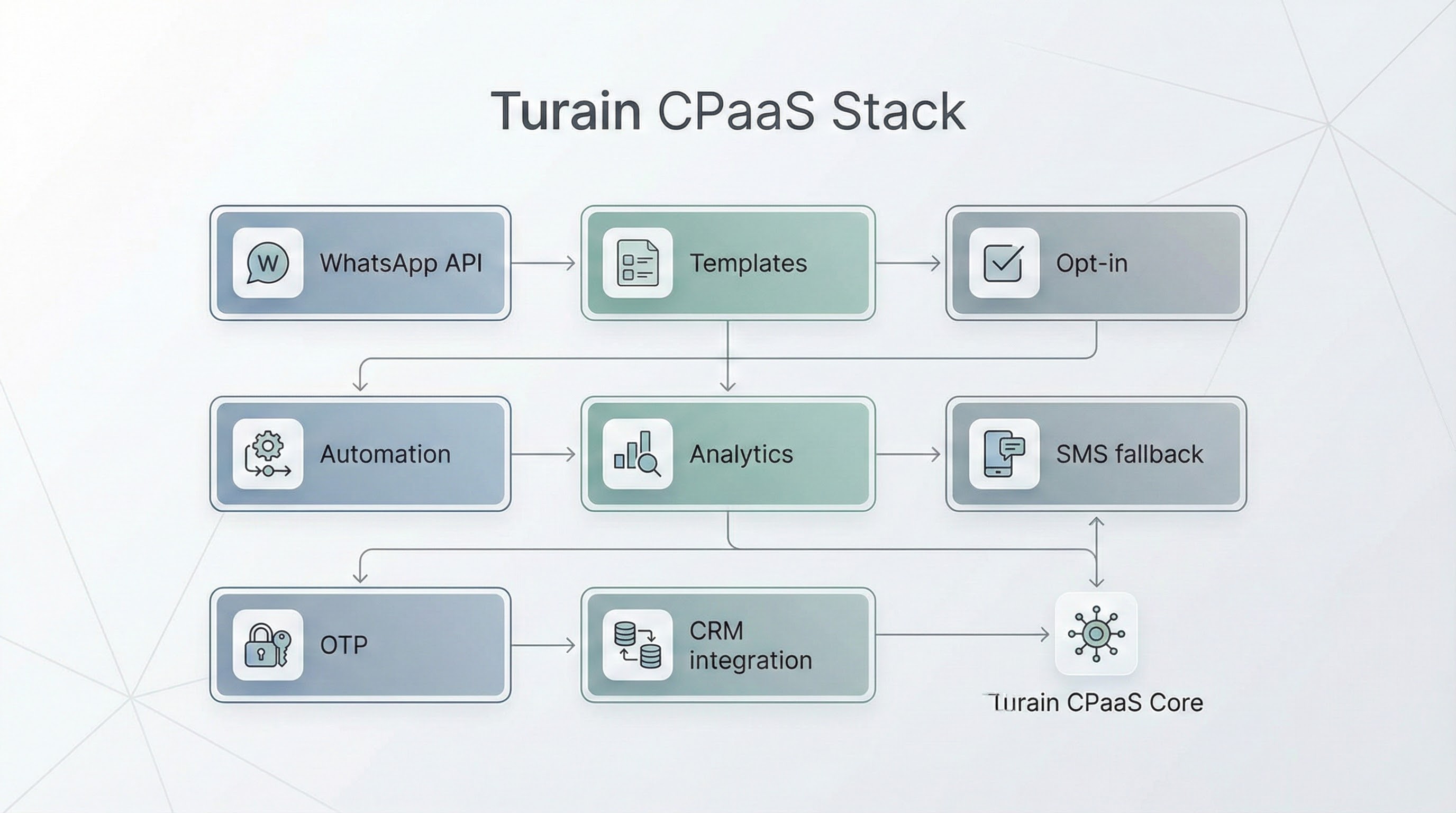
If your team wants WhatsApp automation that survives policy changes, you need CPaaS-grade controls—not just a chatbot.
Turain CPaaS capabilities to stay compliant and scale
WhatsApp Business API onboarding + governance
-
-
WABA setup support, policy-aligned templates, opt-in design, audit readiness
-
Automation flows that are “business-first”
-
- Lead capture → qualification → routing → agent handoff
- Support journeys → ticketing → SLA reminders → CSAT collection
Template + category strategy to reduce cost and risk
-
-
Smart use of Service / Utility / Authentication / Marketing categories
-
Multi-channel fallback when WhatsApp isn’t ideal
Automate Support & Lead Qualification at Scale—
Conclusion
WhatsApp’s January 2026 AI chatbot update doesn’t kill automation—it forces better automation. If you design structured, consent-led, business-purpose flows (with careful data handling and escalation), you can still scale support and revenue journeys on WhatsApp—safely. Turain’s CPaaS approach helps you automate with governance, templates, analytics, and fallback channels so you grow without policy shocks.
Disclaimer:
This article is for informational purposes and does not constitute legal advice. WhatsApp/Meta policies and enforcement can change; always review the latest official documentation and consult compliance/legal teams for your specific use case.
FAQ’s
Q1. Are AI chatbots banned on WhatsApp Business API in 2026?
No—WhatsApp targets general-purpose AI assistants as the primary product. Business-purpose automation (support, bookings, order updates) can still be compliant.
Q2. What’s the effective date of the new rule?
WhatsApp stated changes apply for new signups after Oct 15, 2025, and for earlier signups on Jan 15, 2026.
Q3. What counts as “general-purpose”?
Bots positioned for wide-ranging, open-ended conversation where the AI itself is the main offering—rather than support for a specific business service.
Q4. Can my brand still use GPT-like models behind the scenes?
The terms allow retaining an AI Provider as a third-party service provider, but set strict restrictions on Business Solution Data usage for AI model training.
Q5. Can we message customers freely anytime?
No. Opt-in is required, and outside the 24-hour service window you generally need approved templates.
Q6. How do we reduce WhatsApp messaging costs while staying compliant?
Use service conversations effectively, and leverage entry points like click-to-WhatsApp where applicable.
Q7. What’s the biggest compliance risk brands overlook?
Poor opt-in, unclear expectations, spammy frequency, and automation that surprises users.
Q8. How can Turain help?
Turain can implement policy-safe flows, template governance, consent tracking, routing, and multi-channel fallback so automation continues even when rules change.