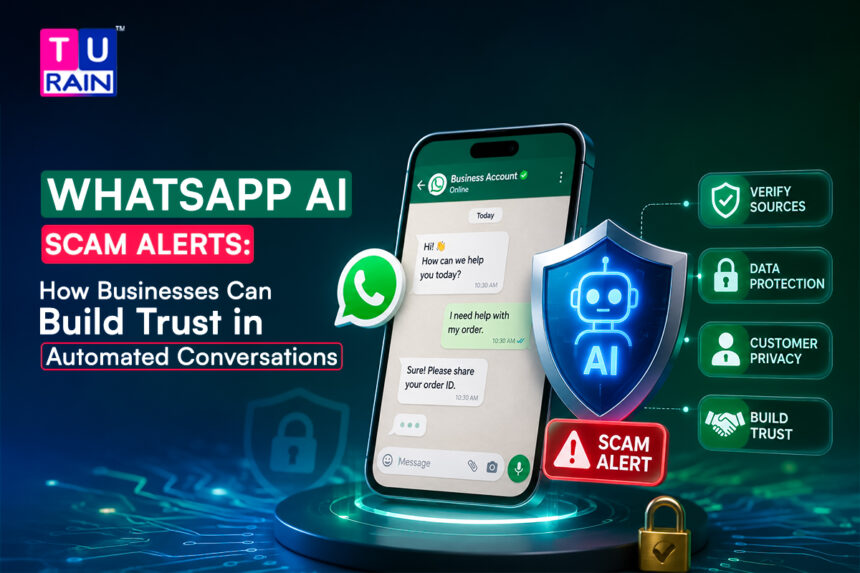
Got a warning banner pop up in a WhatsApp chat recently and wondered what triggered it?
You’re not imagining things. Meta has quietly started testing something new — an AI system that watches for scam patterns inside your conversations and warns you before things go further. If you rely on WhatsApp for sales, you should be asking one big question. Could the app accidentally flag your own messages? Will your carefully crafted texts suddenly vanish into this hidden folder? It is a completely valid fear. You need to know exactly how this new filter works. Let us break down the actual mechanics of this update. We need to look closely at what this means for you as a seller, and what your buyers will actually see on their screens.
What Is WhatsApp’s Scam Alert Feature?
Meta is trying something totally new on WhatsApp. They are currently testing an optional feature known as Scam Alert. It is designed to catch fraudsters before they can trick you. The really impressive thing is how it actually works. It uses a smart learning model that lives directly on your device. Your private messages never get sent off to Meta’s corporate servers for scanning. Instead, your phone handles all the heavy lifting locally. It reviews your incoming chats in real time and throws up a warning if a conversation feels dangerous.
Here’s the part that matters most: nothing leaves your device. The model scans message patterns locally, decides whether something looks like a scam, and only then shows you a warning — one the sender never sees. That design choice keeps WhatsApp’s end-to-end encryption intact, since Meta isn’t reading your messages to make this call. It’s classifying patterns on-device instead.
The rollout is still limited. It’s reaching a small group of beta users for now, and Meta hasn’t confirmed a timeline for a full global launch, whatever the speculation online suggests.
How Does It Actually Work?
The model looks at conversational structure and linguistic signals — things like urgency, requests for money, or patterns that match known scam scripts — mostly in chats from people who aren’t already in your contacts. When something looks off, a banner appears inside that chat.
From there, you get a few choices:
-
- Block the sender
-
- Report the conversation to WhatsApp
-
- Continue chatting, if you’re confident it’s legitimate
-
- Mark as trusted, which clears the warning and stops future alerts for that specific chat
If you mark a chat trusted, you can also choose to voluntarily share the last five messages with WhatsApp, which helps refine the model over time. That sharing step is opt-in, not automatic.
This isn’t Meta’s first move here, either. Earlier in the year, the company rolled out a separate detection system for suspicious linked-device requests — a common tactic scammers use to hijack accounts. Scam Alert builds on that same push. And the stakes are real: the U.S. Federal Trade Commission reported $425 million in losses tied to WhatsApp scams in 2025 alone, much of it linked to so-called “pig butchering” schemes that build trust over weeks before asking for money.
So, Could a Legitimate Business Get Flagged?
This is the question every business running WhatsApp outreach should be asking right now.
The honest answer: it’s possible, though the feature currently targets messages from people outside a user’s contact list, and its stated focus is on scam-shaped language patterns — urgency, money requests, unfamiliar senders pushing quick action. A business sending a poorly worded payment reminder, an unexpected “click here to verify” link, or a message that reads like classic scam phrasing could, in theory, trip the same signals a real scammer would.
That’s not really new, though. It’s the same territory businesses have had to navigate with spam filters and quality ratings for years. Scam Alert just adds another layer of scrutiny on top.
How Businesses Can Actually Build Trust on WhatsApp
None of this requires panic. It requires the same things that have always made WhatsApp messaging trustworthy — just done a bit more deliberately.
1. Use the WhatsApp Business Platform, not a personal number. Messages sent through the official WhatsApp Business API carry your registered display name and business profile, even before a customer saves your number. A random personal number pushing offers looks exactly like what a scammer’s setup looks like. Don’t give the algorithm a reason to guess.
2. Go for verification if you qualify. WhatsApp’s verified badge — commonly called the green tick, now shown as blue after Meta’s 2024 badge unification — marks an account as an Official Business Account (OBA). Getting it means passing Meta Business Manager verification with legal documents, plus proving brand “notability,” typically through several organic press mentions. It’s not instant, and not every business will qualify. But for the ones that do, it’s the clearest authenticity signal WhatsApp currently offers.
3. Keep display names and business details consistent. A mismatch between your registered business name and what customers see is one of the most common reasons verification requests get rejected. It’s also exactly the kind of inconsistency that makes a message look less legitimate, badge or no badge.
4. Avoid scam-shaped language, even when the offer is genuine. “Act now,” “verify your account immediately,” unexplained links, requests for OTPs or payment details out of context — these are the exact phrases fraud-detection models are trained to catch. If your legitimate payment reminder reads like a phishing attempt, rewrite it. Say what it’s for, name your business clearly, and skip the artificial urgency.
5. Stick to approved message templates for outbound messaging. Template messages approved through the WhatsApp Business Platform go through Meta’s own review before they’re ever sent. That review process already filters out a lot of the phrasing that trips scam-detection systems, which makes templated messaging a quieter, safer default for anything transactional — order updates, appointment reminders, delivery alerts.
6. Let customers verify you back. Complete business profiles — address, website, category, working hours — give customers something to check against. A business that’s easy to verify independently earns trust faster than one that just claims to be legitimate.
What This Means Going Forward
Scam Alert is still a beta test, and its detection logic isn’t public. But the direction is clear: messaging platforms are shifting more fraud-detection work onto the device itself, without needing to read private conversations to do it. For businesses, that’s actually a reasonable trade — better protection for customers, without Meta scanning message content. The trust ball is just landing a bit more in businesses’ court. Verified profiles, consistent naming, approved templates, and honest language do more now than they ever have.
Make Your WhatsApp Business Messaging More Secure
Build trusted customer conversations with WhatsApp Business API, automation and professional messaging solutions.
Disclaimer
The information provided in this article is for educational and informational purposes only. Features like WhatsApp’s on-device Scam Alert are currently in limited beta testing and their detection criteria, scope, and global rollout timelines are subject to change by Meta. Readers should consult official WhatsApp and Meta Business documentation for the most up-to-date compliance guidelines and feature availability before altering their communication strategies.
This feature is currently in limited beta testing. Details on scope, detection criteria, and rollout timeline may change as Meta expands testing — check WhatsApp’s official Help Center for the latest updates before relying on any specifics here for compliance planning.
References & Further Reading
-
- Messaging Security & Privacy: WhatsApp Help Center: About end-to-end encryption
-
- Official Business Accounts: Meta Business Help Center: About the Official Business Account (OBA)
-
- Creating High-Quality Messages: WhatsApp Business Messaging Policy