If you run marketing or support for a business on WhatsApp, you’ve probably typed some version of this into Google in the last two weeks: “Is WhatsApp really about to charge for messages that used to be free?”
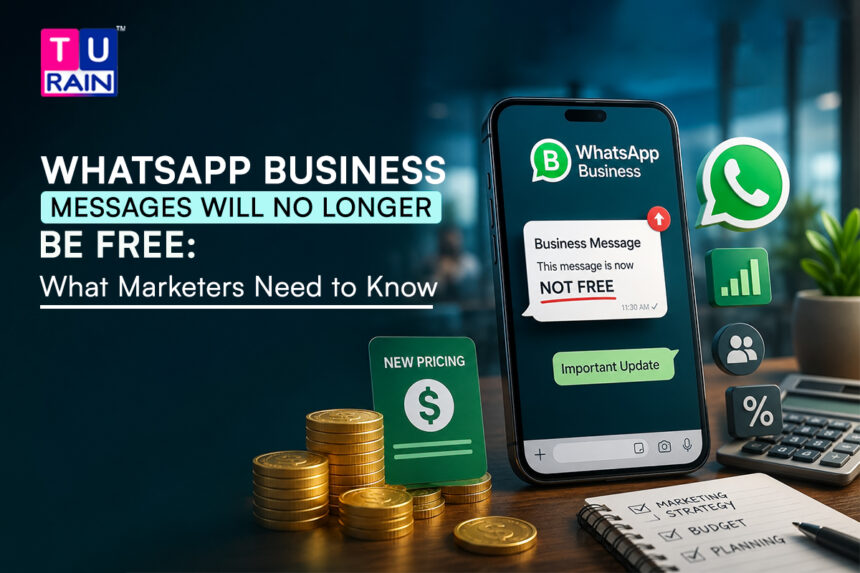
Let us guess. You handle customer support or run marketing campaigns through WhatsApp. And lately, you have probably been frantically searching Google. You want to know if WhatsApp is suddenly slapping a price tag on messages that used to cost nothing. Well, brace yourself. The answer is a definite yes. Two massive policy changes are dropping within weeks of each other. These are confirmed facts, not just industry gossip. One change is going to pull money straight from your pocket. The other change decides if your audience even receives your broadcasts in the first place. People mix these two updates up constantly. We need to walk through them separately so you do not get caught off guard.
What’s Actually Changing, and When
There are two major shifts happening on two different dates.
From 1 August 2026, replies generated by Meta’s own AI—the Meta Business Agent—will be billed per token rather than per message. The rate is $2.00 per million tokens globally, which works out to roughly 4–5 cents per typical reply, since one response usually burns through 20,000 to 25,000 tokens just reading the question and writing back.
From 1 October 2026, the bigger shift hits. Service messages (the free-form replies your team or your chatbot sends inside the open 24-hour customer service window) will become billable per message. Utility template messages, which had been free inside that same window since July 2025, will lose that exemption too. Authentication messages were never free in-window, so nothing changes there.
Meta hasn’t published the exact October rates yet, but they have committed to doing so by 1 September 2026. The rule of thumb so far is that service messages will cost roughly the same per-message rate as utility and authentication templates already charge in each country. So, if you know your current utility rate for India or the UAE, you already have a rough working number.
One thing worth being precise about: this only affects the WhatsApp Business Platform, meaning the API used by businesses running automation, CRMs, or large-scale support operations. The free WhatsApp app and the regular WhatsApp Business app that a small shop owner uses on their own phone aren’t touched by any of this.
Wait – Wasn’t Some of This Already Free?
Yes, and that’s exactly why this stings.
Since November 2024, plain-text service replies inside the 24-hour window had been free. Since July 2025, utility templates got the same treatment when sent inside that window. For about a year, businesses got used to a fairly generous free lane: a customer messages you, you reply within the day, and there is no charge regardless of how many back-and-forths it takes.
That lane is closing on 1 October 2026—not just narrowing, but closing completely.
Marketing templates, to be clear, are a separate story and already moved to a per-message billing model back in July 2025. What’s new is that the replies inside customer-initiated conversations, which businesses assumed were permanently free, are joining the billing structure too.
What This Actually Costs You, in Practice
Nobody has a final number yet because Meta hasn’t released October’s rate card, but early estimates from platforms modelling this are landing somewhere in the ballpark of $0.004 to $0.005 per service message in markets like the US, scaling by country the way utility rates already do.
Run the arithmetic on your own volume, and it adds up fast even at those small per-message numbers. A business handling 1,000 customer-initiated conversations a month, with an average of four replies per conversation, is looking at around 4,000 billable messages—somewhere near $16 extra a month at current estimates. Scale that to 10,000 conversations, and you’re closer to $160 a month in new costs. Neither figure is catastrophic on its own, but when you stack it against the Meta Business Agent’s token pricing and your existing marketing template spend, your monthly WhatsApp bill stops looking like a rounding error on the budget sheet.
Here is where it actually bites, function by function:
- Customer support: Every human reply inside an open conversation, once free, becomes a line item. High-touch support teams will feel this first.
- Automated notifications: Utility templates sent in response to a user message—like order confirmations or delivery pings—lose their in-window free status.
- Lead nurturing: If your team replies conversationally to warm leads instead of pushing them through templates, those replies now cost money per message.
- AI-driven messaging: Meta’s own AI agent bills by token from August. Third-party AI tools operating through the API are expected to fall under the October service-message charge instead.
The practical fix isn’t to abandon automation; it’s to get disciplined about it. One clean, comprehensive reply beats four fragmented ones, because each fragment is now a separate billable message. Teams that used to split a response into several short bubbles “for readability” are going to want to stop doing that immediately.
The Other Change: The Offers and Updates Folder
Here is the part that is arguably a bigger deal for marketers than the pricing itself, and it’s happening around the same window.
WhatsApp is officially testing a brand-new folder. It is called “Offers and Updates.” This feature automatically grabs promotional messages from major companies. It yanks texts from banks, airlines, and big retailers right out of your main chat list. Instead, it hides them away in a totally separate tab. Meta is still tweaking the exact schedule. Right now, a business text might sit in your main feed for up to 24 hours before it gets moved. You do have some control over this. You can disable the folder completely if you prefer one messy inbox. But there is a catch. You cannot pick and choose which brand gets a free pass. It is strictly an all-or-nothing deal.
Right now, this is limited to larger businesses on the WhatsApp Business Platform. Small businesses and people using the regular WhatsApp Business app are exempt for now, though Meta has said it may expand the feature later.
Why is Meta doing this? Think about how you actually use WhatsApp today. It is way more than just a simple chat app. In massive markets like India, Brazil, Indonesia, and Nigeria, it does almost everything. You can track a delayed package. You can complain to customer service. You can browse a brand’s new marketing catalog. You can even buy items straight from a digital storefront. The issue is that all this business stuff clogs up the exact same inbox you use to text your mom. That setup was bound to snap eventually. The friction just got too high. Meta finally came up with a solution. They are silently pushing all those brand updates and sales pitches into their own dedicated space. This keeps your primary chat list reserved strictly for real friends and family.
What This Means for Message Visibility
If your brand qualifies as a “large business” under this test, your delivery updates and offer codes might stop appearing in the main chat list within hours. That is a real visibility hit, not just a cosmetic one. A promotional message a customer would have casually glanced at on their home screen now requires them to actively tap into a separate folder to find it.
This directly threatens the open-and-click behaviour that a lot of marketing strategies were quietly built around.
How to Improve WhatsApp Message Visibility After the Folder Change
A few things are within your control here, even with the folder rollout:
- Lean harder into ad-originated conversations. The 72-hour free entry-point window after a Click-to-WhatsApp ad or Facebook Page CTA stays intact and untouched by both the pricing change and, so far, the folder sorting. That window is becoming more valuable, not less.
- Prioritise utility over marketing where the relationship allows it. Order and delivery updates carry inherent urgency that gets attention even from inside a folder. Pure promotional pushes don’t have that advantage.
- Tighten your messaging cadence. Fewer, better-timed messages protect your quality rating, and a stronger quality rating has always influenced how WhatsApp treats your delivery—folder test or not.
- Consolidate replies. Sending one complete response instead of four fragmented bubbles now saves you money under the new pricing and reduces visual clutter under the folder logic. It solves both problems with one fix.
What Marketers Should Actually Do Right Now
Realistically, before October rolls around, you should:
- Audit your reply ratios: Check how many of your customer replies are non-template, free-form service messages versus structured utility templates, as that ratio tells you your real financial exposure.
- Model your monthly costs: Use Meta’s rule of thumb (service rates matching local utility/authentication rates) to estimate budgets, even without the exact numbers yet.
- Rework fragmented workflows: Fix any AI or human workflow that splits responses into multiple messages, because under the new pricing, that habit gets expensive fast.
- Monitor your open rates: If you fall into the “large business” bracket, start tracking whether your account is included in the Offers and Updates folder test, and watch your open rates for early signs of a visibility drop.
Don’t wait for Meta’s 1 September rate announcement to start planning. By the time the numbers are public, you will want your workflow changes already built, not just budgeted for.
Disclaimer
The information provided in this article is for educational and strategic planning purposes only. Meta frequently updates its WhatsApp Business Platform pricing structures, token rates, and inbox features (such as the Offers and Updates folder). The estimated costs and October 2026 rollout dates mentioned are based on Meta's announcements prior to September 1, 2026. Businesses should always verify the latest official rate cards and policy changes directly through Meta's developer documentation before finalizing their marketing budgets or restructuring their API workflows.