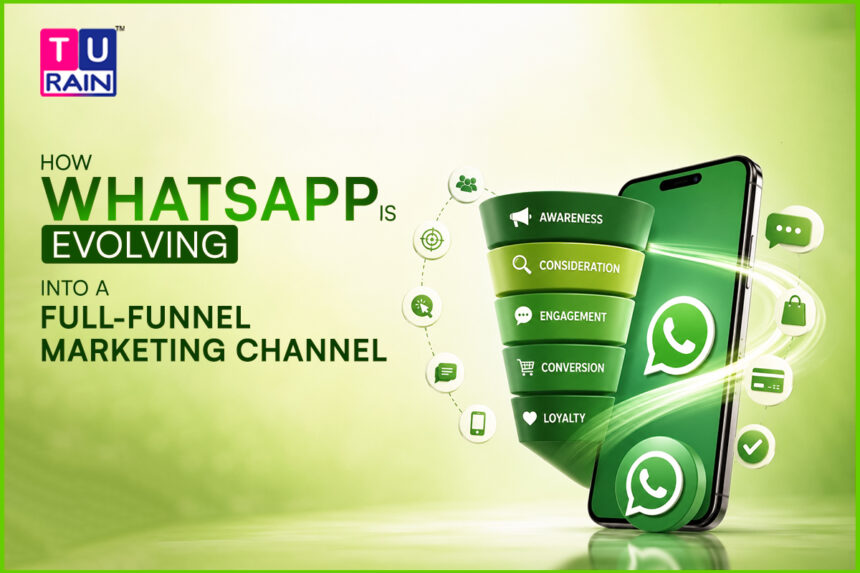
Can WhatsApp Really Handle the Entire Customer Journey?
Think about how we actually buy from small businesses these days. The entire journey usually happens on WhatsApp. The conversation usually starts small. A customer simply asks, “Do you have this in stock?” Weeks later, the thread ends with a simple “Got it, thanks!” No executives planned this out in a boardroom meeting. It happened completely organically. Why? Because shoppers always take the path of least resistance. Chatting is just much easier. Many marketing teams still treat WhatsApp like a giant digital billboard. They just blast out endless promotional codes and hope for the best. That is a massive mistake. They are completely missing the actual revolution. The entire customer journey happens right there in the app. The chat thread is acting as your full sales funnel, doing all the hard work automatically.
The Traditional Funnel Just Collapsed
We love to draw marketing funnels in neat little boxes. You know the drill. Instagram is for building awareness. The website is for browsing. The checkout page is for conversion. Email is for retention.
Here’s the thing: WhatsApp doesn’t care about your neat little boxes. It handles every single one of those stages at the exact same time, inside the exact same thread. You never force the customer to switch tabs or open a new app.
Look at how a single chat thread does it all:
-
- Instant Leads: Someone clicks a social media ad and boom—they aren’t dropped onto a slow-loading landing page. They fall straight into a real conversation with you.
-
- Always open. You never lose a midnight shopper. Smart automated replies handle all the repetitive questions. They instantly answer things like “do you have this in blue?” completely on their own. This happens at two in the morning while you are fast asleep. Your digital catalog simply does the work for you.
-
- Seamless support. Customer service becomes incredibly easy. A buyer can track a late package instantly. They can quickly swap out the wrong size. They can report a damaged item directly in the chat window. Nobody has to log into a frustrating help portal ever again.
-
- Casual upselling. Selling extra items feels totally organic. You can easily suggest a matching pair of earrings. It comes across as genuine advice from a helpful shopkeeper. It never looks like a desperate promotional blast. Customers actually appreciate the quick recommendation.
-
- Real feedback. You finally get honest opinions from your buyers. You can just ask a customer how their new item fits. People actually reply to a simple chat message. They give you solid feedback instead of totally ignoring a boring email survey link. People rarely mind texting back a quick thought.
-
- Gentle Nudges: Waking up a customer who ghosted you isn’t some complex win-back campaign. It’s just a polite, well-timed text.
The marketing funnel hasn’t vanished. It just collapsed into a single, user-friendly app that your customers actually enjoy opening. What used to take five separate software tools now runs as one continuous flow.
What This Looks Like in the Real World
Let’s look at what this looks like in practice. There’s a furniture brand down in Chennai that used to do things the hard way. They ran flashy Instagram ads and then tried to chase down leads using automated email flows. It was a mess. They were juggling two separate systems and two different teams, creating massive friction for the buyer.
Eventually, they got smart. They simply routed every single ad click straight into a WhatsApp chat.
The shift was night and day. Suddenly, a curious shopper could ask for the exact dimensions of a sofa, get a quick shaky-cam video of the fabric in natural light, and pay for the whole thing without ever leaving the conversation. The result? They closed sales way faster. By removing the friction of websites and emails, they turned casual curiosity into cold hard cash much quicker.
We are seeing the exact same pattern everywhere. Clothing labels and local service businesses are taking clunky webs of contact forms and phone trees and turning them into one smooth text thread.
How to Actually Sell in a Chat
Selling on WhatsApp is a totally different beast than a cold call or a slick email sequence. It’s a conversation. It breathes. It moves entirely at the customer’s pace, often playing out over a few short, casual exchanges rather than one aggressive pitch.
If you want this to work, you need to change your approach:
-
- Answer first, sell later. If they ask about shipping times, answer the question immediately. If you try to pitch an upsell before answering their basic question, you just look pushy.
-
- Keep it short and sweet. Treat this like you are texting a friend. Nobody wants to read a five-paragraph essay on a tiny phone screen.
-
- Show, don’t just tell. Instead of typing out a long description of a product, just snap a picture or send a 10-second video. Visuals answer questions instantly.
-
- One nudge is plenty. Follow up once if they go quiet. A single, polite check-in works wonders. Pestering them with four follow-ups just ruins the vibe and gets you blocked.
Support is Your Secret Marketing Weapon
This might sound a little backward, but stellar customer support on WhatsApp is actually your best retention tool. Support and marketing usually live in different departments, but here, they are the exact same thing.
Think about it. If a customer has a problem and you fix it quickly right there in the chat they already trust, you’ve just won a repeat buyer. That genuine, helpful interaction builds deep loyalty. It does way more for your brand than a generic “we value your feedback” auto-responder ever could. The support chat is the retention marketing.
Building a Funnel That Doesn’t Suck
You can’t just slap a WhatsApp number in your Instagram bio and expect the money to roll in. You have to be intentional about the design.
-
- Reroute your ads. Stop sending traffic to generic landing pages. Route those clicks directly to WhatsApp, especially if you are selling high-ticket items where people naturally have a lot of questions.
-
- Load up your catalog. Don’t make people wait six hours for a basic answer about sizing or pricing. Let the automated features do the heavy lifting.
-
- Check in after the sale. A casual “hey, how is the product working out for you?” text is a powerhouse for building long-term relationships.
-
- Segment your audience. A loyal customer who buys every month shouldn’t get the same introductory pitch as a total stranger who just clicked an ad today.
-
- Be incredibly fast. WhatsApp trains us to expect instant replies. If you take two days to text back, you look bad.
-
- Plan it out first. Grab a whiteboard and map out the entire journey before you build any automated flows. Every single message should have a clear, specific purpose.
How Do You Know if it’s Actually Working?
Even though everything is happening in one app, you still have to track your numbers. You just don’t need fancy, expensive software to do it.
Tag your ad clicks. You need to know exactly which leads came from WhatsApp versus your website, so don’t lump them all into one messy inbox. Watch the clock, too. Track how long it takes to go from that first “hello” to a paid invoice. If that time is shrinking, your funnel is genuinely working.
Look for the silence. Notice exactly where people stop replying. Pay close attention to when the conversation completely dies. If customers consistently ghost you right after seeing the shipping costs, you have a massive problem. You need to adjust that specific part of your pitch right away. Also, keep an eye on your customer support pipeline. Monitor what happens after a routine complaint gets solved. Do those people actually buy from you again? Tracking this transition shows the real value of your team. It proves whether your daily service interactions actively keep your buyers around.
Honestly? A simple, shared spreadsheet updated once a week is usually all you need to spot these patterns.
The Bottom Line
Here is the reality for businesses today. WhatsApp has quietly become the place where customers actually make their purchasing decisions. It isn’t just a digital dumping ground for promotional flyers that people ignore.
Are your buyers still bouncing between different apps to get things done? If so, you are wasting serious energy. You are making the entire sales process way harder than it should be. The fastest-growing companies completely ditched that scattered approach. They moved everything into one single chat thread. They realized this simple tool is incredibly effective. It easily transforms a casually curious browser into a fiercely loyal customer. You just have to put in the initial effort. Set the chat up properly once, and watch the results roll in.
Disclaimer
The information provided in this article is for educational and informational purposes only. Features, best practices, and advertising policies related to Meta's WhatsApp Business Platform are subject to change. Readers should consult Meta’s official guidelines and their own legal or financial advisors before implementing new marketing strategies, managing customer data, or launching Click-to-WhatsApp ad campaigns to ensure compliance with relevant privacy laws.
Frequently Asked Questions (FAQs)
1. If the whole journey is on WhatsApp, how do I track my return on ad spend (ROAS)?
2. Don’t customers get annoyed if I try to upsell them when they chat with their family?
3. Is it safe to handle customer support complaints on WhatsApp? What if they leave a bad review?
References & Further Reading
-
- Click-to-WhatsApp Advertising: Meta for Business: Ads that Click to WhatsApp
-
- Understanding Conversational Marketing: HubSpot: What is Conversational Marketing?
-
- Managing Customer Data Privacy: WhatsApp Business Help Center: About WhatsApp Business policies