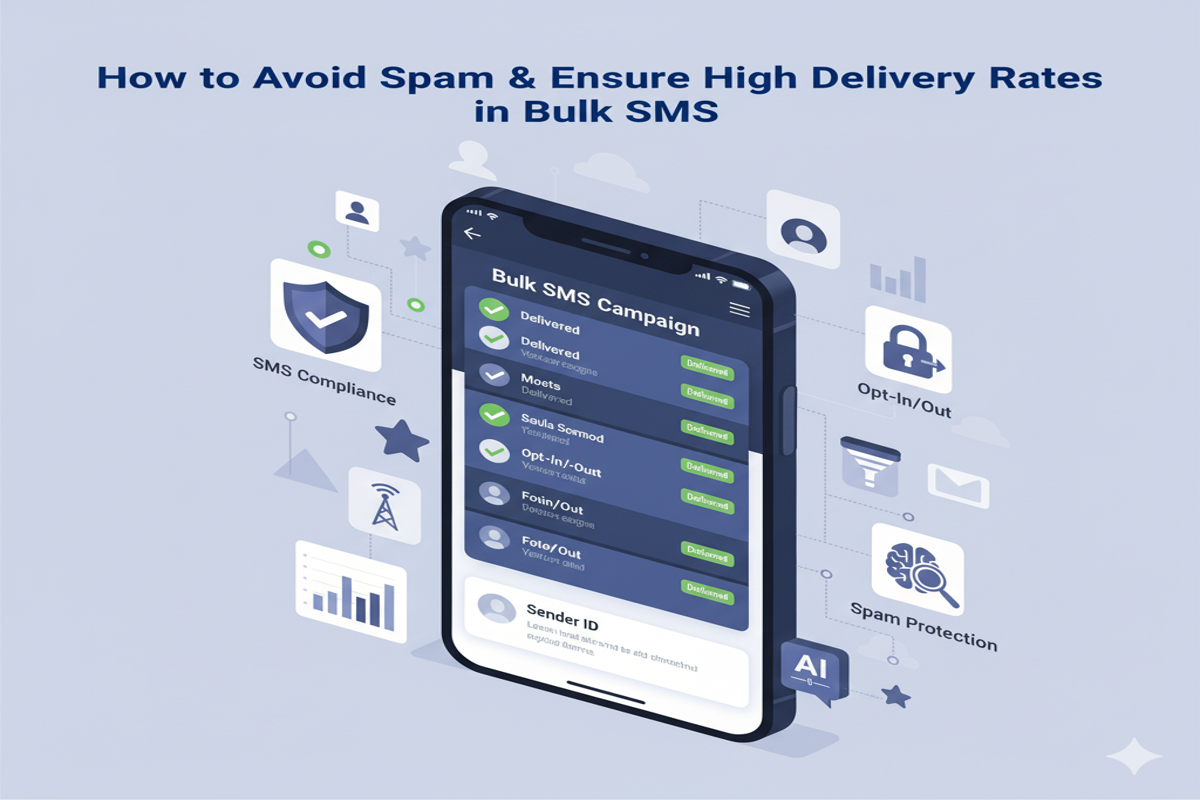
Bulk SMS is fast, and it is powerful, and it reaches people directly. Many businesses use it, and many fail, and they struggle with delivery. They fail because their messages never arrive, and they lose trust quickly. Or they fail because their texts are marked as spam, and they lose business immediately. If you want to avoid SMS spam, you must understand the system, and you must respect carriers. You must respect the rules, you must respect the user, and you must respect compliance. A trusted bulk SMS service provider helps you achieve this by ensuring proper delivery, compliance, and reputation management. That is how you gain trust, and that is how you secure delivery, and that is how you grow.
What Does SMS Deliverability Really Mean?
SMS deliverability is not simple, and it requires precision. It measures if your messages travel, and if they arrive. To avoid SMS spam, you must understand deliverability clearly.
What’s the difference between sent, delivered, and received?
Sending a message is simple, and delivery is harder, but monitoring it matters. A message is sent, and then it leaves your system, and it enters the carrier. A message is delivered, and then the carrier confirms receipt, and it tracks logs. A message is received, and then it reaches the user, and it registers quickly. To avoid SMS spam, you must respect this chain, and you must track carefully. Each stage tells a story, and each stage may break, and each stage matters.
How is SMS spam different from email spam?
Email spam lives in folders, and users mark it, and they ignore it. SMS spam lives in filters, and carriers block it, and they enforce it. Carriers watch patterns, and they study words, and they protect. They protect users, and they punish senders, and they regulate constantly. If you want to avoid SMS spam, you must write clean, and you must write carefully. You must craft SMS messages that look safe and that build trust slowly. This difference matters, and it defines the game and it defines strategy.
Why Do Bulk SMS Messages Get Flagged as Spam?
Bulk SMS can fail, and it often gets blocked. Carriers watch patterns, and they filter suspicious content quickly. To avoid SMS spam, you must know the triggers.
Are keywords triggering carrier filters?
Carriers watch keywords, and they block aggressively and filter quickly. They see “FREE,” and they raise suspicion, and they filter. They see “WIN,” and they pause, and they check. They know tricks, and they know abuse, and they prevent. To avoid SMS spam, you must use plain speech, and you must sound natural. You must sound human, and you must sound clear, and you must stay consistent.
Does sender ID reputation matter?
Carriers track your sender ID, and they score it and track its history. They prefer short codes, and they prefer branded IDs, and they prefer trust. If you recycle bad IDs, you risk failure, and you risk blocks. To avoid SMS spam, you must respect reputation, and you must protect identity. This is one of the best SMS sender ID best practices, and it protects delivery.
Can poor targeting increase spam complaints?
A message is relevant, and it feels welcome, and it feels right. A message is irrelevant, and it feels forced, and it feels fake. Send a gym offer to the wrong user, and you lose trust quickly. Send an OTP SMS at the right time, and you gain trust. In bulk SMS for business, relevance is survival, and relevance defines success.
What happens if you skip opt-in or send too often?
Regulators demand consent, carriers respect it, and they monitor it. If you send without opt-in, you break trust, and you break rules. If you flood users, you break patience, and you break results. Both paths end the same, and both lead to spam, and both hurt. To avoid SMS spam, you must give a choice, and you must respect timing.
How Can You Stay Compliant With SMS Regulations?
Compliance protects your business, and it protects your users. Bulk SMS regulations and compliance guide every successful campaign. To avoid SMS spam, you must follow the rules.
Why are opt-in and opt-out essential?
Consent is law, and it is also respect, and it is trust. Bulk SMS regulations and compliance require it, and carriers enforce it. An opt-in keeps you safe, and an opt-out keeps you honest, and both matter. This is how you prevent SMS from going to spam, and this is how you protect.
Should you use branded sender IDs or short codes?
Yes, because identity matters, and identity builds trust. A branded sender ID is clear, and it is trusted, and it is consistent. A short code is fast, and it is reliable, and it is useful. These are SMS sender ID best practices, and they work well.
What global rules should you follow?
Each region writes rules, and each region enforces them, and each region tracks. TCPA rules apply in America, and GDPR rules apply in Europe, and both matter. TRAI rules apply in India, and others follow, and others adapt. Bulk SMS regulations and compliance are many, and they evolve, and they expand. To avoid SMS spam, you must respect all of them, and you must comply carefully.
How Do You Write SMS That Don’t Look Like Spam?
The way you write matters, and it shapes deliverability. Words carry signals, and they decide if messages pass. To avoid SMS spam, you must craft SMS messages carefully.
How short and clear should your SMS be?
An SMS is short, and it must stay short, and it must stay precise. Long messages confuse, and short messages deliver, and short messages win. To avoid SMS spam, you must value clarity, and you must value honesty.
What words and formatting should you avoid?
Carriers watch style, and users do too, and both notice. Too many emojis feel forced, and too many capitals feel fake, and they reject. To avoid SMS spam, you must sound natural, and you must sound consistent. You must sound like a person, and not like a bot, and not like spam.
Should you always include a link, and how do you make it safe?
Links are useful, and links are dangerous, and links are risky. If you use them, you must use them well, and you must test. A branded domain builds trust, and a generic domain kills it, and it destroys it. Craft SMS messages with care, respect safety, and respect delivery.
What Technical Choices Improve SMS Delivery?
Strong delivery depends on technology, and it depends on setup. The right tools guide performance, and they shape reliability. To avoid SMS spam, you must choose technical paths wisely.
Which SMS gateway or route should you choose?
A strong gateway is stable, and a weak one is risky, and it fails. Carriers know grey routes, and they block them, and they monitor them. A trusted Bulk SMS API ensures quality, and it ensures safety, and it ensures delivery. If you want to avoid SMS spam, you must choose well, and you must check.
Is it better to use shared or dedicated sender IDs?
Shared IDs are cheaper, and they are weaker, and they are unstable. Dedicated IDs are stronger, and they are safer, and they are trusted. For OTP SMS and for transactional SMS delivery issues, a dedicated ID is critical, and it is necessary.
How do carriers filter or block suspicious traffic?
Carriers monitor patterns, and they block floods, and they block spikes. If you send too many at once, you risk filters, and you risk bans. Bulk SMS marketing modern methods use pacing, and they use rhythm, and they use control. They send with care, and they send with rhythm, and they send with balance.
How Do You Keep Your SMS List Clean?
A clean list supports trust, and it supports deliverability. Poor data creates risks, and it creates delivery problems. To avoid SMS spam, you must maintain your lists carefully.
Why is list hygiene important?
Inactive numbers are dead, and they drag you down, and they reduce rates. A dirty list lowers rates, and it hurts, and it damages trust. A clean list is sharp, and it delivers, and it improves. To avoid SMS spam, you must clean often, and you must clean carefully.
How can segmentation reduce spam complaints?
Segmentation is intelligence, and it saves effort, and it builds results. Group your users, respect their needs, and respect their choices. Bulk SMS for business works best this way, and it works reliably. When you segment, you prevent SMS from going to spam, and you prevent complaints.
How often should you send messages?
Too often is noise, and too rare is silence, and both hurt. A rhythm works best, a balance works, and timing matters. To increase SMS open rates, you must respect timing and you must respect users.
How Can You Monitor and Optimize SMS Campaigns?
Segmentation is intelligence, and it saves effort, and it builds results. Group your users, respect their needs, and respect their choices. Bulk SMS for business works best this way, and it works reliably. When you segment, you prevent SMS from going to spam, and you prevent complaints.
What delivery metrics should you track?
Track delivery, track opens, and track carefully. Track clicks, track exits, and track complaints. Numbers tell the truth, and they guide you, and they shape. If you want to avoid SMS spam, you must study them and you must respect them.
How do you test messages for better results?
A/B testing is simple, and it is powerful, and it is reliable. Change a word, and watch results, and watch engagement. Change a link, and watch clicks, and watch performance. Craft SMS messages with learning, and craft them with data. That is how you improve, and that is how you avoid SMS spam, and that is how you succeed.
What should you do when spam complaints rise?
Listen, pause, and study patterns. Study, and refine, and adjust carefully. Complaints are signals, and they point out flaws, and they expose. Bulk SMS regulations and compliance protect users, and complaints remind you why, and they remind importance.
What Advanced Tactics Boost Delivery Rates?
Basic steps help you start, and advanced tactics push further. Modern tools guide growth, and they guide stronger delivery. To avoid SMS spam, you must apply smarter proven methods.
Can personalization improve trust?
Yes, because people like recognition, and they like relevance. Say their name, and they respond, and they engage. Use location, and they notice, and they trust. To increase SMS open rates, you must personalize, and you must personalize carefully.
Does scheduling by time zone help engagement?
Yes, because time matters, and timing affects results. Send at midnight, and they ignore, and they avoid. Send at noon, and they engage, and they respond. Smart timing prevents SMS from going to spam, and smart timing builds trust.
How does SMS fit into omnichannel marketing?
SMS works alone, and it works with others, and it connects. Pair it with email, and you double the strength, and you build. Pair it with voice SMS, and you expand reach, and you expand influence. Bulk SMS for business grows when you connect it, and it grows faster.
Can AI reduce spam triggers in SMS copy?
Yes, because AI can see patterns, and it can predict. It studies words, and it predicts flags, and it blocks. It helps craft SMS messages that avoid SMS spam, and it helps with compliance. It is a modern tool, and it is practical, and it is useful.
Final Thoughts: What’s the Key to Sustainable SMS Success?
The key is respect, the key is discipline, and the key is patience. If you want to avoid SMS spam, you must follow the rules and you must respect the guidelines. You must write simply, and you must write humanely, and you must write clearly. You must use clean routes, you must use strong IDs, and you must use checks. You must monitor numbers, you must refine messages, and you must refine campaigns. Bulk SMS marketing modern methods require patience, and they require clarity, and they require compliance. They require testing, and they require monitoring, and they require respect. Bulk SMS for business will stay relevant, and it will stay strong, and it will stay vital. The winners will be those who respect the system, and they will be consistent. The winners will be those who respect the user, and they will be trusted.