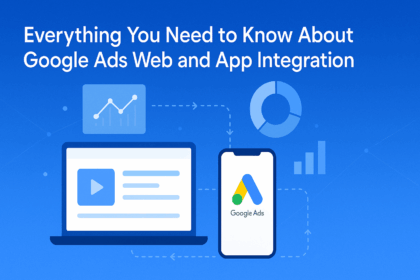

If you’re still running Search campaigns with automatically created assets or campaign-level broad match turned on, mark your calendar. September 1, 2026, isn’t a soft deadline. It’s the day Google starts moving those campaigns into AI Max, whether you’ve clicked a single button or not.
No opt-in required. No confirmation email to approve. Just an automatic upgrade, rolling out account by account.
Here’s what’s actually happening, why it’s happening now, and what to check before it reaches your account.
What Is Changing With Google AI Max Migration in September 2026?
Google confirmed the migration through a direct email to affected advertisers on August 5, 2026. The message was blunt: campaigns using automatically created assets (ACA) or campaign-level broad match would be automatically upgraded to AI Max for Search, starting September 1.
A week later, on August 12, Google published the technical mechanics on its Developer Blog, filling in details the email left out — default settings, new reporting fields, and confirmation that the door on legacy setups had already closed.
Because here’s the part a lot of advertisers missed: the option to create new campaign-level broad match or legacy ACA configurations was switched off on August 3, 2026 — across the Ads UI, Ads Editor, and API. So by the time September rolls around, you’re not choosing whether to keep the old setup. That choice is already gone. What you’re choosing is whether to configure the migration yourself, or let Google do it for you with default settings.
The migration itself runs across the full month, from September 1 through September 30. Campaigns won’t all flip on day one — they’ll migrate in place, gradually, throughout September.
Why This Is Happening Now
This didn’t come out of nowhere. Google first announced the broader plan back on April 15, 2026, when Brandon Ervin, Director of Product Management at Google Ads, confirmed AI Max was officially out of beta. The original plan bundled three features together for a combined September migration: Dynamic Search Ads, ACA, and campaign-level broad match.
That bundle got split.
On June 11, 2026, Google pushed Dynamic Search Ads out to February 2027 — a five-month delay, attributed to advertiser pushback over the risk of campaign changes landing in the middle of Q4 planning season. Fair concern, and Google listened. But ACA and campaign-level broad match kept their original September date. Nothing about that timeline moved, even though some of Google’s own help documentation wasn’t updated fast enough to reflect the split, which understandably confused a few advertisers checking dates in the weeks after.
So to be clear about what’s happening when:
- August 3, 2026 — Creation of new legacy campaign-level broad match and ACA configurations blocked
- September 1–30, 2026 — Automatic migration of existing campaign-level broad match and ACA campaigns to AI Max
- September 2026 — In-account notices begin appearing, encouraging voluntary upgrade of Dynamic Search Ads
- January 15, 2027 — Reminder notifications sent to advertisers still running legacy Dynamic Search Ads
- February 1–28, 2027 — Automatic migration of Dynamic Search Ads, and the ability to create new DSA ad groups permanently removed
Worth noting: this timeline is specific to Search campaigns. Performance Max is a separate campaign type and isn’t part of this migration.
What Actually Happens to Your Campaign
Google says the migration is designed to mirror your existing setup as closely as possible, not to hand your account a completely new configuration overnight. But the defaults still matter, and they differ depending on what your campaign was using before.
If your campaign used Automatically Created Assets: it gets upgraded to AI Max with both search term matching and text customization turned on by default.
If your campaign used campaign-level broad match: it gets upgraded to AI Max with search term matching turned on by default — text customization is not automatically enabled for this group.
Neither group gets final URL expansion turned on automatically at migration, since that setting depends on text customization being active first. Your existing brand inclusions and exclusions carry over unchanged, which is at least one thing you won’t need to rebuild from scratch.
What Is Google AI Max for Search Campaigns?
If you haven’t worked with it yet, AI Max isn’t a new campaign type, and it isn’t a black box that takes over your account. It’s a set of features that sit inside your existing Search campaign structure, replacing what used to be the broad match setting in your campaign settings.
Three components do the real work:
- Search term matching — uses broad match logic and keywordless technology to find relevant queries beyond your existing keyword list, learning from your keywords, ad creative, and landing pages
- Text customization (the new name for automatically created assets) — generates headlines and descriptions using your existing ads, landing page copy, and AI, tailored to what the user actually searched for
- Final URL expansion — automatically sends users to whichever page on your site best matches their search intent, rather than locking them to a single fixed landing page
You still keep your bidding strategy, your negative keywords, your brand inclusions and exclusions, your audience signals, and your geographic targeting. AI Max works within those boundaries — it doesn’t override them.
Google AI Max Migration Checklist: What Should Advertisers Check Before September 2026?
This is the part that actually matters for your account. A few things worth doing now, not after the migration lands.
Run a campaign audit. Identify every Search campaign currently using ACA or campaign-level broad match. These are the ones affected. Standard keyword-based Search campaigns without either setting are not being auto-converted in September.
Review your asset quality. Since text customization pulls language from your existing ads and landing pages to generate new copy, weak or outdated ad assets become a bigger liability once AI Max starts writing variations off them. Clean these up before the migration, not after.
Tighten your search-term monitoring. Expanded query matching means your account will likely start serving against queries it wasn’t matching before. Baseline your current search terms report now, so you have something to compare against once AI Max is active. Plan to check it weekly, at minimum, for the first several weeks post-migration.
Set your brand controls deliberately. Brand inclusions and exclusions carry over automatically, but this is a good moment to re-confirm they’re actually configured the way you want — not just whatever was set months ago and forgotten.
Decide on final URL expansion in advance. It won’t switch on automatically at migration, but if you plan to enable text customization anyway, think through whether you want final URL expansion active too, and set URL exclusion rules for any pages that shouldn’t receive paid traffic — particularly relevant for regulated industries like healthcare or finance.
Confirm your conversion tracking is solid. Any time query matching and ad creation shift, clean conversion data becomes the thing that tells you whether the change is actually working. Don’t wait until after the migration to notice tracking gaps.
Check your scripts, tools, and API integrations. If you’re running bid management tools, scripts, or reporting pipelines built against legacy broad match or ACA entities, those need an update plan before the window closes. AI Max isn’t yet available across every Editor and API version, so activating or deactivating it manually can throw errors in tools not built to handle the change.
Want to get more from your Google Ads campaigns?
From campaign strategy and conversion tracking to performance optimization, build paid campaigns around measurable business outcomes.
Explore Turain’s Google Ads & PPC Services
Disclaimer
Platform Updates & Timeline Notice: This guide is for informational purposes only and is based on Google Ads announcements, Developer Blog updates, and platform documentation available as of August 2026. Google frequently adjusts rollout timelines, API endpoint deprecations, and feature definitions. Advertisers and developers should rely on their direct Google Ads account notifications and the official Google Ads Developer Blog for the most current information regarding forced migrations and API support.
This guide reflects Google’s published migration timeline and documentation as of August 2026. Given how recently this schedule has shifted once already, advertisers should keep an eye on in-account notifications and Google’s official Ads Developer Blog for any further updates before September 1.
Frequently Asked Questions
What is Google AI Max?
AI Max for Search campaigns is a set of optional features — search term matching, text customization, and final URL expansion — that operate inside an existing Search campaign. It's not a separate campaign type; it replaces the older broad match setting with more advanced, AI-driven query matching and creative generation, while keeping your existing bidding, targeting, and negative keyword controls intact.
Which Google Ads campaigns will automatically migrate?
Any Search campaign currently using automatically created assets or the campaign-level broad match setting. The migration runs from September 1 through September 30, 2026. Standard keyword-based Search campaigns without either setting are unaffected by this particular migration. Dynamic Search Ads follow a separate timeline, migrating automatically in February 2027.
How can advertisers prepare for AI Max?
Audit which campaigns use ACA or campaign-level broad match, clean up ad assets and landing pages that text customization will draw from, baseline your search terms report before the migration, confirm brand inclusions and exclusions are current, decide your position on final URL expansion, and verify conversion tracking is accurate. If you manage scripts or API integrations tied to legacy settings, update those before the window closes.
Will AI Max migration affect my existing bid strategies (tCPA/tROAS)?
No. Your underlying bidding strategy (Target CPA, Target ROAS, Maximize Conversions, etc.) will remain intact and will continue to function. However, because AI Max introduces broader search term matching and new creative variations, you may see a temporary fluctuation in performance as the algorithm adjusts to the new query volume. Monitor your CPA/ROAS targets closely during the first two weeks of September.
Does this migration impact Performance Max (PMax) campaigns?
No. This specific September 2026 migration applies exclusively to standard Search campaigns utilizing legacy Automatically Created Assets (ACA) or campaign-level broad match settings. Performance Max operates on a different infrastructure and is unaffected by this update.
If I don't want AI Max, can I opt out before September 1?
You cannot opt out of the migration itself if you intend to keep using campaign-level broad match or ACA, as those legacy settings are being permanently retired. To avoid being migrated into the AI Max environment entirely, you must manually change your affected campaigns back to standard keyword-level matching and turn off ACA before September 1.
What happens to API scripts running against legacy broad match settings?
Scripts or API calls attempting to create new campaigns with legacy campaign-level broad match or ACA configurations will return errors, as creation was blocked on August 3, 2026. Developers must update their scripts to reference the new AI Max feature settings. Consult the Google Ads API documentation for the most current object definitions.
Official Reference Links
- Google Ads Help – About AI Max for Search: support.google.com/google-ads
- Google Ads Developer Blog – API Updates: ads-developers.googleblog.com
- Google Ads Help – Brand Settings in Search & Performance Max: support.google.com/google-ads