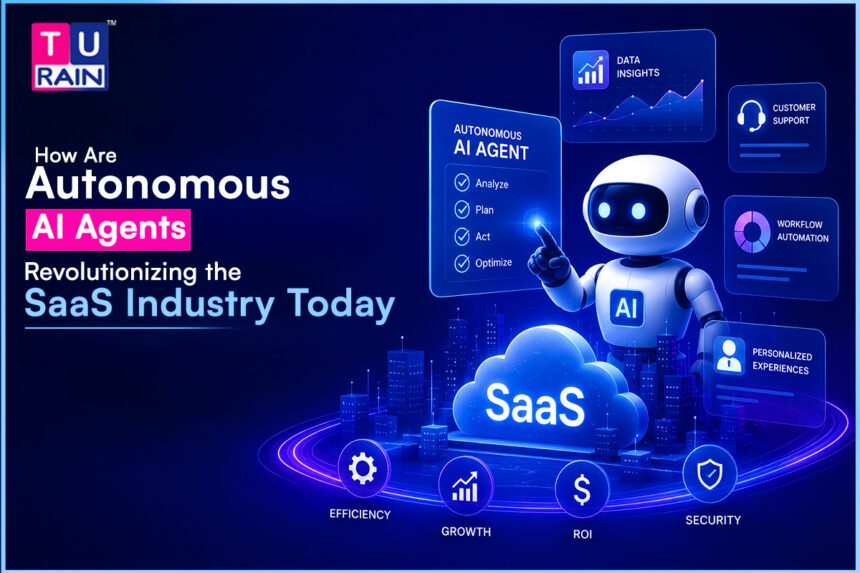
Are You Still Stuck With Chatbots That Need Constant Hand-Holding?
Ever stared down a customer support bot that completely misses your question, leaving you more frustrated than before? Basic bots loop back to “Did this help?” while ignoring real needs, and this repetition quickly erodes trust.
The real software problem today isn’t missing tools; instead, it’s a total lack of independence. Old chatbots work like scripted FAQ finders, and as a result, they fail the moment a request goes off-script.
- They follow strict rules only, so they can’t adapt when conversations turn messy.
- They ping humans instantly when chats go sideways, which slows everything down.
- Human approvals for minor tasks slow down speed and disrupt the user experience.
Picture a hot enterprise lead asking for custom pricing in the middle of a busy day. A dumb bot just creates a ticket, and then everyone waits. They wait days, and in that time, momentum dies.
Autonomous AI agents instead grab the lead’s profile fast, connecting context in seconds.
They check CRM pricing securely, using guardrails to stay compliant. They craft a personal quote that actually reflects usage and intent. They hit send while interest is still high. Sales teams close while autonomous workflows run everything else quietly in the background.
This guide demonstrates how SaaS leverages intelligent AI agents, replacing rigid bots with dynamic capabilities, and transforming static software into living systems. Tech partners like Turain scale teams without extra hires using these systems and a strong layer of oversight.
What Exactly Are Autonomous AI Agents in SaaS?
Autonomous AI agents are advanced digital team members powered by Large Language Models, built to act instead of just answer. They go far beyond pulling canned answers and surface-level snippets.
- They decode complex goals alone, even when users explain them in messy language.
- They map step-by-step plans, so they don’t stall after the first reply.
- They finish full tasks from start to end, within well-defined boundaries.
- They work without human babysitting on routine work, while still respecting approvals on risky actions.
In real SaaS stacks, their permissions are scoped, monitored, and logged so they cannot act outside clearly defined responsibilities, which keeps teams in control.
A basic chatbot feels like a vending machine; you push the exact buttons, or nothing happens. AI agents in SaaS act like sharp executive assistants instead, anticipating needs from context. They watch your software 24/7, not to replace humans but to handle the grind. They connect to APIs and databases as needed, stitching together data from multiple tools. They decide and complete autonomous workflows live, moment by moment.
They do this within carefully designed workflows, not with unlimited freedom across every internal system, which is crucial for safety. You gain smart systems that handle jobs reliably under supervision, freeing humans to focus on strategy.
Why Do Autonomous Workflows Matter So Much Right Now?
Switching to agent systems changes everything because it shifts software from passive to proactive. It turns static software into active digital workers that actually move work forward.
- User wins: No more menu mazes for billing or data syncs, so friction drops immediately. Autonomous AI agents fix issues quietly behind the scenes, letting users feel like things “just work.”
- Real impact: They cut churn by spotting trouble early, before tickets explode. AI agents in SaaS push custom fixes instantly, not days later. Satisfaction climbs when autonomous workflows are solved quickly, and users feel seen rather than ignored.
- Business shift: Scale output without admin armies, which is vital in lean teams. Autonomous AI agents handle routine work so humans can focus on creative, complex tasks. Costs stay low with smart oversight, but real results still depend on good implementation, measurement, and iteration, so leaders should treat these benefits as data-backed goals, not automatic outcomes.
How Do These Autonomous AI Agents Actually Work?
True autonomous workflows need solid engineering, not just a clever model. Here’s the real process these digital workers follow from first signal to final action:
- Step 1: Context Grab – Agents scan user signals like upset queries, usage patterns, or account flags. They read true intent via natural language, not just keywords. Autonomous AI agents get the problem right away more often because they blend history and tone.
- Step 2: Task Split – No canned replies here; instead, they break the job down. AI agents in SaaS break big goals into small steps that are easier to execute. They plan logical sequences for clean execution, reducing the chance of missing a crucial step.
- Step 3: Tool Action – Agents hit APIs or databases solo once the plan is ready. They grab history, crunch numbers, and update tickets at once, so the user doesn’t have to repeat themselves. Autonomous workflows run smoothly when tools, permissions, and rules are wired correctly.
- Step 4: Learn & Adapt – They recall past work and outcomes to adjust behavior. AI agents in SaaS fix API failures by retrying with smarter strategies. They retry smartly to complete autonomous workflows, but even here, retries and changes are bounded by rate limits, rules, and safety checks, so a failing integration cannot spiral into repeated bad actions.
Who Needs to Implement Autonomous AI Agents?
Agent tech fits every level now, from scrappy startups to global enterprises.
- Startups: Use autonomous AI agents for 24/7 onboarding so no new user waits. Skip global support hires in the early days, while still offering responsive help.
- IT Leads: Code agents scan repos solo, surfacing risks quickly. AI agents in SaaS find bugs, push fixes fast, and reduce toil around repetitive checks.
- Teams: Marketing/HR run lead quals via autonomous workflows, so follow-up never slips. Pipelines update auto, keeping CRM and HRIS clean in the background.
- Integrators: Partners like Turain build multi-agent setups that span tools and teams. AI agents in SaaS scale profits smartly by turning services into repeatable flows.
Every group still needs a clear RACI: which tasks agents own end-to-end, which they only assist, and which must remain human-first to protect relationships.
What Are Some Practical Examples of Autonomous Workflows?
Real ROI shows in daily use, not just in slide decks.
Example 1: Win-Back Plays
User drops premium plan after a period of low activity. Autonomous AI agents check unused features and product paths. They build discount offers + tutorials automatically so the outreach feels relevant, not random. Many teams keep a human check on final offers or caps so discounts stay within policy and margins.
Example 2: Finance Match
Agent pulls transaction logs at billing without manual exports. It checks invoices and flags issues, spotting mismatches early. Autonomous workflows clean data in minutes, closing the books faster. In finance and compliance, these fixes are often staged as suggestions and then approved by humans before hitting the source of record.
Example 3: Code Fixes
Bug ticket hits during a sprint crunch. AI agents in SaaS read it and map code changes line by line. They draft scripts and file pull requests quickly, giving engineers a strong starting point. Engineers still gate changes behind tests, reviews, and CI/CD, treating agent output as a smart assistant rather than an unsupervised committer.
What Are the Limitations of Autonomous AI Agents in SaaS?
Smart tech has real limits, and teams need to plan around them from day one.
- Data Risks: Autonomous AI agents can hallucinate facts, even confidently. Control source data tightly so they rely on trusted systems of record.
- Security Needs: Sandbox write access always, no exceptions. Humans approve deletes/changes, especially in sensitive systems. AI agents in SaaS need gates, not open doors. It’s just as important to defend against prompt injection, data leakage, and unauthorized access, backed by detailed audit trails and role-based permissions.
- Wrong Fits: Skip autonomous workflows for angry clients. Avoid them for delicate negotiations. Do the same for sensitive HR issues. Human empathy wins in these moments. Nuance matters more than speed. The strongest setups route complex emotional conversations to people. High-stakes cases go to people, too. Automation still plays a role. Agents can supply context. They can add summaries. They can suggest next steps to support human staff.
What Will the Future of AI Agents in SaaS Look Like?
Bots to agents is just the start of a much bigger shift.
- Expert View: Multi-agent teams are coming fast, coordinating like small digital departments. Research agents pass to doers via autonomous workflows, and validators check the output.
- Tech Jump: Software becomes goal control hubs where users state the outcome, not the steps. State your need, and AI agents in SaaS orchestrate the rest across tools and teams. Future architectures will likely standardize “agent orchestration layers” that coordinate multiple agents, tools, and humans in a controlled way.
- Stay Ahead: Skip manual work or lag, especially on repeatable tasks. Autonomous AI agents run 10x faster, error-free, as a north-star ambition. In reality, teams should expect big speedups but still plan for monitoring, drift, and mistakes, because no production AI system is perfectly accurate in every case.
What Is the Final Takeaway for Your Automation Strategy?
Click-heavy software feels outdated in a world of conversational work. Reactive bots waste time and annoy users, while tickets stack up.
Autonomous AI agents add real brains, not just prettier buttons. They plan and execute solo for well-defined workflows that used to burn hours. Autonomous workflows kill bottlenecks, surfacing only edge cases to humans. Humans focus on strategy, relationship-building, and innovation instead of copy-paste tasks.
Secure these AI agents in SaaS tightly so power never outruns control. Agent tech sets the new bar for modern software expectations. Modernize now, before legacy workflows become a growth ceiling. Partner with pros for safe digital teams that blend autonomy with governance. Build autonomous workflows today to grow fast, learn faster, and stay ahead of slower, manual-first competitors.
Disclaimer:
This blog reflects general information and opinions about autonomous AI agents in SaaS and is provided for educational and marketing purposes only. It does not constitute technical, legal, security, or financial advice, and outcomes may vary widely depending on your specific systems, data, and implementation. Readers should perform their own evaluations, seek professional guidance where appropriate, and ensure that any AI deployment complies with applicable laws, regulations, and internal governance policies. All product names, vendors, and examples are illustrative and do not imply endorsement or guaranteed results.
Sources and further reading on autonomous AI agents in SaaS:
- Salesforce – What are Autonomous Agents? A Complete Guide
https://www.salesforce.com/in/agentforce/ai-agents/autonomous-agents/[salesforce] - Workativ – Autonomous AI agents: Everything you need to know
https://workativ.com/ai-agent/blog/autonomous-ai-agents[workativ] - Aalpha – How to Integrate AI Agents into a SaaS Platform
https://www.aalpha.net/blog/how-to-integrate-ai-agents-into-a-saas-platform/[aalpha] - Text.com – SaaS Buyer’s Guide for 2026: Best AI Agents for Customer Support
https://www.text.com/blog/best-ai-agents-for-customer-support/[text] - Apollo Technical – Best AI Customer Service Agents for SaaS in 2026
https://www.apollotechnical.com/best-ai-customer-service-agents-for-saas/[apollotechnical] - AgileSoftLabs – How Agentic AI Is Transforming SaaS Applications
https://www.agilesoftlabs.com/blog/2025/11/how-agentic-ai-is-transforming-saas[agilesoftlabs] - Wildnet Edge – Custom AI Agent Development for SaaS Startups
https://www.wildnetedge.com/blogs/ai-agents-for-saas-industry[wildnetedge] - AIQ Labs – Top Multi-Agent AI Systems for SaaS in 2025
https://aiqlabs.ai/blog/top-multi-agent-systems-for-saas-companies-in-2025[aiqlabs] - Valence Security – Securing AI Agents: Why Autonomous AI is the Next SaaS Identity Risk
https://www.valencesecurity.com/resources/blogs/securing-ai-agents-saas-identity-risk[valencesecurity] - DigitalOcean – 7 Types of AI Agents to Automate Your Workflows in 2025
https://www.digitalocean.com/resources/articles/types-of-ai-agents[digitalocean] - AIQ Labs – Multi-agent conversational and workflow systems (Agentive AIQ, Briefsy, RecoverlyAI)
(same article, deeper multi-agent examples)
https://aiqlabs.ai/blog/top-multi-agent-systems-for-saas-companies-in-2025[aiqlabs] - LinkedIn – Autonomous AI Agents: Transforming SaaS Product Innovation
https://www.linkedin.com/pulse/autonomous-ai-agents-transforming-saas-product-innovation-arvind-t-n-xgafc[linkedin]
FAQs on Autonomous AI Agents in SaaS
What are autonomous AI agents in SaaS?
Autonomous AI agents are LLM-powered digital team members that understand goals, plan steps, and execute workflows across your SaaS tools with minimal human input.
How are autonomous AI agents different from basic chatbots?
Unlike scripted chatbots, autonomous agents can reason, call APIs, and complete multi-step tasks instead of just serving canned FAQ-style answers.
Can autonomous AI agents replace human support teams?
They don’t replace humans but offload repetitive, low-risk work so support teams can focus on complex, high-empathy and high-impact issues.
What kinds of tasks can these agents handle?
They can qualify leads, manage simple billing issues, update CRM records, trigger win-back campaigns, and even draft code changes under review.
How do autonomous workflows help reduce churn?
Agents can spot early risk signals in behavior or tickets, then trigger personalized outreach or fixes before customers decide to leave.
Are autonomous AI agents safe to give system access to?
Yes, if they operate with strict permissions, sandboxed write access, audit logs, and human approval for sensitive or destructive actions.
Do these agents really work without human supervision?
They can run independently on well-defined workflows, but best practice keeps humans in the loop for edge cases and high-stakes decisions.
What are the main risks of using autonomous AI agents?
Key risks include hallucinated outputs, security and data leakage issues, misconfigured permissions, and poor handling of emotionally sensitive cases.
Where should I not use autonomous AI agents?
Avoid using them as the primary handler for angry customers, escalations, legal or HR disputes, and any context where empathy is critical.
How do these agents “learn and adapt” over time?
They improve through feedback, logs, and fine-tuned workflows, adjusting prompts and policies rather than autonomously rewriting their own core logic.
What tools or platforms do these agents typically connect to?
They commonly integrate with CRMs, ticketing systems, billing platforms, collaboration tools like Slack, and internal databases via APIs.
Do I need a big team to implement autonomous AI agents?
No; even small startups can start with a few narrow workflows, then expand as they validate ROI and tighten security.
How do autonomous AI agents affect operating costs?
They can lower costs by reducing manual workload and response times, though you still invest in setup, monitoring, and ongoing optimization.
Are multi-agent systems really the future of SaaS automation?
The trend is toward multiple specialized agents collaborating—research, action, and validation agents orchestrated by a central layer.
Why would I work with a partner like Turain for this?
Specialized partners help design secure workflows, integrate tools, and balance autonomy with governance so agents are fast but controlled.