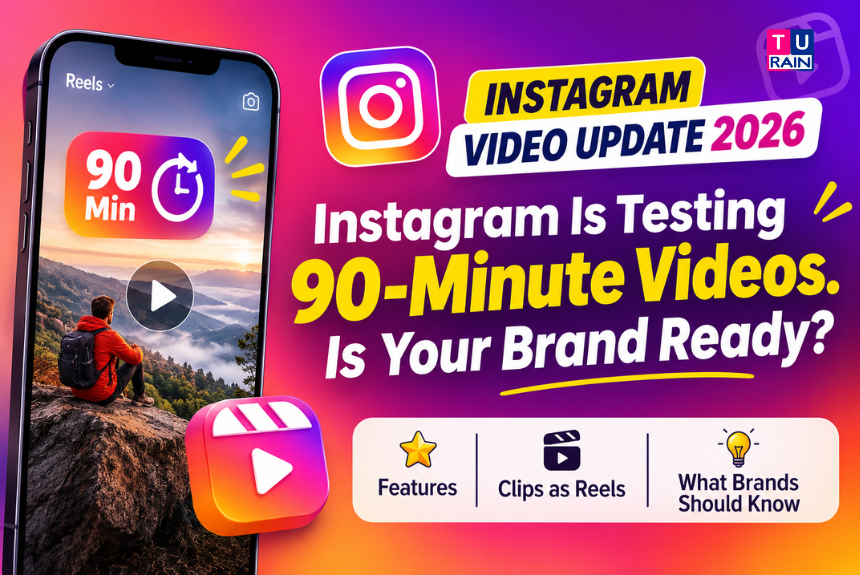
Every few months, Instagram announces something that makes brand teams quietly open a spreadsheet, and it is a familiar and stressful moment for marketers. The reason is not to celebrate but to recalculate. This time, it is a 90-minute video test, along with two companion tools built to feed it, which are Clips as Reels and Save to TV. For any brand sitting on podcasts, webinars, or interview series, the question is fair, as the content plan may need a change now. A clear Instagram long-form video strategy is a useful and timely step for brands in this situation, and it helps teams stay calm, prepared, and informed. This guide explains what Instagram is actually testing, who can use it, how to slice long assets into Reels, and why YouTube stays put for the moment.
The Instagram New Video Update: 90-Minute Video Feature introduces a new possibility for brands publishing podcasts, webinars and interviews, but its limited availability means businesses should understand the test before changing their content strategy.
Where Things Stand as of Mid-November 2026
The biggest question is whether this is live for everyone, and the answer is no, as it is a test. Instagram announced it on Monday, 26th October 2026, in a video from Instagram head Adam Mosseri and product VP Tessa Lyons. The long-form format, called Features, started with a small group of creators in Brazil, and a small U.S. test followed. In reporting from early November, there was still no public sign-up and no announced date for a wider rollout. Mosseri was upfront about the pace, as he said getting long-form right across mobile and TV will take time, and that Meta is committed to it long term. The announcement came as a video, not a detailed blog post, so some specifics are still thin. These Instagram updates in November 2026 should be treated as a moving target.
This isn’t Instagram’s first try, either. The company launched IGTV in 2018 and later shut it down, and Mosseri has also said he was against long-form video for a long time, since short content like Reels drives more shares and DMs. What is different now is the pairing, as short clips act as the doorway, and long video sits behind it.
What the Test Actually Includes
The test is a layered and connected set of tools for creators, and the main parts are listed below.
- Features: horizontal videos up to 90 minutes, aimed at podcasts, vlogs, interviews, and episodes
- Clips as Reels: Reels cut from a long video that link viewers to the full version, with a reported limit of eight clips per long video
- Save to TV: viewers can save a longer video and send it to the Instagram app on their TV.
- TV apps: available in the U.S. on Samsung, Fire TV, and Google TV, and now on Apple TV, with live stream support listed as coming soon on Apple TV
- Series: a dedicated home on a creator’s profile for episodic Reels, tested since spring 2026 with select creators in the U.S., India, and Mexico
Who Can Use It Right Now
Access is a limited and selective matter at this stage, and the picture, as reported so far, is listed below.
- Feature uploads are limited to creators Instagram has selected.
- Most brand accounts can’t post a 90-minute Feature today.
- Clips as Reels sits inside the same test, trialed in Brazil first and now in a small U.S. test.
- Regular Reels remain open to everyone, as always.
One thing is worth knowing early: a brand outside the test can’t use the native link between a clip and a long video. That doesn’t stop the team from building the clip workflow today, and more on that is covered below.
For now, access to the Instagram New Video Update: 90-Minute Video Feature is restricted to selected creators, so most brands cannot use the format directly.”
Understanding Features, Clips as Reels, and Save to TV
This is the part that makes the whole test make sense, as three tools work together in one loop.
| Tool | What It Does |
| Features | Horizontal video up to 90 minutes, aimed at podcasts, interviews, vlogs, and episodic content |
| Clips as Reels | Short Reels cut from a long video, each linking viewers to the full version, with a reported cap of eight clips per video |
| Save to TV | Lets viewers save a longer video on their phone and send it to the Instagram TV app |
| Series | A dedicated spot on a creator’s profile for connected, episodic Reels |
A movie trailer is a helpful and familiar comparison, as it is short, it is built to hook, and it points to something bigger. That is the role Reels play here. Mosseri’s own concern was that long video could eat into short-form engagement, but the test is designed around the opposite idea. Someone who watches a few podcast clips as Reels may want the full episode on their TV, which can enhance reach, loyalty, and watch time for brands.
The Repurposing Workflow
Even without access to the Instagram New Video Update: 90-Minute Video Feature, brands can prepare by repurposing podcasts, webinars and interviews into shorter Reels.
- Pick your anchor assets. Podcast episodes, webinars, and interview series with clear standalone moments
- Keep the full episode on YouTube. It stays the home base and the monetized version.
- Cut six to eight clips per episode. Eight matches the reported cap on clips per long video
- Reframe for vertical. Open on the strongest line, add captions, trim the warm-up.
- Point every clip to the full episode. In the test, use the native link. Outside it, use the link in bio, a Story link sticker, or a clear on-screen cue naming the episode.
- Track what moves. Watch shares, DMs, saves, clicks to the full episode, and YouTube watch time from Instagram traffic.
- Test Features only if invited. Upload the full episode as-is, attach the clips, and compare results against YouTube.
That last step matters, as the show should not be re-edited for Instagram until there is data.
The Biggest Catch: No Ad Revenue Share
Revenue is a crucial and sensitive topic for budget decisions, and this is the part that matters most. Instagram isn’t sharing ad revenue on Features, not yet. A Meta spokesperson said it’s too early to share a long-term monetization model, and the company says it’s exploring ways for creators to earn from brands, fans, and Instagram, including performance-based incentives. Mosseri has said there are no current plans for a revenue share across short- or long-form video, though he has also said Instagram is exploring options to help long-form creators get paid.
What exists today is smaller. Existing creator ad deals reportedly carry over into Features videos, and Instagram told Variety it’s directly funding some creators making longer-form content while the format is tested. For brands, this stings less than it does for solo creators, as a brand-owned show doesn’t live or die on platform payouts. But it does shape where the best long version should sit.
What Each Platform Pays
Payment is a clear and measurable point of comparison between platforms, and the details are listed below.
- YouTube: qualified Partner Program creators receive 55% of ad revenue on long-form videos
- Instagram Features: no ad revenue share announced
- Instagram’s performance-based payments: Mosseri has said Meta spends far more on these than it earns back
None of this is a verdict on reach, as it is a verdict on payout. Instagram reach can still be worth having, as long as it doesn’t replace the platform that pays.
How the Rollout Has Moved So Far
The rollout is a gradual and staged process for Instagram, as the pieces didn’t arrive together. Instagram launched its first TV app last year with a version of Reels for Fire TV, then added Samsung and Google TV, and Apple TV is the newest addition. Clips as Reels was trialed with creators in Brazil earlier this year, and Series has been in testing since spring 2026. Features is the latest piece, announced on 26th October 2026 and now in a small U.S. test alongside Brazil. According to Variety’s reporting on the announcement, Series is set to expand to more countries through the end of 2026, while Features has no published expansion date.
Should Brands Pivot? What’s Known So Far
The short answer is no, and a layer should be added instead. Features is a test, not a full launch, and most brand accounts can’t use it yet. There is no ad revenue share, while YouTube pays qualified creators 55%, and Instagram’s own head says the TV experience will take time to get right. IGTV is a fair reminder that Instagram has tried this before.
But ignoring it would be a mistake too. Instagram’s move is a clear push to compete with YouTube in long-form, one of the bigger social media trends of 2026. Brands that already have a clip pipeline lose nothing by preparing, and if access opens, they are ready. One caution on figures is needed here, as some reports mention specific payment amounts for select creators. Meta hasn’t confirmed them, so this guide doesn’t use them.
So here is the practical version. YouTube should stay as the home base, Reels should keep getting cut, and every clip should point to the full episode. The test should be watched, and the content calendar should not be rebuilt until Instagram announces wider access and a monetization plan.
The Instagram New Video Update: 90-Minute Video Feature is worth monitoring, but brands should focus on repurposing existing long-form videos into Reels rather than rebuilding their entire video strategy around a limited test.
Not sure how to slice a podcast or webinar into Reels that actually send people to the full episode? Talk to Turain‘s content team before Instagram’s next update lands.
Disclaimer
Platform Test & Monetisation Notice: The Instagram long-form video format (Features), Clips as Reels, and Save to TV capabilities discussed in this article are in limited testing as of November 2026 and are not yet available to all creator or brand accounts. Instagram has not announced an official global or India rollout date for Features, nor has it introduced an ad-revenue-sharing model for long-form uploads. Feature limits—such as the 90-minute maximum duration and the cap of eight linked Reels per video—are subject to change during testing. Brands and creators in India producing sponsored long-form video or episodic Reels must also ensure all paid partnerships carry clear disclosures in compliance with the Advertising Standards Council of India (ASCI) guidelines and Instagram’s Partner Monetisation Policies.
Frequently Asked Questions
How long can videos be under Instagram’s new test?
Up to 90 minutes, in a horizontal format called Features. It’s limited to creators Instagram has selected.
What is Clips as Reels?
A tool that lets creators cut Reels from a long video. Each Reel links viewers to the full version. Reports put the limit at eight clips per long video.
Can any brand post a 90-minute video on Instagram today?
No. As of early November reporting, there was no public sign-up and no announced date for a wider rollout.
Does Instagram pay for Features videos?
Not through a public program. There’s no ad revenue share. Meta says it’s exploring ways for creators to earn.
Should brands leave YouTube for Instagram?
No. YouTube pays qualified creators a share of ad revenue and remains the stronger home for full episodes. Instagram works best, for now, as a discovery layer.
Is the TV app part of this?
Yes. Viewers can save a long video and send it to the Instagram TV app, which is available in the U.S. on Samsung, Fire TV, Google TV, and Apple TV.
Can Indian brands or creators upload 90-minute Features videos right now?
No. As of mid-November 2026, Instagram is testing Features only with a small, selected group of creators in the U.S. and Brazil, with no confirmed rollout date for India. However, Indian creators and brands can still use regular Reels and watch for Series—Instagram’s dedicated profile tab for episodic Reels, which has been in testing across the U.S., India, and Mexico since spring 2026.
How is Instagram Features different from the old IGTV?
IGTV, launched in 2018 and shut down in 2022, tried to pull users into a separate tab and standalone app for vertical long-form videos. Features takes the opposite approach: it focuses on horizontal video designed for big-screen viewing via Instagram’s smart TV apps (Fire TV, Samsung, Google TV, and Apple TV), while using short vertical clips (Clips as Reels) inside the main mobile feed as the discovery doorway to the full episode.
If Instagram does not share ad revenue on Features, how can brands and creators make money from it?
Unlike YouTube’s Watch Page Monetisation Module—which pays eligible Partner Program creators 55% of net ad revenue—Instagram currently offers no ad revenue share on Features. Creators rely on direct brand sponsorships, affiliate links, and fan-funded tools like Subscriptions or Gifts. For brands, the value is not platform ad payouts, but organic reach, audience retention, and driving viewers down the funnel to owned channels.
Should we stop uploading full podcasts and webinars to YouTube while waiting for Features?
No. YouTube remains the primary search engine and monetisation hub for long-form video. The safest workflow right now is to keep publishing full horizontal episodes on YouTube, slice six to eight standalone highlights into vertical Reels for Instagram discovery, and direct viewers back to the full episode until Instagram opens global access and clarifies its long-term Features roadmap.
Official Reference Links
- Meta Newsroom – Latest Instagram News & TV App Updates: about.fb.com/news/category/technologies/instagram
- YouTube Help – Partner Earnings & 55% Ad Revenue Share Overview: support.google.com/youtube/answer/72902
- ThePrint – Coverage of Instagram’s 90-Minute Features Test: theprint.in/feature/instagram-90-minute-videos-features-podacsters-youtubers/3082652